Tianyi Sensor IOT Technology Co., Ltd
Sales Manager:Ms. Emily Wang
Cel,Whatsapp,Wechat:+86 15898932201
Email:info@fengtutec.com
Add:No. 155 Optoelectronic Industry Accelerator, Gaoxin District, Weifang, Shandong, China


Sales Manager:Ms. Emily Wang
Cel,Whatsapp,Wechat:+86 15898932201
Email:info@fengtutec.com
Add:No. 155 Optoelectronic Industry Accelerator, Gaoxin District, Weifang, Shandong, China
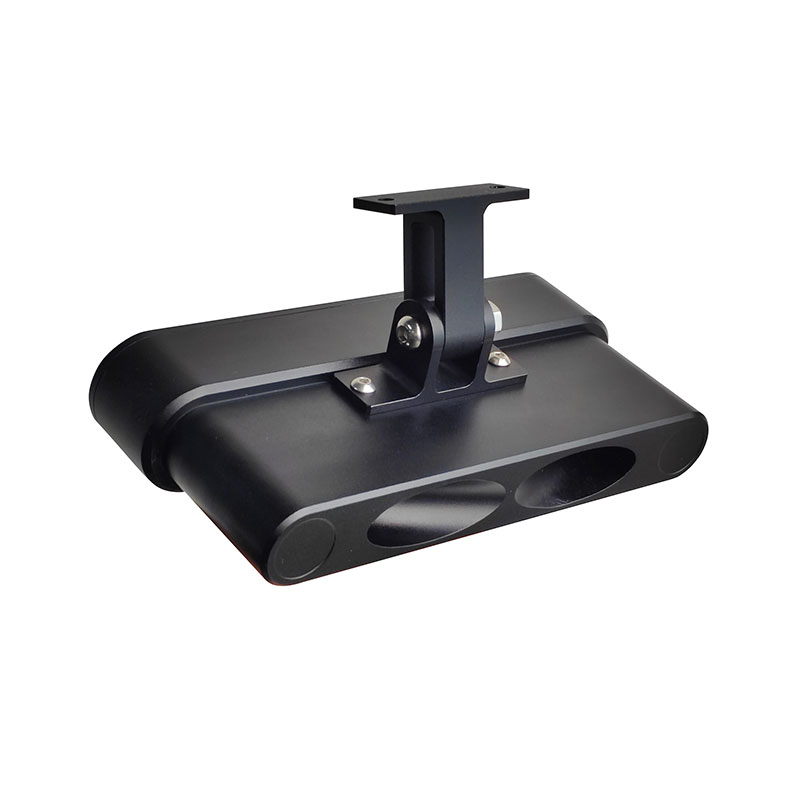
Model:FT-WJN10
Brand:tianyi
1、Forward Scatter Visibility Sensor Product Introduction
Forward Scatter Visibility Sensor determines visibility by measuring the forward scattering of light from particles in the atmosphere, providing the best visibility measurement accuracy.Forward Scatter Visibility Sensor is designed for monitoring and collecting visibility and other meteorological data during flight of unmanned aerial vehicles (UAVs) or small unmanned inspection aircraft.
It features a compact design and uses the forward scattering method to detect atmospheric visibility, operating normally at altitudes of up to 4000 meters and temperatures as low as -20 degrees Celsius.
It has a flat, low-drag design and is mounted on the belly of the aircraft. Users can choose between ABS and aluminum alloy shell materials, and can also opt to install temperature, humidity, and barometric pressure sensors.
Forward Scatter Visibility Sensor consumes only 0.9 watts, making it ideal for small UAV platforms for low-altitude meteorological element inspection.
2、Forward Scatter Visibility Sensor Dimensions and Weight
Visibility Dimensions: 174mm*85mm*35mm
Weight (ABS material): 300g
Weight (Aluminum alloy material): 580g
3、Forward Scatter Visibility Sensor Main Technical Parameters
Detection Range: 10-10000 meters
Measurement Accuracy: ±10%
Light Source: IR LED
Data Update: 1 second
Digital Output: RS485
Optional Parameters: Temperature, Humidity, Air Pressure
Operating Temperature: -20–50°C
Operating Humidity: 0–95%
Power Supply: DC 12V
Power Consumption: 0.9W
As meteorological monitoring needs become increasingly diverse, traditional meteorological equipment faces challenges in installation convenience, data comprehensiveness, and environmental adaptability. Conventional miniature weather instruments often suffer from measurement errors caused by sensor...
Meteorological monitoring equipment includes six-parameter automatic weather stations, precipitation sensors, radiation observation stations, and unmanned aerial vehicle (UAV) systems, used to monitor meteorological elements such as temperature, humidity, wind speed and direction, rainfall, at...
Displacement monitor is a portable device for millimeter-level precision non-contact monitoring of building displacement...
The portable visibility monitor uses the forward scattering method to measure the total extinction coefficient of air and calculate visibility. Its integrated, portable design is compact and lightweight, making it widely applicable in emergency response, road traffic, and meteorological scenar...


 Get a Free Quote
 Skype
Skype
 whatsapp
 mail
mail