Tianyi Sensor IOT Technology Co., Ltd
Sales Manager:Ms. Emily Wang
Cel,Whatsapp,Wechat:+86 15898932201
Email:info@fengtutec.com
Add:No. 155 Optoelectronic Industry Accelerator, Gaoxin District, Weifang, Shandong, China


Sales Manager:Ms. Emily Wang
Cel,Whatsapp,Wechat:+86 15898932201
Email:info@fengtutec.com
Add:No. 155 Optoelectronic Industry Accelerator, Gaoxin District, Weifang, Shandong, China

Model:FT-SL1
Brand:tianyi
Seepage Monitoring detects water seepage under dams to detect and manage water seepage through dams and foundations to ensure dam safety.
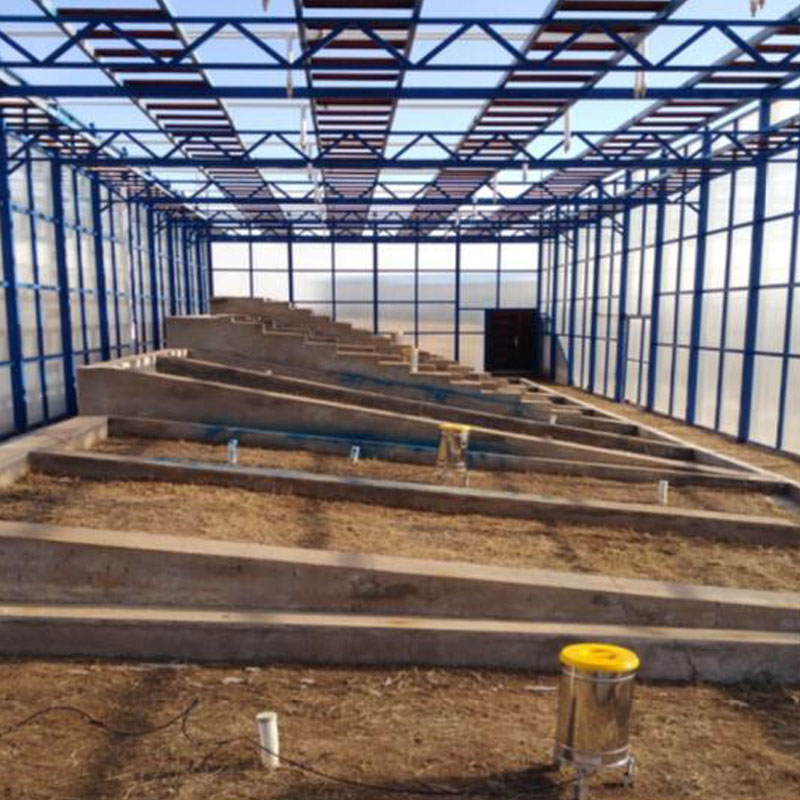
Seepage Monitoring primarily consists of on-site testing equipment and remote monitoring equipment.
On-site testing equipment, including weir gauges and triangular weirs, measures reservoir seepage and monitors flow rates.
Remote monitoring equipment, also known as a remote monitoring terminal, collects data from on-site testing equipment and transmits this information to the monitoring center via wireless transmission.
Seepage Monitoring Introduction
The weir gauge uses a magnetostrictive sensor for liquid level measurement. It features high resolution, excellent stability, reliable performance, fast response, linear measurement, resistance to wear, and a long service life. The weir gauge measures the water head above the weir and then calculates the flow rate based on empirical formulas for weir channels (such as triangular, trapezoidal, and rectangular weirs).
Seepage Monitoring Structure and Principle
The water weir meter consists of a magnetic rod, a floating ball, a measuring circuit and a stainless steel casing.When the water level in the weir flume changes, it will drive the float to produce a liquid level difference. The host computer uses the current liquid level minus the calibrated base value to obtain the actual water level on the weir, and then calculates the flow rate according to the weir flume type.
Seepage Monitoring Product Features
High precision and resolution
Excellent stability and fast response
Minimal temperature drift
Standard MODBUS protocol and wide compatibility
Seepage Monitoring Specifications and parameters
| Measurement range | 0~600mm |
| Sensitivity | 0.01mm |
| Measurement accuracy | ≤0.1%F.S |
| Working voltage | DC12V (0.5W@12V) |
| Output signal | RS485-MODBUS protocol |
| Protection level | IP67 |
| Case material | 304 Stainless Steel |
| Dimensions | Φ89×850mm |
The measurement of wind speed and direction is of great importance in many fields, such as weather forecasting, high - speed railways, wind power generation, industrial and agricultural production, and scientific research.In the traditional meteorological field, the measurement of wind speed and dir...
The Farmland Weather Station is a product of the integration of information technology and agricultural meteorological monitoring. By integrating multiple technical means, it achieves real-time and efficient processing of agricultural meteorological data, addressing the issues of delayed data collec...
The 3D ultrasonic anemometer utilizes ultrasonic measurement technology and features an all-metal construction devoid of any moving parts; it is capable of simultaneously measuring wind direction in both horizontal and vertical planes while outputting wind speed components along the X, Y, and...
Leveraging the propagation characteristics of sound waves underwater, Water Rescue Equipment performs underwater detection through electro-acoustic conversion and signal processing. It provides scanned views, 3D visualizations, and underwater life detection capabilities for riverbeds and water...


 Get a Free Quote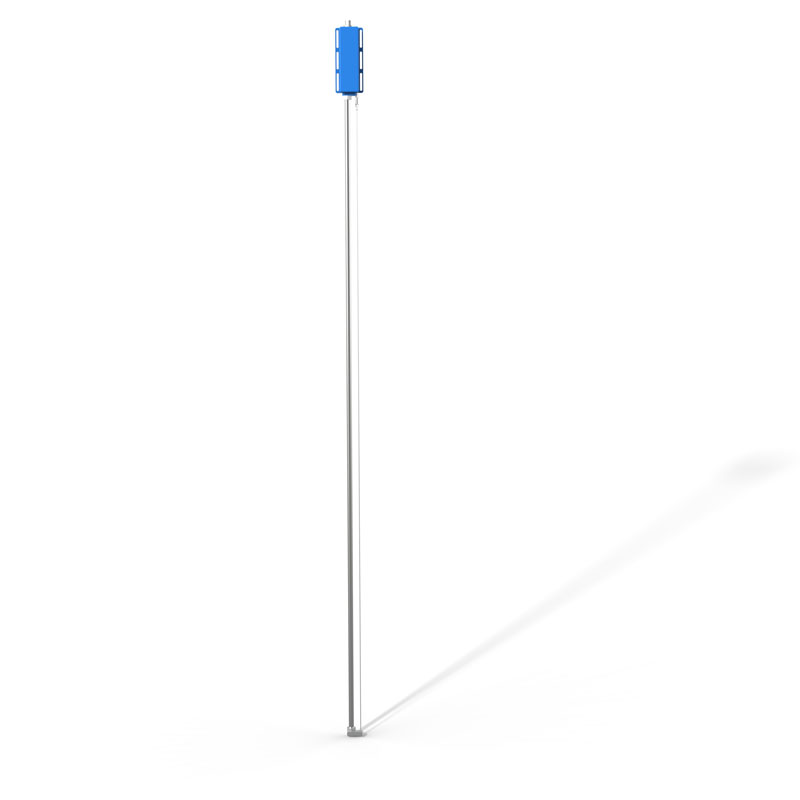
 Skype
Skype
 whatsapp
 mail
mail