Tianyi Sensor IOT Technology Co., Ltd
Sales Manager:Ms. Emily Wang
Cel,Whatsapp,Wechat:+86 15898932201
Email:info@fengtutec.com
Add:No. 155 Optoelectronic Industry Accelerator, Gaoxin District, Weifang, Shandong, China


Sales Manager:Ms. Emily Wang
Cel,Whatsapp,Wechat:+86 15898932201
Email:info@fengtutec.com
Add:No. 155 Optoelectronic Industry Accelerator, Gaoxin District, Weifang, Shandong, China
time:2025-04-07 10:06:09 source:Weather Station viewed:384 time
Cultural relics carry the memories of human civilization and are precious non-renewable resources. Meteorology, as an important part of the natural environment, has an intricate connection with the protection of cultural relics.
Meteorological conditions are directly related to the preservation status of cultural relics. Extreme weather has a particularly obvious destructive effect on cultural relics. Heavy rain not only directly impacts cultural relics but may also trigger geological disasters such as landslides, indirectly destroying cultural heritages. Floods and huge waves can also damage cultural relics located near water bodies. Long-term exposure to wind and sunlight will also accelerate the aging of cultural relics. Fluctuations in temperature and humidity can cause the surfaces of steles and stone carvings to crack and powder, ultraviolet radiation can fade murals and colored paintings, and acid rain can corrode metal cultural relics.
The smooth progress of cultural relic protection work is inseparable from accurate meteorological services. The meteorological department and the cultural relic protection department work together efficiently to build a "protective wall" for the safety of cultural relics. The meteorological department promptly conveys early warning information of severe weather to the cultural relic protection department, which can then take preventive measures in advance accordingly.
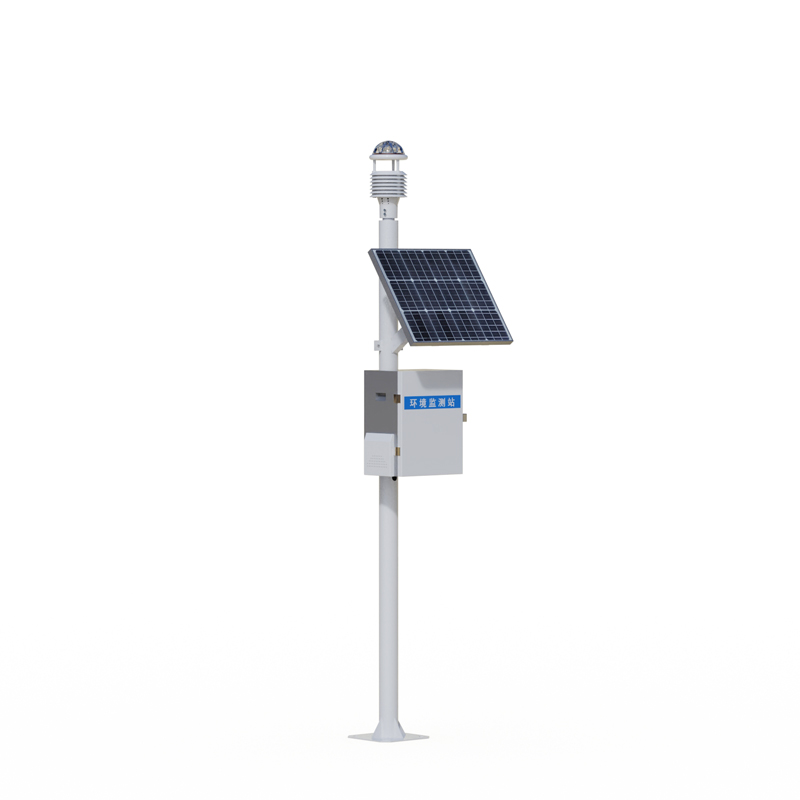
To support the protection of cultural relics, the meteorological department has also established a comprehensive meteorological monitoring network. Automatic meteorological observation stations have been built to monitor meteorological elements in real time, helping the cultural relic department evaluate the impact of meteorology on the aging of cultural relics and formulate targeted protection strategies.
The Miniature sensor, by integrating multiple sensors and adopting ultrasonic technology, can accurately measure parameters such as wind speed, wind direction, temperature, and humidity. Its portability and real-time performance make it particularly suitable for use at the site of cultural relic protection, such as monitoring the environmental changes of open-air cultural relics or ancient buildings.
The Miniature sensor is usually installed around or at key parts of ancient buildings, such as the roof and walls. When installing, it is necessary to ensure the stability of the device and the accuracy of data collection. The device can transmit data to the cloud platform in real time via a wireless network, making it convenient for managers to view and analyze the data anytime and anywhere. Managers can access the monitoring data through a mobile phone APP or a web page, promptly detect abnormal situations, and take corresponding measures.
In conclusion, cultural relic protection and meteorology complement each other. Providing good meteorological services is an important guarantee for safeguarding the safety of cultural relics and inheriting human civilization.

Some enterprises, in order to reduce wastewater treatment costs, secretly discharge untreated sewage directly into the external environment or municipal pipelines through illicitly installed concealed pipes. For example, a company in an industrial park discharged high-concentration phenol-containing...
Radar rain detector is a precipitation measurement instrument that uses 24GHz Doppler radar technology. It identifies rain, snow, and hail types and measures rainfall intensity by analyzing the falling velocity and particle size of precipitation particles. Unaffected by foliage cover, it offers sensitive and rapid detection and is widely used in meteorology, hydrology, environmental protection, and flood control....
A soil moisture monitoring system is a comprehensive station that conducts real-time monitoring of soil moisture and related environmental parameters. Equipped with high-precision sensors, it adopts technologies such as Frequency Domain Reflectometry (FDR) and Time Domain Reflectometry (TDR) to accu...
Dust pollution refers to an open-air pollution phenomenon where ground dust is blown into the atmosphere by wind, human activities, or other factors. In ambient air, it is a component of total suspended particles (TSP) and poses a severe threat to atmospheric environmental quality. There are various...


 Skype
Skype
 whatsapp
 mail
mail