Tianyi Sensor IOT Technology Co., Ltd
Sales Manager:Ms. Emily Wang
Cel,Whatsapp,Wechat:+86 15898932201
Email:info@fengtutec.com
Add:No. 155 Optoelectronic Industry Accelerator, Gaoxin District, Weifang, Shandong, China


Sales Manager:Ms. Emily Wang
Cel,Whatsapp,Wechat:+86 15898932201
Email:info@fengtutec.com
Add:No. 155 Optoelectronic Industry Accelerator, Gaoxin District, Weifang, Shandong, China
time:2025-06-13 08:51:23 source:Weather Station viewed:376 time
Why Does Wind Power Generation Easily Encounter Icing Issues?
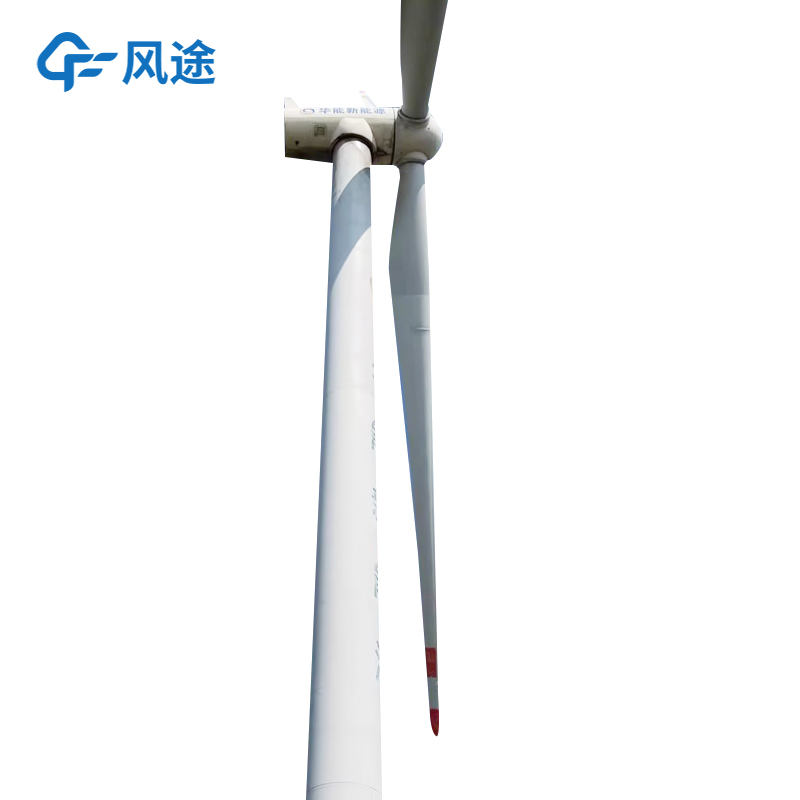
First, wind farms are mostly located in areas with abundant wind resources such as mountains and coastal regions, where harsh climatic conditions (high humidity, low temperatures) easily lead to weather phenomena like clouds, fog, and freezing rain. When the ambient temperature drops below the freezing point, supercooled water droplets will rapidly freeze upon impacting the blade surface.
Second, the characteristics of the blades themselves, such as their shape, material, and surface coating, play a role. If the blade surface is rough or uneven, water droplets are more likely to adhere and freeze.
Third, environmental factors matter. When a wind turbine is in operation, the blades collide with air containing supercooled water droplets. The impact disrupts the droplets' equilibrium, raising their freezing point and causing ice to form on the blade surface.
Icing Poses Serious Hazards:
First, icing alters the aerodynamic performance of blades. It reduces lift and increases drag, leading to a decrease in wind turbine output and power generation efficiency. In harsh areas, annual power generation losses can reportedly reach 20%-50%.
Second, icing increases blade loads and causes uneven load distribution, triggering unit vibrations, aggravating blade fatigue damage, shortening blade lifespan, and even potentially leading to severe accidents like blade breakage or unit collapse.
Finally, ice shedding poses safety threats to on-site maintenance personnel and surrounding equipment/people.
In view of these hazards, icing monitoring and early warning are essential.
FT-JB3H Detecting Ice on Wind-turbine Blades uses microwave detection technology. It distinguishes icing conditions by analyzing microwave signal feedback from different substances (ice, water, air) and can calculate ice thickness. With a detection resolution of up to 0.01mm and a maximum measurement thickness of 30.00mm, it accurately reflects the icing status on the blade surface. The sensor adopts wireless 433 communication, with a communication distance of over 100 meters, enabling convenient transmission of monitoring data to the control center. It operates in a temperature range of -40°C to 65°C and has an IP66 protection rating.
FT-JB3H Detecting Ice on Wind-turbine Blades also features multiple functions, including temperature detection, battery voltage detection, and charging voltage detection, to comprehensively monitor icing conditions and related environmental parameters.
Underwater Side-Scan Sonar utilizes the underwater propagation characteristics of sound waves to perform underwater detection through electro-acoustic conversion and information processing. Equipped with a 7-inch high-brightness IPS screen, it supports independent control of four- or six-way s...
In underground coal mine operations, ensuring the safety of personnel and the smooth progress of work is of great significance. The industrial product, the Toxic gas detector, as a safety detection device, shoulders the important responsibility of safeguarding the safety of the mine. It can accurate...
Traditional flow measurement involves trekking through mountains and rivers, enduring sun and rain, while modern technology can achieve fully automatic monitoring with just one device.River flow measurement is a crucial part of water conservancy work, directly related to flood control, drought relie...
Why measure the flow velocity of a river?First, it provides data support for water resources management. By mastering the river flow velocity, water resources can be rationally allocated to ensure the water demand for daily life and production.Second, it helps with flood control and disaster reducti...



 Skype
Skype
 whatsapp
 mail
mail