Tianyi Sensor IOT Technology Co., Ltd
Sales Manager:Ms. Emily Wang
Cel,Whatsapp,Wechat:+86 15898932201
Email:info@fengtutec.com
Add:No. 155 Optoelectronic Industry Accelerator, Gaoxin District, Weifang, Shandong, China


Sales Manager:Ms. Emily Wang
Cel,Whatsapp,Wechat:+86 15898932201
Email:info@fengtutec.com
Add:No. 155 Optoelectronic Industry Accelerator, Gaoxin District, Weifang, Shandong, China
time:2025-07-07 08:41:19 source:Weather Station viewed:352 time
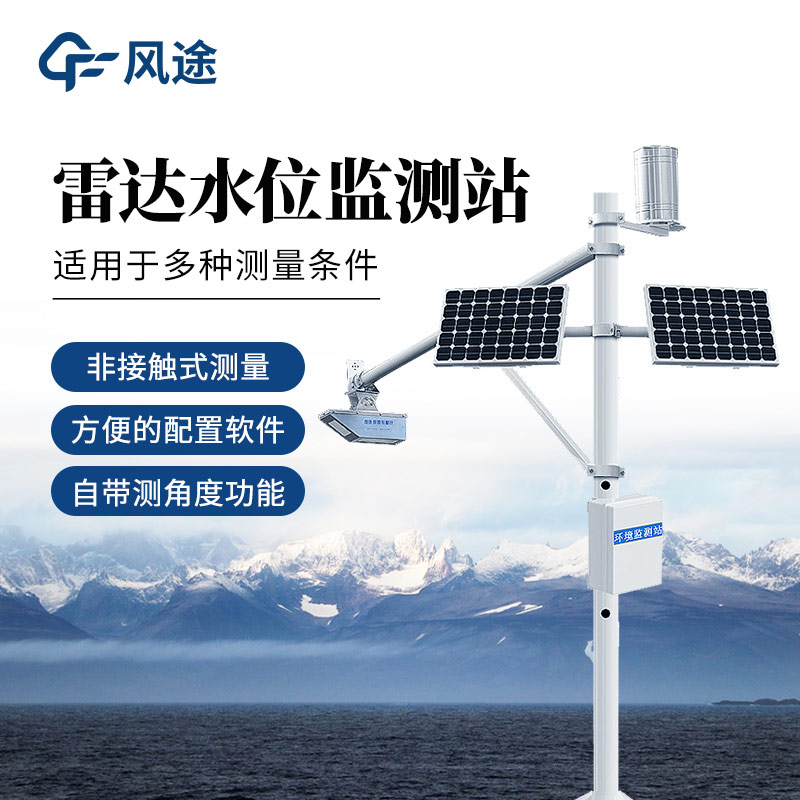
River Level Monitoring Station is one of the tools in the modern flood control and disaster reduction system. It realizes real-time control of watershed hydrological information through multi-dimensional data collection and intelligent analysis. The system is composed of four major modules: water level monitoring, rainfall monitoring, data transmission, and intelligent early warning, providing data support for flood control decisions through automated equipment and network technologies.
The water level monitoring module uses radar water level gauges to accurately measure changes in river water levels. The equipment is installed at river sections and obtains water level data with millimeter-level accuracy through non-contact or contact measurement. The rainfall monitoring part relies on tipping bucket rain gauges and piezoelectric rainfall sensors to achieve continuous monitoring of rainfall, capable of real-time recording of every 0.1-millimeter rainfall change. Both monitoring devices operate 24 hours a day to ensure no time gaps in hydrological data collection.
Monitoring devices transmit the collected water level and rainfall data to the data center in real time through transmission methods such as 4G/5G networks. The data center establishes a hydrological database to store and analyze historical and real-time data, generating visual charts such as water level change curves and rainfall intensity distribution maps. Staff can view real-time data and historical records of each monitoring point at any time through computer terminals or mobile apps, realizing remote dynamic monitoring of watershed hydrological conditions.
The system combines historical data with real-time monitoring information to dynamically predict the trend of water level rise. When the monitored data reaches the preset warning threshold, the system immediately activates a graded early warning mechanism, releasing early warning information to relevant departments and threatened areas through multiple channels such as text messages, voice broadcasts, and LED display screens.
Greenhouse sensor is primarily used for monitoring and controlling humidity in the air. These devices are designed for complex indoor and outdoor environments and can measure four key parameters in real-time: temperature, humidity, carbon dioxide, and light intensity. They are widely app...
Leveraging the propagation characteristics of sound waves underwater, Water Rescue Equipment performs underwater detection through electro-acoustic conversion and signal processing. It provides scanned views, 3D visualizations, and underwater life detection capabilities for riverbeds and water...
Visibility detector uses forward scattering to measure the total extinction coefficient of air and calculate current visibility. It can identify weather phenomena such as fog, rain, snow, mixed precipitation, and clear skies, with a recognition rate of no less than 95%. It is suitable for indu...
With the advancement of environmental science research toward refinement, traditional large-scale air monitoring stations suffer from low distribution density and limited coverage, making it difficult to capture air quality differences in small-scale areas such as urban functional zones and around p...



 Skype
Skype
 whatsapp
 mail
mail