Tianyi Sensor IOT Technology Co., Ltd
Sales Manager:Ms. Emily Wang
Cel,Whatsapp,Wechat:+86 15898932201
Email:info@fengtutec.com
Add:No. 155 Optoelectronic Industry Accelerator, Gaoxin District, Weifang, Shandong, China


Sales Manager:Ms. Emily Wang
Cel,Whatsapp,Wechat:+86 15898932201
Email:info@fengtutec.com
Add:No. 155 Optoelectronic Industry Accelerator, Gaoxin District, Weifang, Shandong, China
time:2025-08-21 08:51:39 source:Weather Station viewed:387 time
Against the backdrop of rapid industrialization, industrial parks—core hubs for industrial agglomeration—face prominent pollution discharge issues. These issues are characterized by complex compositions, diverse types, and high emission intensity. Among them, industrial clusters and parks involving VOCs (Volatile Organic Compounds), such as petroleum, chemical, industrial coating, and packaging & printing sectors, as well as those with high nitrogen oxide (NOₓ) emissions, have particularly severe pollution problems. Pollutants discharged from these areas not only severely impact the surrounding atmospheric environment but also may harm residents’ health. Thus, they have become key targets requiring focused attention in coordinated air pollution control efforts, with an urgent need for remediation.
The establishment of an Industrial Park Air Quality Micro-station holds significant value across multiple dimensions:
From an environmental supervision perspective: The system enables real-time, accurate monitoring of pollutant discharge data in the park, clarifying the specific impact of the park’s emission activities on the surrounding air quality. It provides reliable support for environmental supervision authorities to formulate targeted control plans, effectively avoiding the blindness in governance caused by insufficient data in the past.
From the perspective of park development: The monitoring data provided by the system helps park managers accurately identify pollution sources and high-emission links, thereby promoting the park to take effective measures to achieve emission reduction and consumption reduction goals. This data also provides scientific guidance for industrial structure adjustment, assists enterprises in optimizing production processes, drives the industrial upgrading toward green and efficient development, and ultimately provides strong support for the high-quality development of local economy and society.
In terms of monitoring factor configuration, the system covers a wide range:
Routine monitoring indicators: Include six parameters—NOₓ (nitrogen oxides), CO (carbon monoxide), O₃ (ozone), SO₂ (sulfur dioxide), PM10 (inhalable particulate matter), and PM2.5 (fine particulate matter). These are fundamental and key parameters reflecting atmospheric environmental quality, which can directly indicate the overall air pollution status of the park.
Specialized monitoring for VOCs-involved parks: Given the special composition and high hazard of VOCs emitted by these parks, specialized monitoring is required, focusing on volatile organic compounds. Based on the park’s actual industrial types, pollutant emission characteristics, and monitoring needs, targeted monitoring of characteristic toxic and harmful pollutants can be conducted. This further enhances the pertinence and comprehensiveness of monitoring, providing more detailed data support for precise pollution control.
The system’s scope of application is clear: it mainly targets industrial clusters and parks involving VOCs (e.g., petroleum, chemical, industrial coating, packaging & printing) and those with high nitrogen oxide emissions. In the air pollution control work of these key areas, the real-time, accurate, and comprehensive monitoring data provided by the system will serve as a key data basis for formulating control strategies, evaluating control effects, and optimizing control measures. It will help these areas effectively address air pollution issues and promote the coordinated development of regional ecological environment and economic growth.
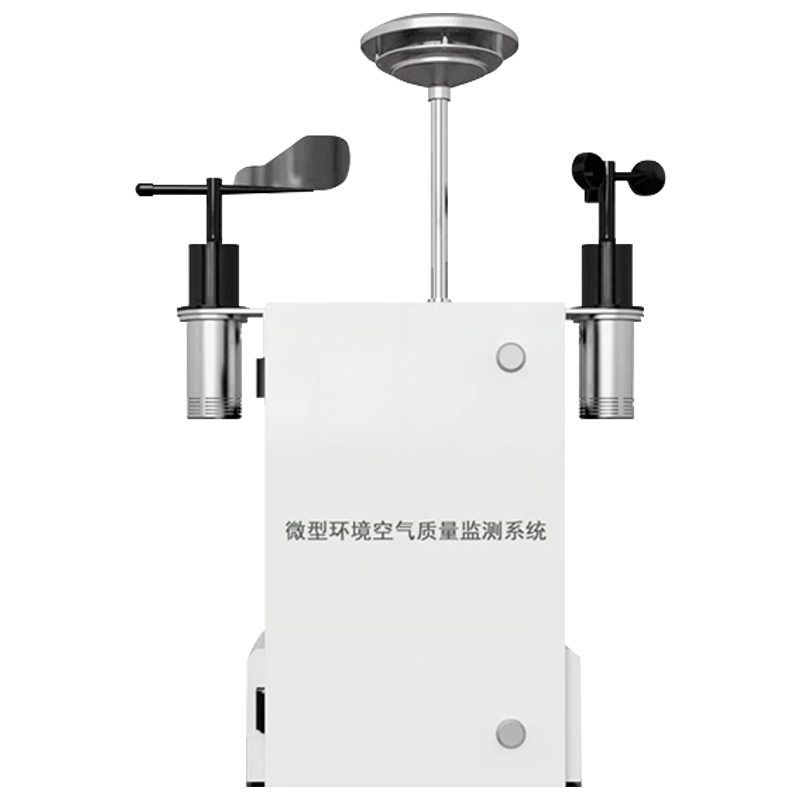
Explosion - proof weather stations are meteorological monitoring devices specifically designed to operate in hazardous environments. With the development of industries such as manufacturing, military, and chemical, the demand for explosion - proof weather stations has been growing steadily. The main...
20km Portable Visibility Detector device employs the forward scattering method to calculate current atmospheric visibility by measuring the total extinction coefficient of the air. This equipment can be deployed on highways, mountain roads, and other similar locations to provide real-time visibility information, assisting traffic management departments in adjusting speed limits and issuing warnings. It is widely used in emergency response, road traffic, and meteorological monitoring....
Wind speed and direction are important parameters in meteorological observation and environmental monitoring, and they play a significant role in many fields such as agricultural production, aerospace, and energy development. Accurate wind speed and direction data can provide strong support for disa...
Methane, as the main component of natural gas, is widely used in industrial production and urban gas supply. However, its colorless, odorless, flammable and explosive properties make methane leakage a major safety hazard. The handheld Laser methane telemeteris mainly used for long-distance mea...


 Skype
Skype
 whatsapp
 mail
mail