Tianyi Sensor IOT Technology Co., Ltd
Sales Manager:Ms. Emily Wang
Cel,Whatsapp,Wechat:+86 15898932201
Email:info@fengtutec.com
Add:No. 155 Optoelectronic Industry Accelerator, Gaoxin District, Weifang, Shandong, China


Sales Manager:Ms. Emily Wang
Cel,Whatsapp,Wechat:+86 15898932201
Email:info@fengtutec.com
Add:No. 155 Optoelectronic Industry Accelerator, Gaoxin District, Weifang, Shandong, China
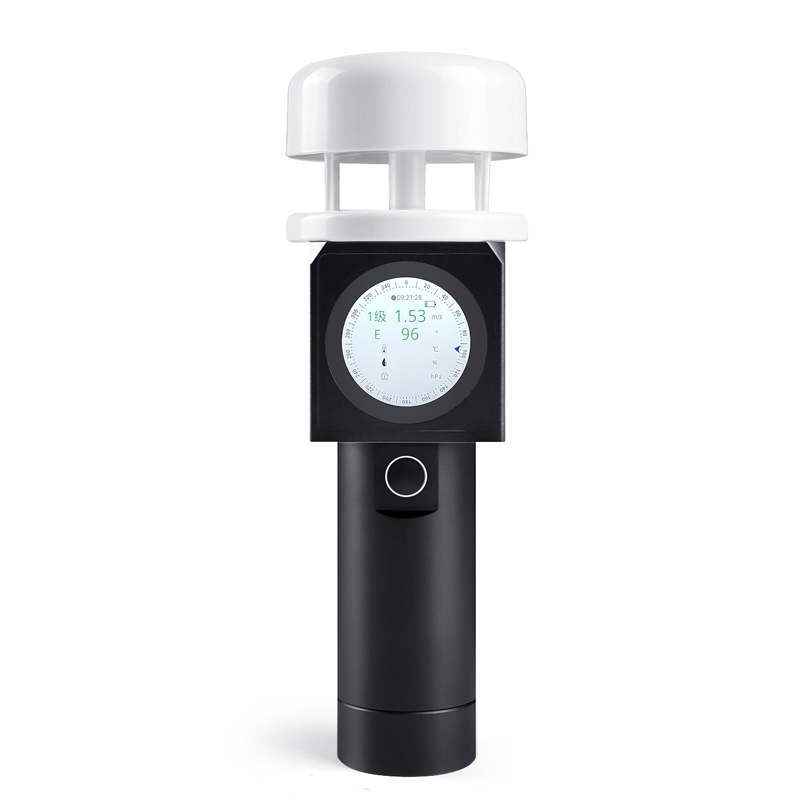
Model:FT-SQ2A
Brand:tianyi
1、Ultrasonic Portable Mini Wind Meter Product Introduction
Ultrasonic Portable Mini Wind Meter is a rechargeable, compact wind speed monitoring device that uses ultrasonic waves to measure wind speed.Ultrasonic Portable Mini Wind Meter series condenses laboratory-grade weather monitoring technology into a handheld device, adding a handle, power supply, display, wireless data transmission module, and software. Integrating three core technologies: ultrasonic sensing, multi-module integration, and intelligent IoT, it enables one-stop collection of accurate weather data for outdoor scenarios.
We've incorporated specialized designs tailored to the operational needs and environments of handheld weather stations. For example, a display allows on-site observers to directly read data, while also storing data on a TF card for at least 365 days of monitoring data. A dedicated app uses Bluetooth for data transmission, allowing users to receive real-time monitoring data on their phone.
Specially designed handle (made of an all-aluminum alloy) is lightweight and easy to hold with one hand. The bottom mounting thread allows for tripod mounting, making it ideal for field inspections.
2、Ultrasonic Portable Mini Wind Meter Key Features
No moving parts, zero wear
Maintenance-free, long service life
Uses a reflective ultrasonic probe for a more compact design
Powered by a removable standard 18650 rechargeable lithium battery
Optional sensors for temperature, humidity, air pressure, radiation, and PM2.5
Built-in Bluetooth transmission module
App data display interface
3、Ultrasonic Portable Mini Wind Meter Typical Applications
Handheld Multi-factor Meteorological Monitoring
Mobile Inspection
Power Safety Inspection
Ship, Dock, and Navigation Inspection
Urban Air Quality Inspection
4、Ultrasonic Portable Mini Wind Meter Technical Parameters
Wind Speed: 0-40m/s
Wind Force Level: 1-12
Wind Direction: 0-359°
Wind Direction: East, South, West, North, Northeast, Southeast, Southwest, Northwest
Temperature: -40°C to +80°C (optional)
Humidity: 0-100% (optional)
Air Pressure: 300-1100hPa (optional)
Altitude: Mean Sea Level (optional)
Illuminance: 0-200,000 lux (optional)
Radiance: 0-2000W/m² (optional)
UV Index: 0-15 (optional) )
PM2.5/PM10: 0-2000 μg/m³ (optional)
Data Display: Mobile App/1.6-inch Circular Touchscreen
Display: Touchscreen
Data Storage: TF Card
Charging/Data Port: Power adapter, 5V/2A output/Type-C port
Power Requirements: 3x18650 rechargeable lithium batteries
Battery Operating Time: Fully charged (3x18650 lithium batteries), up to 24 hours of operation (depending on weather conditions)
Dimensions: Ø82x249mm
Audio and video life detection device is an emergency rescue device integrating audio acquisition and video imaging functions. It obtains images, sounds, and infrared thermal images of trapped individuals through a rotatable probe. The device supports a 180-degree observation range, offering good visibility, high reliability, and ease of operation, making it suitable for rapid search and rescue operations in earthquakes, landslides, building collapses, and other scenarios....
Stainless Steel Tipping Bucket Rain Gauge employs a standard Φ200mm diameter aperture and a bistable tipping bucket structure. Each bucket triggers tipping when it receives 0.2mm of rainfall. It supports Modbus 485 signal output and ±2% measurement error, making it suitable for monitoring li...
Leakage current Measurement is a portable safety detection device suitable for both land and water use. With an IP68 protection rating, it can operate normally in underwater environments. Based on the principle of electromagnetic induction, the device acquires wide-angle AC field signals throu...
The Automatic Monitoring Instrument for Runoff Sediment is an integrated device designed for automatic and real-time measurement of sediment concentration and water volume in surface water flow. It replaces traditional manual measurement methods, enabling continuous 24/7 monitoring. The complete sys...


 Get a Free Quote
 Skype
Skype
 whatsapp
 mail
mail