Tianyi Sensor IOT Technology Co., Ltd
Sales Manager:Ms. Emily Wang
Cel,Whatsapp,Wechat:+86 15898932201
Email:info@fengtutec.com
Add:No. 155 Optoelectronic Industry Accelerator, Gaoxin District, Weifang, Shandong, China


Sales Manager:Ms. Emily Wang
Cel,Whatsapp,Wechat:+86 15898932201
Email:info@fengtutec.com
Add:No. 155 Optoelectronic Industry Accelerator, Gaoxin District, Weifang, Shandong, China
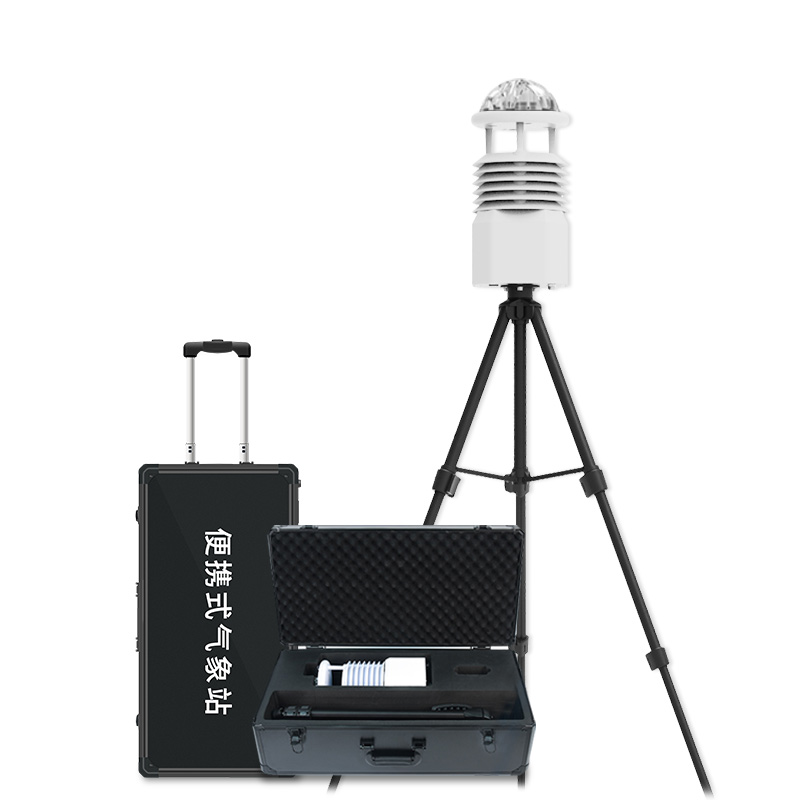
Model:FT-BQX7
Brand:tianyi
1.Introduction to Modular Weather Station
Modular Weather Station parameters can be freely selected and can monitor meteorological elements such as wind speed, wind direction, air temperature, humidity, atmospheric pressure, light, optical rainfall, etc.BQX7 Modular Weather Station is a highly integrated, low-power, fast installation and easy for field monitoring.
The device supports wired, Bluetooth, GPRS and other transmission methods, is debug-free and can be quickly arranged.It is suitable for the acquisition of meteorological data such as short-term emergency meteorological observations and mobile meteorological monitoring.Widely used in meteorological, agriculture and forestry, environmental protection, ocean, airport, port, scientific investigation, campus education and other fields
The device adopts a seven-element integrated sensor, which can conduct real-time observation of meteorological elements such as wind speed, wind direction, air temperature, humidity, atmospheric pressure, light, optical rainfall, etc.The sensor shell is made of imported Stainless steel material, which is more effective in resisting salt spray and other environments, and has a protection level of more than IP65.
2.Product features of Modular Weather Station
1.The hidden ultrasonic probe on the roof cover can avoid interference from rain and snow accumulation, and avoid natural wind shading☆
2.The principle is to transmit a continuous frequency conversion ultrasonic signal, and to detect the wind speed and direction by measuring the relative phase☆
3.Integrated sensor of seven elements, wind speed, wind direction, air temperature, humidity, atmospheric pressure, light, and optical rainfall☆
4.Standard configuration: GPRS, Bluetooth, 485 to USB
5.Aluminum alloy bracket, retractable
6.Shock-absorbing protective trolley case, easy to carry
3.Technical parameters of Modular Weather Station
1.Wind speed: measurement principle: ultrasonic wave, range: 0~60m/s, accuracy: 0.1m/s+0.01v, resolution: 0.1m/s;
2.Wind direction: measurement principle: ultrasonic wave, range: 0~360°, accuracy: ±2°, resolution: 1°;
3.Air temperature: measurement principle diode junction voltage method, range: -40-80℃, accuracy: ±0.3℃ (25℃), resolution: 0.01℃;
4.Air humidity: measurement principle capacitive type, range: 0-100%RH, accuracy: ±3%RH (20%~80%), resolution: 0.01%RH;
5.Atmospheric pressure: measurement principle piezoresistive type, range: 300-1100hpa, accuracy: ±0.25%, resolution: 0.1hpa;
6.Lighting: Range: 0-157286LUX, Accuracy: <±3%, Resolution: 1LUX;
7.Optical rainfall: range: 0-4mm/min, accuracy: ≤±4%, resolution: 0.01mm;
8.Data storage: no less than 500,000 pieces;
9.Power consumption: 1.5W
10.Lithium battery: capacity 12000maH, battery life ≥50h, battery capacity display function
11.Total weight of the equipment: ≤5kg;
12.Layout time: 1 person, no more than 2 minutes to complete the layout;
13.The manufacturer has ISO quality management system, environmental management system and occupational health management system certification
14.The manufacturer has a computer software registration certificate
15.The manufacturer is a 3A credit enterprise
4.Introduction to Modular Weather Station's upper computer software
1.Software for receiving, storing, viewing and analyzing PC stand-alone version of data
2.Support serial port data reception, processing and display
3.Support json strings, modbus485 and other communication methods
4.The storage time can be set by itself.The acquisition time can be set by itself in modbus485 acquisition mode
5.Support self-service addition, deletion, and modification of monitoring parameters protocols, names, icons, etc.
6.Support data post-processing function
7.Support external running of javascript scripts
5.Introduction to Modular Weather Station Android APP
1.Android stand-alone version of data reception, storage, viewing and analysis software
2.Support Bluetooth data reception
3.The software background reception and processing after the mobile phone is dormant
4.Json data is automatically added to the device, modbus device supports scanning code to add the device
5.Support historical data viewing, analysis, and export tables, support curve display and single data point viewing
6.Support data post-processing function
7.Support external running of javascript scripts
6.Introduction to Modular Weather Station Cloud Platform
1.CS architecture software platform, supports direct observation of mobile phones and PC browsers without additional software installation
2.Support multiple accounts and multiple devices to log in
3.Support real-time data display and historical data display dashboard
4.Cloud server and cloud data storage, stable and reliable, easy to scale, and load balanced
5.Support SMS alarm and threshold settings
6.Support map display and viewing device information
7.Support data curve analysis
8.Support data export table form
9.Support data forwarding, HJ-212 protocol, TCP forwarding, http protocol, etc.
10.Support data post-processing function
11.Support external running of javascript scripts
The Farmland Weather Station is a product of the integration of information technology and agricultural meteorological monitoring. By integrating multiple technical means, it achieves real-time and efficient processing of agricultural meteorological data, addressing the issues of delayed data collec...
Global Navigation Satellite System (GNSS) is an autonomous, worldwide space-based positioning system. These systems continuously broadcast radio navigation signals to the ground through satellite constellations, providing users with positioning, navigation, and timing services.01 GNSS Technica...
Weather conditions have always been a key factor affecting crop growth and harvest. Alas! Frequent meteorological disasters have brought great crises to agriculture!Drought, a common meteorological disaster, results from prolonged precipitation scarcity, leading to soil water shortage and dry air. C...
The 3D ultrasonic anemometer utilizes ultrasonic measurement technology and features an all-metal construction devoid of any moving parts; it is capable of simultaneously measuring wind direction in both horizontal and vertical planes while outputting wind speed components along the X, Y, and...


 Get a Free Quote
 Skype
Skype
 whatsapp
 mail
mail