Tianyi Sensor IOT Technology Co., Ltd
Sales Manager:Ms. Emily Wang
Cel,Whatsapp,Wechat:+86 15898932201
Email:info@fengtutec.com
Add:No. 155 Optoelectronic Industry Accelerator, Gaoxin District, Weifang, Shandong, China


Sales Manager:Ms. Emily Wang
Cel,Whatsapp,Wechat:+86 15898932201
Email:info@fengtutec.com
Add:No. 155 Optoelectronic Industry Accelerator, Gaoxin District, Weifang, Shandong, China
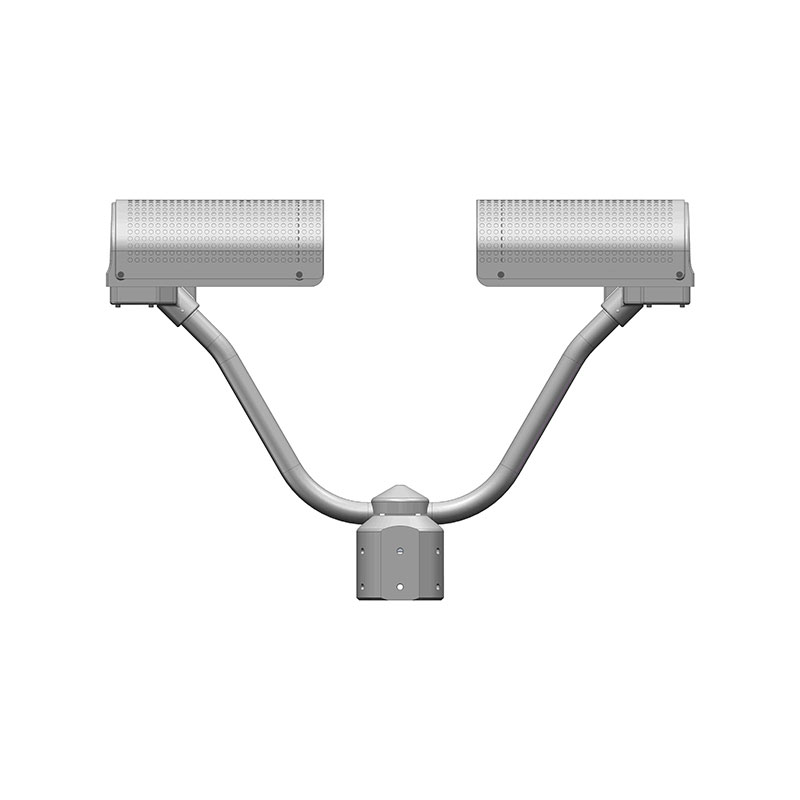
Model:FT-YD1
Brand:tianyi
1.Precipitation weather phenomenon instrument product introduction
Precipitation weather phenomenon instrument can identify weather phenomena and determine rainfall types, such as drizzle, rain, sleet, snow, hail, etc.The Precipitation weather phenomenon instrument is a sensor that automatically and continuously monitors the precipitation particle spectrum and precipitation weather phenomenon.Its working principle is to actively emit infrared light bands, and calculate the spectral distribution of the drop speed and size of precipitation particles by measuring the changes in light energy received when they pass through the light bands, and automatically determine the output precipitation weather phenomenon based on the empirical model of the precipitation particle spectrum.
2.Functional features of the Precipitation weather phenomenon instrument
The Precipitation weather phenomenonon instrument adopts an integrated design, which is small in size and convenient to install; stable performance, accurate data and strong environmental adaptability; the transmitting and receiving ends are covered with a unique splash shield to effectively prevent precipitation particles from splashing into the sampling area; professional application software can be optionally used to receive instrument observation results and display raindrop spectra imagery; standard calibration devices can be optionally equipped.
3.Precipitation weather phenomenon instrument application field
It is suitable for scientific research institutes, artificial weather-affected fields, and can effectively monitor the types of precipitation and provide early warning for disaster prevention and mitigation.
4.Precipitation weather phenomenon instrument technical parameters
| Physical specifications | ||
| Dimensions (length, width, height) | 660mm×450mm×120mm | |
| weight | ≤7kg | |
| Measure performance | ||
| Measurement range | Particle size (liquid) | 0.2~5mm |
| Particle size (solid) | 0.2~25mm | |
| speed | 0.2~20m/s | |
| Measurement error | ±5% (liquid), ±20% (solid) | |
| Particle size distribution | 32 particle size levels, 32 speed levels | |
| Precipitation type | Drizzle, rain, sleet, snow, hail, distinguish intensity | |
| Precipitation type identification accuracy | Automatic recognition rate is greater than 90% | |
| Precipitation intensity | 0~999 mm/h | |
| Weather code (output) | WMO4680 (default), optional WMO4677 or NWS | |
| Weather code output interval | 60s (default), adjustable 10s ~ 60min | |
| Electrical performance | ||
| power supply | DC12~24V | |
| Power consumption | ≤4W@24V (when not heated), ≤80W@24V (when heated) | |
| Communication interface | RS232/RS485 | |
| Environmental adaptability | ||
| Operating temperature | ﹣40~50℃ | |
| Working humidity | 0~100%RH | |
| Storage temperature | ﹣40~50℃ | |
| Storage humidity | 0~100%RH | |
| Protection level | IP65 | |
This fully automated online hydrological monitoring device, based on K-band planar radar technology, can simultaneously measure water level, flow velocity, flow rate, and rainfall. Employing a non-contact measurement method, it is unaffected by silt and sewage corrosion. Its built-in intellige...
Ultrasonic Smart Weather Station integrates multi-element monitoring and uses a fully digital design to achieve accurate perception and real-time transmission of environmental data...
Please note that this is a basic meteorological instrument capable of monitoring only wind speed, wind direction, air temperature and humidity, and air pressure.When equipped with sensors for dust concentration, harmful gases (such as sulfur dioxide, nitrogen oxides), PM2.5, PM10, etc., it becomes a...
Water quality monitoring equipment, centered around sensors for water temperature, pH, dissolved oxygen, and turbidity, can collect and analyze water data in real time. This equipment is widely used in various water environment monitoring applications, including aquaculture, wastewater treatment, reservoirs, rivers, and drinking water sources....


 Get a Free Quote
 Skype
Skype
 whatsapp
 mail
mail