Tianyi Sensor IOT Technology Co., Ltd
Sales Manager:Ms. Emily Wang
Cel,Whatsapp,Wechat:+86 15898932201
Email:info@fengtutec.com
Add:No. 155 Optoelectronic Industry Accelerator, Gaoxin District, Weifang, Shandong, China


Sales Manager:Ms. Emily Wang
Cel,Whatsapp,Wechat:+86 15898932201
Email:info@fengtutec.com
Add:No. 155 Optoelectronic Industry Accelerator, Gaoxin District, Weifang, Shandong, China
time:2025-11-17 11:23:18 source:Weather Station viewed:409 time
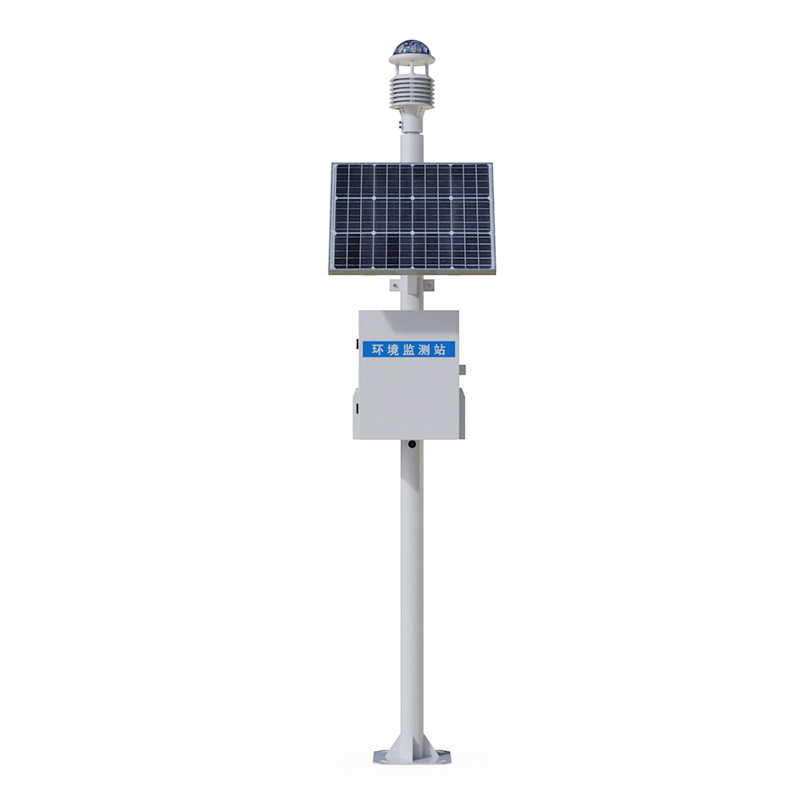
Ultrasonic Smart Weather Station integrates multi-element monitoring and uses a fully digital design to achieve accurate perception and real-time transmission of environmental data
Ultrasonic Smart Weather Station—a professional-grade weather station capable of measuring multiple meteorological parameters—is becoming the "nerve ending" of smart cities and environmental monitoring thanks to its revolutionary design.
Traditional meteorological equipment relies on independent mechanical sensors, while this product's revolutionary nature stems from its highly integrated design concept. It employs a multi-data acquisition device integrated design, condensing the monitoring functions of numerous environmental parameters such as wind speed, wind direction, temperature and humidity, noise, PM2.5 and PM10, atmospheric pressure, and light intensity into a compact body. This high degree of integration not only results in a sleek appearance but also brings the significant advantage of easy installation, allowing deployment in almost any location where data is needed, greatly expanding the coverage density of the monitoring network.
Its core wind measurement technology completely abandons mechanical principles. It uses ultrasonic principles for measurement, with no angle limitations, providing 360° omnidirectional coverage, and simultaneously acquiring wind speed and direction data. By calculating the minute time difference of ultrasonic waves propagating through the air, it can instantly sense even the weakest gusts of wind. With no moving parts, it fundamentally solves the inherent drawbacks of mechanical sensors, such as susceptibility to wear and freezing, and high starting wind speeds. This technological approach endows it with a series of outstanding features, including a wide measurement range, excellent linearity, and superior waterproof performance.
At the heart of the data processing, it adheres to a fully digital design. Utilizing advanced digital signal processing technology, it ensures stable and rapid data transmission, reduces errors, and improves data accuracy. The analog signals collected by the sensor are converted into precise digital signals at the source, minimizing interference during transmission and ensuring data fidelity from the sensing end to the decision-making end. Combined with wireless transmission technologies such as 4G/LoRa, it achieves long-distance remote monitoring capabilities, with data reaching the cloud management platform in real time.
Because of its powerful comprehensive capabilities, it is widely applicable to environmental monitoring. In smart city management, it's not just a "weather station," but a comprehensive environmental monitoring station, providing a unified data foundation for dust control, traffic optimization, and acoustic environment assessment. In agriculture, it guides precision irrigation and pesticide application; in mountainous areas with complex wind farm terrain, it provides reliable wind resource assessments; and in airports and ports, it provides crucial meteorological support for operational safety.
In short, Ultrasonic Smart Weather Station transcends the scope of a single-function device. It is a flexible, multi-dimensional, and reliable environmental sensing system. This silent device is weaving a high-density environmental sensing network with invisible sound waves, providing an indispensable data foundation for building a safer, more efficient, and more livable environment.
Methane, as the main component of natural gas, is widely used in industrial production and urban gas supply. However, its colorless, odorless, flammable and explosive properties make methane leakage a major safety hazard. The handheld Laser methane telemeteris mainly used for long-distance mea...
The COD Analyzer is a professional instrument that uses the potassium dichromate spectrophotometric method to determine the chemical oxygen demand (COD) of water. It is suitable for online monitoring of surface water, groundwater, industrial wastewater, and domestic sewage. The instrument complies with current environmental protection standards and can accurately detect the COD index of various water bodies, providing reliable data support for water quality assessment....
COD Analyzer employs the dichromate method to determine the Chemical Oxygen Demand (COD) in water bodies. Its measurement range covers selectable options of 0–200 mg/L, 0–500 mg/L, and 0–1000 mg/L. The indicated value error is ≤ ±3%, the detection limit is 10 mg/L, and the repeatability i...
A propeller flow meter is a contact-type water flow velocity measuring instrument. Its working principle is that water flow pushes the instrument's propeller to rotate around an axis, and there is a definite functional relationship, usually linear, between the rotational speed of the propeller a...


 Skype
Skype
 whatsapp
 mail
mail