Tianyi Sensor IOT Technology Co., Ltd
Sales Manager:Ms. Emily Wang
Cel,Whatsapp,Wechat:+86 15898932201
Email:info@fengtutec.com
Add:No. 155 Optoelectronic Industry Accelerator, Gaoxin District, Weifang, Shandong, China


Sales Manager:Ms. Emily Wang
Cel,Whatsapp,Wechat:+86 15898932201
Email:info@fengtutec.com
Add:No. 155 Optoelectronic Industry Accelerator, Gaoxin District, Weifang, Shandong, China
time:2025-10-13 08:59:22 source:Weather Station viewed:356 time
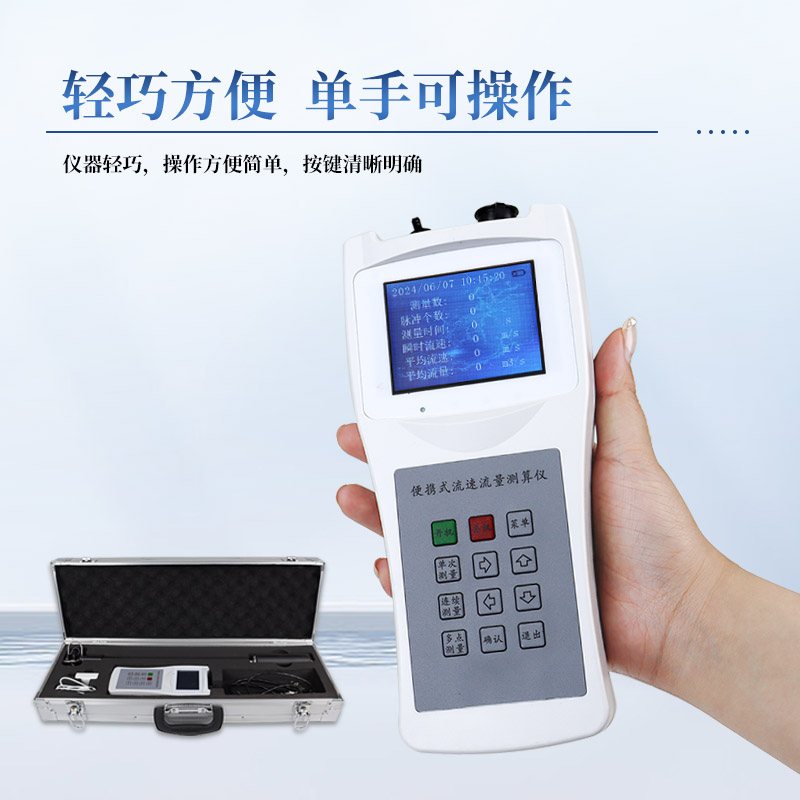
A propeller flow meter is a contact-type water flow velocity measuring instrument. Its working principle is that water flow pushes the instrument's propeller to rotate around an axis, and there is a definite functional relationship, usually linear, between the rotational speed of the propeller and the water flow velocity.
The instrument mainly consists of the following components:
Propeller (rotor): A spiral blade component that rotates under the impact of water flow.
Sensor: Used to detect the rotation of the propeller, typically using magnetoelectric, photoelectric, or reed switch methods to convert rotational signals into electrical pulse signals.
Tail fin: Installed at the rear of the body to keep the instrument aligned with the water flow direction at all times.
Signal cable: Transmits electrical pulse signals to the data processing unit.
Counter (data processing unit): Receives, records, and processes pulse signals, calculates and displays real-time flow velocity and average flow velocity according to preset flow velocity formulas.
When in use, the current meter is placed at a predetermined measurement point in the water using a measuring rod or suspension cable, with the propeller facing the water flow directly. The propeller rotates with the water flow, generating a series of electrical pulses. By counting the number of pulses per unit time and applying the instrument's calibration formula, the counter can calculate the water flow velocity at that point.
Propeller flow meters are mainly used for measuring fixed-point flow velocities in water bodies such as rivers, channels, and pipelines. They are characterized by robust construction, ease of use, and stable measurements, making them commonly used instruments in hydrological surveys, water conservancy projects, and environmental monitoring.
In today's intertwined context of agricultural modernization and ecological conservation needs, dynamic changes in soil moisture directly impact crop growth, water resource utilization, and ecosystem stability. Automatic Soil Monitoring Systems are becoming the link connecting farmland managemen...
The Single Rain Gauge Monitoring Station consists of a stainless steel rain sensor, a data collector, a solar power supply system, and a pole-mounted bracket. It wirelessly transmits rainfall data to a remote monitoring platform, supporting statistical analysis—such as daily and monthly rainf...
The Negative Oxygen Ion Monitoring Station features comprehensive multi-factor monitoring capabilities. It can conduct real-time monitoring of multiple environmental factors simultaneously and flexibly add or remove monitoring items according to actual usage needs, so as to adapt to monitoring requi...
Some enterprises, in order to reduce wastewater treatment costs, secretly discharge untreated sewage directly into the external environment or municipal pipelines through illicitly installed concealed pipes. For example, a company in an industrial park discharged high-concentration phenol-containing...


 Skype
Skype
 whatsapp
 mail
mail