Tianyi Sensor IOT Technology Co., Ltd
Sales Manager:Ms. Emily Wang
Cel,Whatsapp,Wechat:+86 15898932201
Email:info@fengtutec.com
Add:No. 155 Optoelectronic Industry Accelerator, Gaoxin District, Weifang, Shandong, China


Sales Manager:Ms. Emily Wang
Cel,Whatsapp,Wechat:+86 15898932201
Email:info@fengtutec.com
Add:No. 155 Optoelectronic Industry Accelerator, Gaoxin District, Weifang, Shandong, China
time:2025-05-13 09:55:08 source:Weather Station viewed:358 time
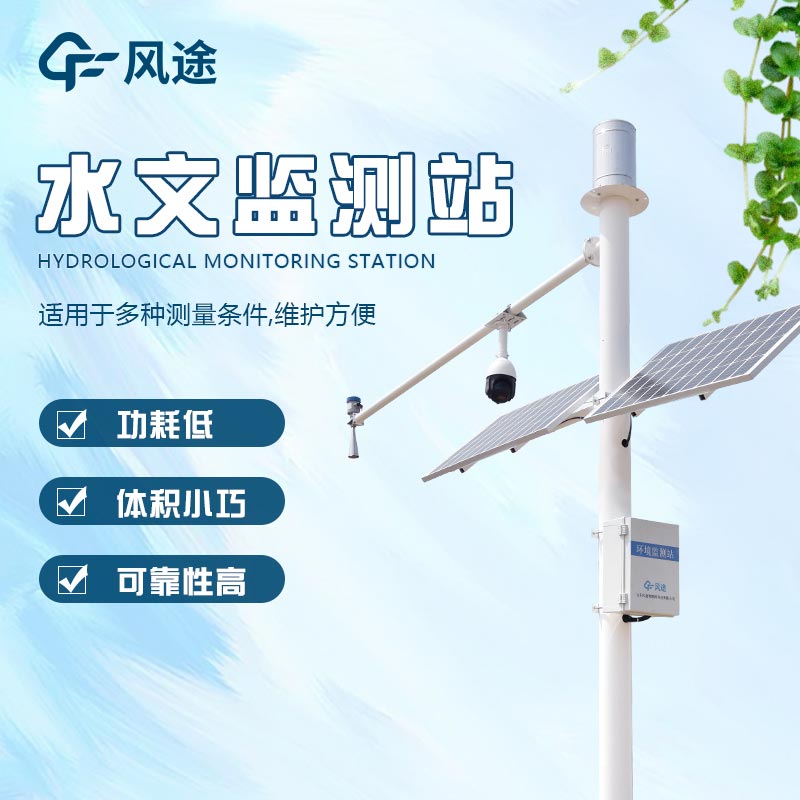
The rain and water conditions refer to the changes in hydrological elements such as rainfall, river and reservoir water levels, and flow rates within a region. They serve as important bases for flood control and disaster reduction as well as water resource management. Measuring the rain and water conditions can provide early warnings of flood disasters, offer data support for the dispatching of water conservancy projects and urban drainage planning, safeguard the safety of people's lives and property, and enable the scientific allocation of water resources.
In traditional rain and water condition measurement, water level gauges and rain gauges are observed manually, or simple mechanical sensors are used to record data. There are problems such as low efficiency, poor real-time performance, and large data errors. With the development of technology, the Water Level Monitoring System has emerged. Taking the FT-SW2 as an example, this system is based on the Internet of Things and sensor technology and is composed of a rainfall sensor, a water level sensor, and a data collection and transmission unit. The rainfall sensor adopts a tipping bucket design and accurately measures the rainfall by counting the number of times the tipping bucket turns. The water level sensor uses the principle of radar ranging to measure the distance from the water surface to the sensor and calculates the water level height. The data collection and transmission unit uploads the information obtained by the sensors to the cloud platform in real time through communication networks such as 4G/NB-IoT.
The advantages of the FT-SW2 Water Level Monitoring System are obvious. Firstly, it has a high degree of automation and can achieve 24-hour uninterrupted monitoring, reducing labor costs and human errors. Secondly, the data transmission is timely, and it supports minute-level data updates to ensure the timeliness of information. Thirdly, it has a remote management function, and managers can view the monitoring data and set the device parameters through mobile phones or computers. Fourthly, it has strong adaptability and can operate stably in harsh environments such as high temperatures, severe cold, and humidity. It is widely applied in various scenarios such as cities, mountainous areas, and rivers.
In the fields of meteorology, environmental monitoring, agriculture, hydrology, transportation, and wind power generation, obtaining high-precision, high-time-resolution meteorological data for small-scale (microscale) areas is crucial. Traditional meteorological observation stations are usually lar...
A Portable Weather Station is a highly integrated automatic field meteorological data collection and transmission device. Essentially, it is a fully functional mobile observation platform capable of rapidly establishing temporary meteorological observation points in areas not covered by conventional...
Water rescue robot is a novel, flat-panel, modular rescue device. It features a split-structure design—comprising an upper power module and a lower section made of soft, anti-collision buoyant material—and is capable of automatically righting itself if capsized. With a top speed of 48 km/h a...
In the daily operation and maintenance of photovoltaic power plants, testing equipment is a key tool to ensure power generation efficiency and system stability. Among them, the EL detector and I-V Curve Tracer are two widely used professional devices that evaluate the performance of photovoltaic mod...


 Skype
Skype
 whatsapp
 mail
mail