Tianyi Sensor IOT Technology Co., Ltd
Sales Manager:Ms. Emily Wang
Cel,Whatsapp,Wechat:+86 15898932201
Email:info@fengtutec.com
Add:No. 155 Optoelectronic Industry Accelerator, Gaoxin District, Weifang, Shandong, China


Sales Manager:Ms. Emily Wang
Cel,Whatsapp,Wechat:+86 15898932201
Email:info@fengtutec.com
Add:No. 155 Optoelectronic Industry Accelerator, Gaoxin District, Weifang, Shandong, China
time:2025-09-24 09:06:59 source:Weather Station viewed:340 time
Traditional air quality monitoring stations (national and provincial control points) use extremely sophisticated and expensive equipment, resulting in very high construction and operational costs. Consequently, a city typically has only a handful of such stations. Due to the limited number of stations, when a national control point indicates rising pollution levels, it is difficult to determine the direction from which the pollution is coming or identify the specific enterprise or area responsible for the emissions. This poses significant challenges for environmental protection departments in conducting precise law enforcement and implementing effective governance measures.
To address these issues, the Air Quality Monitoring Station was developed.
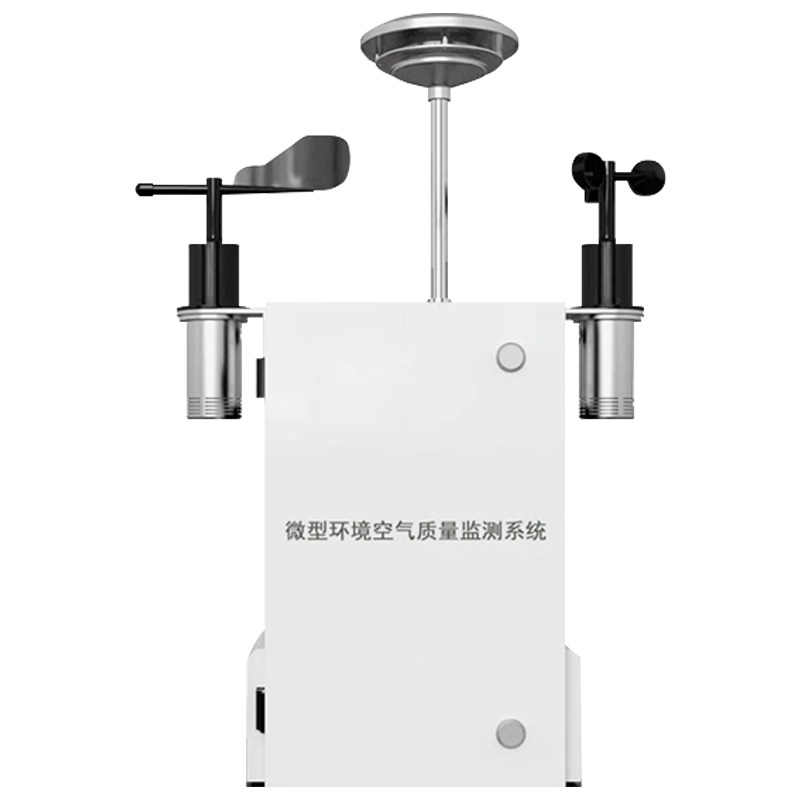
The Air Quality Monitoring Station is a high-density, low-cost, real-time dynamic air quality monitoring network.
Urban areas are divided into numerous grids according to specific standards (e.g., 1km × 1km), with a miniature air quality monitoring station installed in each grid, forming a dense monitoring "sky net" covering the entire area.
These devices are small in size, low in cost (typically one hundredth or even one thousandth of traditional stations), and flexible to install (can be mounted on streetlights, utility poles, or building exteriors).
The main monitoring parameters include six basic pollutants: PM2.5, PM10, SO₂, NO₂, CO, O₃, as well as meteorological parameters such as temperature, humidity, wind speed, and wind direction. Real-time data is continuously transmitted to cloud data centers via wireless network technologies such as 4G/5G and NB-IoT. The platform aggregates data from all grid points for cleaning, calibration, and integration.
Although the overall data accuracy is not as high as that of national standard stations, its advantages lie in trend monitoring and horizontal comparison, which can accurately reflect the relative levels of pollution and their variation patterns.
Through the Air Quality Monitoring Station, it is possible to quickly identify "hotspot grids" with the highest pollution concentrations. Environmental law enforcement personnel can then go directly to the scene to accurately investigate and punish enterprises discharging pollutants in violation of regulations, barbecue stalls, construction site dust, and other pollution sources, enabling "precision-targeted" law enforcement.
The standout advantage of the Portable Weather Station is its "portability," a feature directly reflected in its name. Compared with traditional fixed meteorological monitoring equipment, it has a significantly smaller size and lighter weight, with its overall design fully considering the...
Although traditional mechanical wind speed and direction meters have, to some extent, met basic requirements, they have limitations in terms of accuracy, response speed, and reliability. With the advancement of technology, the 3D Ultrasonic Anemometer based on the time - difference method has been d...
The Weather Station Monitoring System is an important component of the overall environmental monitoring system. It is mainly used for real-time and continuous monitoring and data collection of various meteorological elements and related pollutants in the atmospheric environment, providing scientific...
Agricultural meteorological disasters pose enormous threats to agricultural production. During droughts, prolonged water shortage causes soil to dry out, stunting or even killing crops. In severe cases, large-scale crop failures or even total harvest losses occur, with scenes of cracked land and no...


 Skype
Skype
 whatsapp
 mail
mail