Tianyi Sensor IOT Technology Co., Ltd
Sales Manager:Ms. Emily Wang
Cel,Whatsapp,Wechat:+86 15898932201
Email:info@fengtutec.com
Add:No. 155 Optoelectronic Industry Accelerator, Gaoxin District, Weifang, Shandong, China


Sales Manager:Ms. Emily Wang
Cel,Whatsapp,Wechat:+86 15898932201
Email:info@fengtutec.com
Add:No. 155 Optoelectronic Industry Accelerator, Gaoxin District, Weifang, Shandong, China
time:2025-09-23 08:59:55 source:Weather Station viewed:288 time
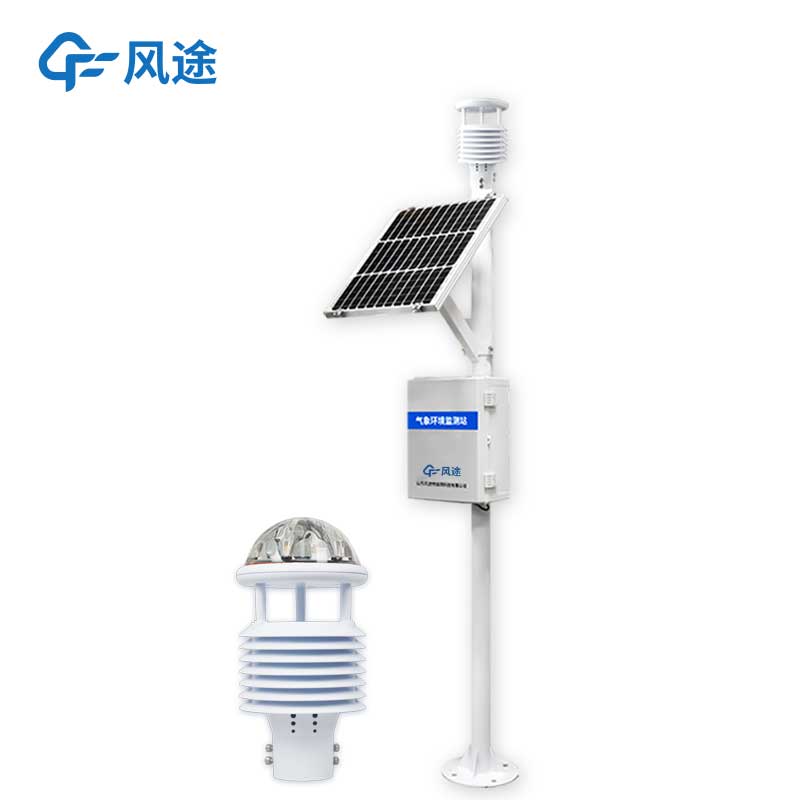
An ultrasonic weather station is a highly integrated meteorological monitoring device that utilizes modern ultrasonic detection technology. It emits ultrasonic waves and measures changes in their propagation speed through the air to accurately calculate wind speed and direction, completely eliminating issues associated with traditional mechanical anemometers, such as wear of rotating parts, inertial errors, and startup thresholds.
The core advantage of this type of weather station lies in its highly integrated design. In addition to basic wind speed and direction monitoring, it typically integrates various sensors for temperature, humidity, atmospheric pressure, rainfall, light intensity, and other meteorological elements, enabling synchronous monitoring of multiple parameters. It can also be expanded to monitor air quality parameters such as PM2.5 and PM10, forming a comprehensive environmental monitoring platform.
The device adopts a low-power design and, when combined with a solar power system and energy storage batteries, can achieve long-term unmanned operation in the field. The housing is often made of corrosion-resistant materials with a protection rating of IP65 or higher, allowing it to withstand various harsh environmental conditions. For data transmission, it supports multiple methods such as GPRS, 4G, and Bluetooth, facilitating integration into IoT platforms for remote monitoring and data analysis.
Ultrasonic weather stations are widely used in various fields, including meteorological observation, agricultural cultivation, forestry monitoring, environmental protection, ocean observation, and operations at airports and ports. Their characteristics—easy installation, low maintenance requirements, and high measurement accuracy—make them essential tools in modern meteorological and environmental monitoring, providing accurate and reliable meteorological data support for various industries.
Vehicle-mounted weather instrument is a high-precision meteorological monitoring device designed for mobile platforms such as vehicles and ships. It can measure environmental temperature, relative humidity, wind speed, wind direction, atmospheric pressure, and piezoelectric rainfall data in real time....
A weather phenomenon sensor is an optical measuring instrument that uses the forward scattering principle. It emits an infrared pulse beam into the atmosphere and receives the scattering signals from aerosol particles, calculating the extinction coefficient to determine the visibility value. T...
Cultural relics carry the memories of human civilization and are precious non-renewable resources. Meteorology, as an important part of the natural environment, has an intricate connection with the protection of cultural relics.Meteorological conditions are directly related to the preservation...
Present weather and visibility sensor is a professional meteorological observation device based on the forward scattering principle. It calculates real-time visibility by measuring the total extinction coefficient of the air, enabling automated identification and recording of weather phenomena...


 Skype
Skype
 whatsapp
 mail
mail