Tianyi Sensor IOT Technology Co., Ltd
Sales Manager:Ms. Emily Wang
Cel,Whatsapp,Wechat:+86 15898932201
Email:info@fengtutec.com
Add:No. 155 Optoelectronic Industry Accelerator, Gaoxin District, Weifang, Shandong, China


Sales Manager:Ms. Emily Wang
Cel,Whatsapp,Wechat:+86 15898932201
Email:info@fengtutec.com
Add:No. 155 Optoelectronic Industry Accelerator, Gaoxin District, Weifang, Shandong, China
time:2025-09-30 09:06:55 source:Weather Station viewed:384 time
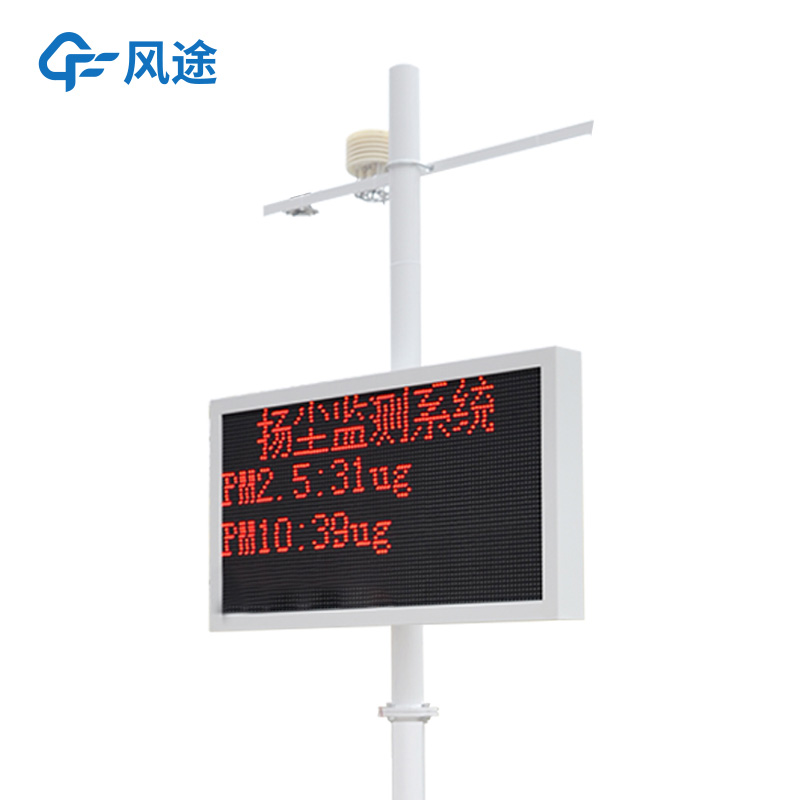
With the rapid advancement of urbanization, construction sites, road works, and material storage yards are scattered across various corners of cities. During construction and operation, these sites inevitably generate environmental pollutants: dust and noise.
A dust detector is an intelligent device capable of monitoring the concentration of particulate matter (such as PM2.5, PM10, and TSP) and noise levels in the environment in real time, continuously, and automatically. It can also transmit data to a monitoring center via wireless networks. These devices are installed in locations requiring environmental monitoring, such as construction sites, urban roads, industrial parks, and ports.
The dust monitoring module primarily employs the laser scattering method. A laser beam inside the instrument irradiates particulate matter in the air, causing the laser to scatter. By measuring the intensity of the scattered light and processing it through algorithms, the number and mass concentration of particulate matter per unit volume can be derived, yielding parameters such as PM2.5 and PM10.
The core of the noise monitoring module is a high-precision microphone (sensor) that captures sound wave vibrations in the air and converts them into electrical signals. The internal circuitry of the instrument processes and analyzes these electrical signals, calculating noise indicators such as the equivalent continuous sound level (Leq) in accordance with international standards (e.g., A-weighted sound level).
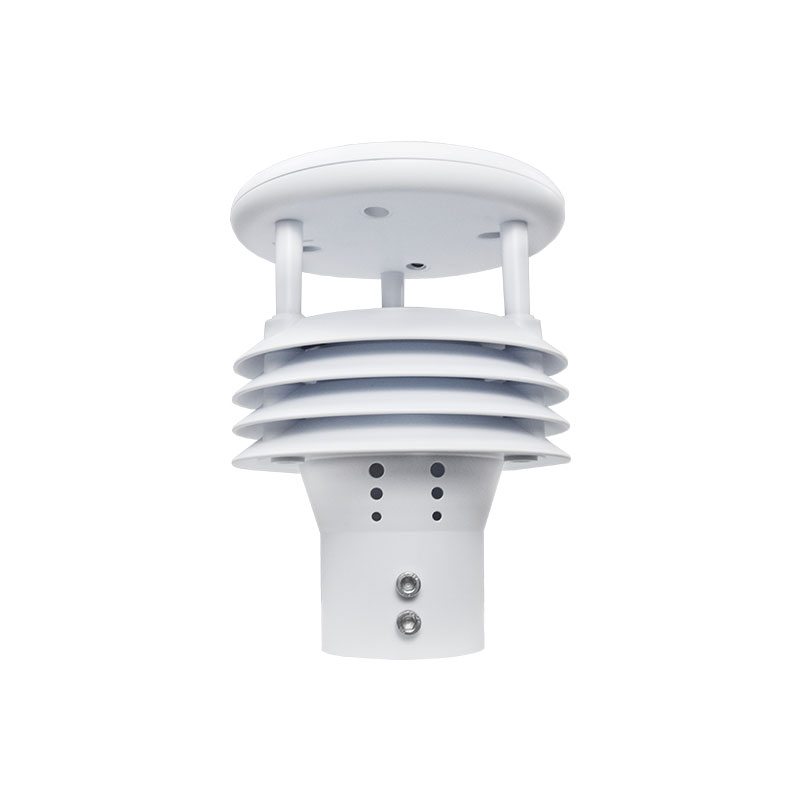
To more comprehensively analyze the diffusion conditions of pollutants, many devices are also equipped with integrated meteorological sensors to monitor wind speed, wind direction, temperature, humidity, atmospheric pressure, and other factors.
For monitoring points without access to grid electricity, solar panels and batteries are provided to achieve energy self-sufficiency.
Built-in 4G/5G or NB-IoT communication modules package the data and automatically upload it to cloud platforms or government regulatory platforms at set intervals (e.g., every 1 minute or 5 minutes).
Handheld weather stations provide convenience for people to obtain meteorological data anytime and anywhere. Among them, mechanical handheld weather stations and ultrasonic handheld weather stations are two common types. What are the differences between them? How should consumers choose?Differences...
You may not know that the occurrence and spread of many plant diseases are related to pathogenic spores. Spores are the reproductive units of fungal pathogens, which are tiny in size and numerous in quantity. They can be widely transmitted through media such as wind, rain, and insects. Once spores l...
Underwater search and rescue robot is a high-performance underwater detection device integrating sonar scanning and high-definition video imaging. It uses sonar for large-area scanning and positioning, combined with high-definition video for detailed observation, providing scanned and 3D views of riverbeds and water bodies. It accurately identifies the outlines and locations of underwater targets and is widely used in underwater surveying and exploration....
Debris flow is a common sudden geological disaster in mountainous areas. Triggered by heavy rains and melting snow and ice, it carries a large amount of solid materials such as sediment and rocks, flowing rapidly with strong impact force and a wide range of destruction. It often causes severe damage...


 Skype
Skype
 whatsapp
 mail
mail