Tianyi Sensor IOT Technology Co., Ltd
Sales Manager:Ms. Emily Wang
Cel,Whatsapp,Wechat:+86 15898932201
Email:info@fengtutec.com
Add:No. 155 Optoelectronic Industry Accelerator, Gaoxin District, Weifang, Shandong, China


Sales Manager:Ms. Emily Wang
Cel,Whatsapp,Wechat:+86 15898932201
Email:info@fengtutec.com
Add:No. 155 Optoelectronic Industry Accelerator, Gaoxin District, Weifang, Shandong, China
time:2026-04-14 11:04:12 source:Weather Station viewed:147 time
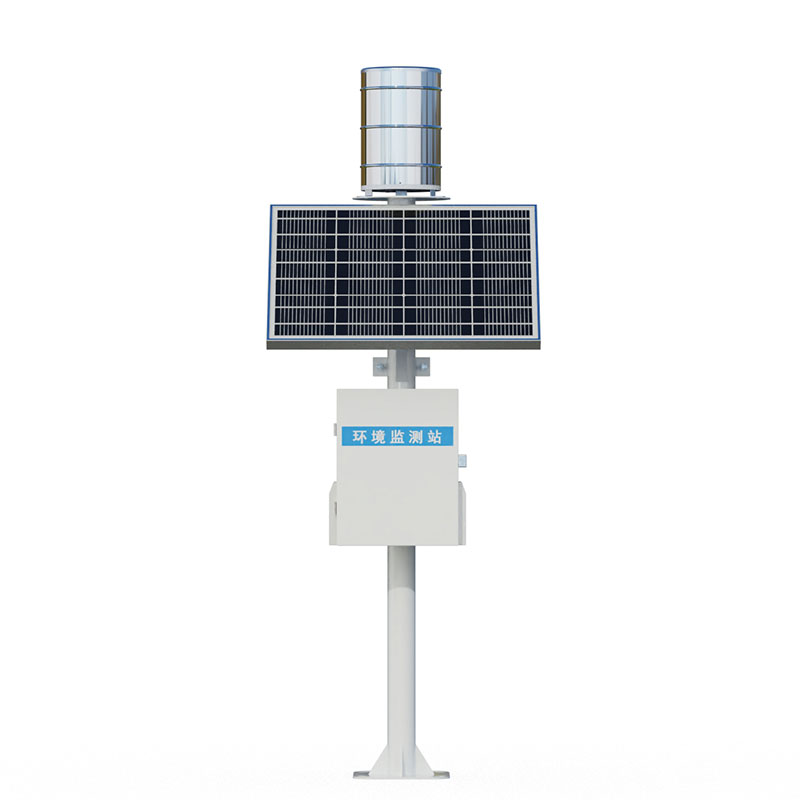
The Single Rain Gauge Monitoring Station consists of a stainless steel rain sensor, a data collector, a solar power supply system, and a pole-mounted bracket. It wirelessly transmits rainfall data to a remote monitoring platform, supporting statistical analysis—such as daily and monthly rainfall totals—as well as data export in Excel format. This system is widely applied in urban drainage management and water conservancy projects.
The Single Rain Gauge Monitoring Station is a modern, automated rainfall monitoring device built upon Internet of Things (IoT) technology. It comprises four main components: a stainless steel rain sensor, a data collector, a solar power supply system, and a pole-mounted bracket. The device features a standard 200mm rain-catching aperture and measures rainfall intensity within a range of 0 to 4 mm/min. It boasts a measurement accuracy of ±0.2 mm and a resolution of 0.2 mm, enabling it to precisely capture real-time fluctuations in rainfall intensity during precipitation events. The low-power data collector consumes less than 1 mA in standby mode. When paired with a 50W solar panel, a 20Ah rechargeable battery, and MPPT (Maximum Power Point Tracking) technology, the system ensures continuous operation even during prolonged periods of overcast or rainy weather. Furthermore, it is designed to operate reliably across a wide environmental temperature range of -40°C to +60°C. The stainless steel protective enclosure features an IP66 ingress protection rating, offering excellent corrosion resistance and anti-oxidation properties, making it ideal for long-term outdoor deployment.
The core function of the Single Rain Gauge Monitoring Station is to wirelessly transmit collected rainfall data to a remote monitoring platform. The device comes standard with GPRS wireless transmission capabilities, with options to expand support for other communication protocols such as 4G and NB-IoT. Users can access the IoT platform to view real-time rainfall data and historical records. The reported data includes current rainfall status, rainfall accumulation during each sampling interval, as well as daily, weekly, monthly, and annual rainfall totals. The cloud-based platform allows for custom configuration of the daily data cutoff time and the setting of daily rainfall alarm thresholds; should real-time rainfall exceed a preset threshold, the system automatically sends an SMS alert to a designated mobile phone number. Data from the platform can be directly exported as Excel spreadsheets, enabling users to download the information locally for further analysis and processing.
In terms of application scenarios, the Single Rain Gauge Monitoring Station is extensively utilized in urban drainage systems, water conservancy projects, and natural disaster early warning systems. Within urban drainage systems, monitoring equipment deployed in flood-prone areas provides real-time data on rainfall intensity, serving as a crucial data foundation for the operational scheduling of drainage pump stations. In the field of water conservancy engineering, these monitoring stations can be utilized to track rainfall in the upstream catchments of reservoirs; by integrating this data with water level readings, they enable a coordinated rainfall-water level early warning system, thereby providing a solid basis for reservoir scheduling and flood control decision-making. Regarding natural disaster early warning, the equipment is capable of detecting potential hazards triggered by torrential rains in advance, thereby gaining critical time for the evacuation of personnel and the implementation of emergency response measures. Furthermore, these monitoring stations are widely deployed across various settings—including meteorological and hydrological stations, agricultural and forestry sites, highways, airports, and seaports. They serve a dual purpose: providing meteorological agencies with raw data—such as precipitation intensity and duration—while simultaneously offering real-time rainfall references to support flood control operations and reservoir water management.
In underground coal mine operations, ensuring the safety of personnel and the smooth progress of work is of great significance. The industrial product, the Toxic gas detector, as a safety detection device, shoulders the important responsibility of safeguarding the safety of the mine. It can accurate...
How to solve the problems of water pollution and water quality deterioration? Traditional manual sampling is time-consuming and lagging, but now there is a more efficient solution - the Water Quality Monitoring Buoy!As a key piece of equipment for water environment monitoring, its development precis...
Agricultural meteorological disasters pose enormous threats to agricultural production. During droughts, prolonged water shortage causes soil to dry out, stunting or even killing crops. In severe cases, large-scale crop failures or even total harvest losses occur, with scenes of cracked land and no...
Audio and video life detection device is an emergency rescue device integrating audio acquisition and video imaging functions. It obtains images, sounds, and infrared thermal images of trapped individuals through a rotatable probe. The device supports a 180-degree observation range, offering good visibility, high reliability, and ease of operation, making it suitable for rapid search and rescue operations in earthquakes, landslides, building collapses, and other scenarios....


 Skype
Skype
 whatsapp
 mail
mail