Tianyi Sensor IOT Technology Co., Ltd
Sales Manager:Ms. Emily Wang
Cel,Whatsapp,Wechat:+86 15898932201
Email:info@fengtutec.com
Add:No. 155 Optoelectronic Industry Accelerator, Gaoxin District, Weifang, Shandong, China


Sales Manager:Ms. Emily Wang
Cel,Whatsapp,Wechat:+86 15898932201
Email:info@fengtutec.com
Add:No. 155 Optoelectronic Industry Accelerator, Gaoxin District, Weifang, Shandong, China
time:2025-11-05 08:51:03 source:Weather Station viewed:468 time
TianYi® EL Detector [Model: FT-EL1] Partial Parameters:
Detectable Defect Types: Cracks, broken cells, fragments, broken grids, black core, poor soldering, process contamination, low-efficiency cells, black edge, over-firing, over-etching, perforations.
Camera: 20-megapixel; Resolution: 4496 x 3000; Sensor: 23.6x15.6mm CMOS.
Detection Area: 3000mm * 2000mm.
Lens: 18-55mm.
Mount: Integrated mount, 1.85-meter aluminum alloy stand.
Weight: 5kg.
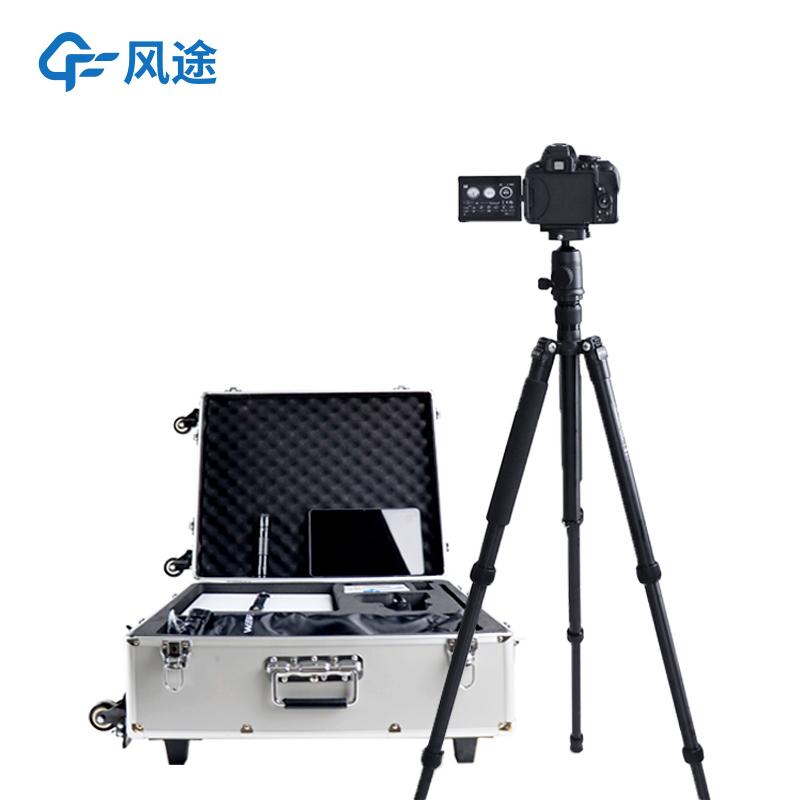
During the long-term operation of photovoltaic (PV) power generation systems, solar cells may develop internal damage due to material defects, manufacturing process issues, or external stress, leading to issues such as micro-cracks, cell fragments, and PID effects. These defects are often invisible in their initial stages but can reduce the power generation efficiency and long-term reliability of the cells. To ensure the quality and performance of PV modules, effective detection methods must be employed during both the production process and power station operation and maintenance. Electroluminescence (EL) imaging technology has emerged as a crucial method developed to address this need.
The EL detector is a professional diagnostic device that operates based on the principle of electroluminescence. The principle is as follows: a forward bias voltage is applied to the PV module, injecting non-equilibrium carriers. This prompts electron-hole recombination within the cell, releasing energy in the form of photons and generating near-infrared light with a wavelength of 1100-1200 nanometers. Since the luminescence intensity is directly related to minority carrier lifetime and current density, areas with defects exhibit reduced recombination efficiency, appearing as dark spots or areas of abnormal brightness in the captured image. This allows for the diagnosis of potential defects within the PV module.
The equipment consists of four main systems:
The Excitation Source Unit is responsible for providing an adjustable DC bias power supply, enabling the module to operate in a non-grid-connected state.
The Optical Acquisition Unit includes a high-sensitivity CCD or CMOS camera sensitive to the near-infrared spectrum, coupled with a specific optical lens.
The Image Processing System utilizes specialized algorithms to enhance the signal-to-noise ratio and analyze image features.
The Structural Mount is designed as either a mobile or fixed installation structure, depending on the application scenario.
Regarding the functions of the EL detector, its primary role is defect identification. It can precisely detect micro-defects such as dislocations and cracks within the silicon material, broken grids and poor soldering at printed grid lines, and leakage channels at the cell edges. Secondly, it enables quality grading by analyzing the uniformity of the EL image and defect density, allowing for the classification of cells and modules into different quality grades. Finally, it provides operational support by conducting pre-installation inspections during the power station construction phase and performing regular checks for issues like hot spots and power degradation during operation, thereby providing a basis for system maintenance.
The detection capability of the equipment is influenced by several parameters. The quantum efficiency of the camera determines the signal acquisition capability, while the spatial resolution directly affects the accuracy of defect identification. The detection speed needs to match the production line cycle rate. In terms of environmental adaptability, measures to shield ambient light and control the operating temperature of the module are necessary, as the electroluminescence intensity exhibits a negative temperature coefficient characteristic.
Scenic areas pay particular attention to negative oxygen ions because the concentration of negative oxygen ions is an important indicator for measuring the quality of air and the ecological environment. Negative oxygen ions have the functions of purifying the air, improving cardiopulmonary function,...
I. Product IntroductionOur company is a professional manufacturer of meteorological sensors. We have been focusing on the research and development, as well as the production of various meteorological sensors, and also provide meteorological environment solutions. The company has a complete productio...
With the advancement of environmental science research toward refinement, traditional large-scale air monitoring stations suffer from low distribution density and limited coverage, making it difficult to capture air quality differences in small-scale areas such as urban functional zones and around p...
Road Weather Sensors is a professional optical instrument that estimates meteorological optical range by measuring the scattering intensity of light particles in the atmosphere. This device monitors the concentration of particles such as smoke, dust, haze, and fog, converting the atmospheric extinction coefficient into visibility data. It is widely used in meteorological monitoring, traffic management, and maritime applications....


 Skype
Skype
 whatsapp
 mail
mail