Tianyi Sensor IOT Technology Co., Ltd
Sales Manager:Ms. Emily Wang
Cel,Whatsapp,Wechat:+86 15898932201
Email:info@fengtutec.com
Add:No. 155 Optoelectronic Industry Accelerator, Gaoxin District, Weifang, Shandong, China


Sales Manager:Ms. Emily Wang
Cel,Whatsapp,Wechat:+86 15898932201
Email:info@fengtutec.com
Add:No. 155 Optoelectronic Industry Accelerator, Gaoxin District, Weifang, Shandong, China
time:2026-04-30 11:25:44 source:Weather Station viewed:79 time
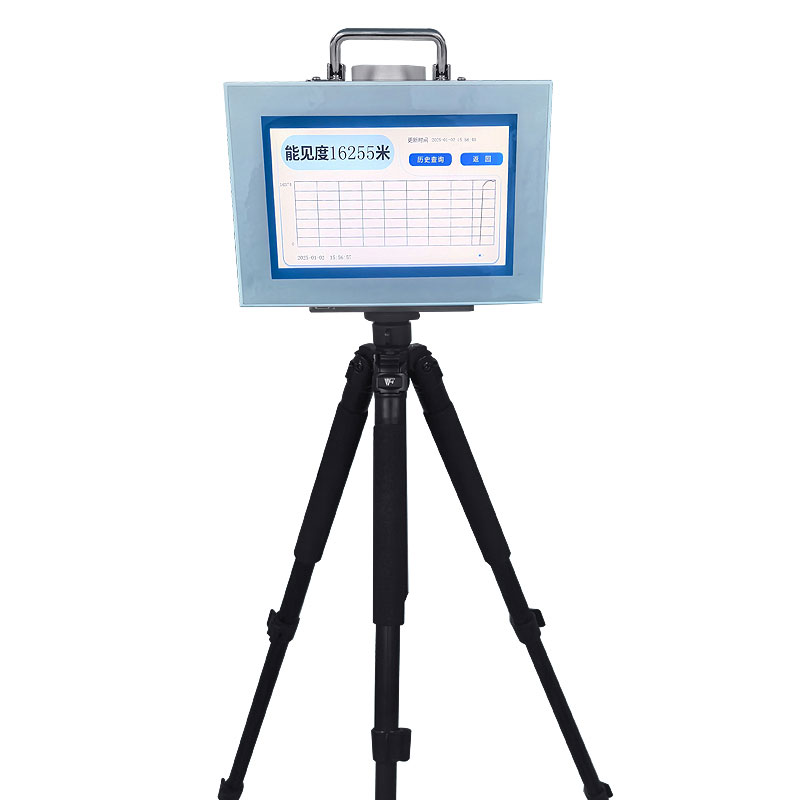
The Visibility sensor utilizes the forward-scatter method to measure the total atmospheric extinction coefficient. With a measurement range of up to 20 kilometers, it features segmented error calibration and is designed for use in road traffic management, meteorological observation, and emergency response sectors.
The Visibility sensor is a professional optical measurement device operating on the principle of forward scattering. By continuously monitoring the intensity of light scattered by aerosol particles suspended in the atmosphere, it calculates the total atmospheric extinction coefficient to determine the current Meteorological Optical Range (MOR). The device consists of three primary components: a light transmitter, a light receiver, and a microprocessor-based controller. The transmitter emits near-infrared light pulses; these pulses are scattered by suspended atmospheric particles and subsequently captured by the receiver. The processor then converts the received scattered signals into a visibility value for output. Compared to traditional transmissometer-style visibility sensors, the forward-scatter detector does not require the establishment of a long-distance optical path. Consequently, it imposes fewer constraints on installation sites, making it particularly well-suited for deployment in space-constrained environments—such as meteorological stations, along highways, near airport runways, and aboard large vessels.
In terms of technical performance, the Visibility sensor boasts a maximum measurement range of 20 kilometers and a minimum display resolution of 1 meter. Specific measurement accuracy requirements are defined for different range segments: for ranges within 2 kilometers, the measurement error does not exceed ±2%; for ranges between 2 and 10 kilometers, the error does not exceed ±5%; and for ranges exceeding 10 kilometers, the error does not exceed ±10%. The device features an industrial-grade, integrated opto-mechanical design; its housing offers excellent resistance to water, dust, and corrosion. Furthermore, it incorporates a built-in lens contamination detection function that automatically monitors the cleanliness of the optical windows during continuous 24-hour operation. Should any contamination be detected, the system issues a maintenance alert, thereby ensuring the long-term stability and reliability of measurements. The unit maintains low overall power consumption and supports dual power supply modes—solar energy and battery power—making it ideally suited for long-term operation in remote locations and at unmanned monitoring stations.
The accurate measurement of visibility holds significant practical value across a wide array of sectors, including power supply management, telecommunications engineering, and industrial and agricultural production. In transportation sectors—including aviation, maritime navigation, and highways—the real-time data output by the Visibility sensor provides drivers and operational managers with critical information regarding environmental safety. Furthermore, in fields such as meteorological research, urban air quality improvement, and the monitoring and mitigation of dust storms, this instrument records the core optical parameters required to retrieve particulate matter concentrations; it also serves as a fundamental source of observational data essential for analyzing the causes of atmospheric pollution and evaluating the effectiveness of smog control measures.
A miniature sensor is a highly integrated meteorological monitoring device. By integrating multiple miniaturized sensors and processing units, it can realize real-time monitoring and data collection of multiple meteorological elements. The device typically integrates core components such as temperat...
The Eleven - element Photovoltaic weather station is a meteorological monitoring device used in the field of distributed photovoltaic power generation, capable of real - time monitoring of multiple meteorological elements:Scheme 1: Wind speed + Wind direction + Average wind speed + Temperature + Hum...
In the photovoltaic field, the I-V Curve Tracer is a core device used to measure and evaluate the electrical performance of solar cells and modules. The "IV" in its name stands for Current-Voltage. This instrument accurately plots the volt-ampere characteristic curve of the measured object...
The operation of air quality monitoring stations relies on a comprehensive grid-based environmental supervision system. This system takes towns, communities (and villages) in cities as basic units, and divides them into air pollution prevention and control management grids according to different lev...


 Skype
Skype
 whatsapp
 mail
mail