Tianyi Sensor IOT Technology Co., Ltd
Sales Manager:Ms. Emily Wang
Cel,Whatsapp,Wechat:+86 15898932201
Email:info@fengtutec.com
Add:No. 155 Optoelectronic Industry Accelerator, Gaoxin District, Weifang, Shandong, China


Sales Manager:Ms. Emily Wang
Cel,Whatsapp,Wechat:+86 15898932201
Email:info@fengtutec.com
Add:No. 155 Optoelectronic Industry Accelerator, Gaoxin District, Weifang, Shandong, China
time:2026-04-27 11:42:28 source:Weather Station viewed:5 time
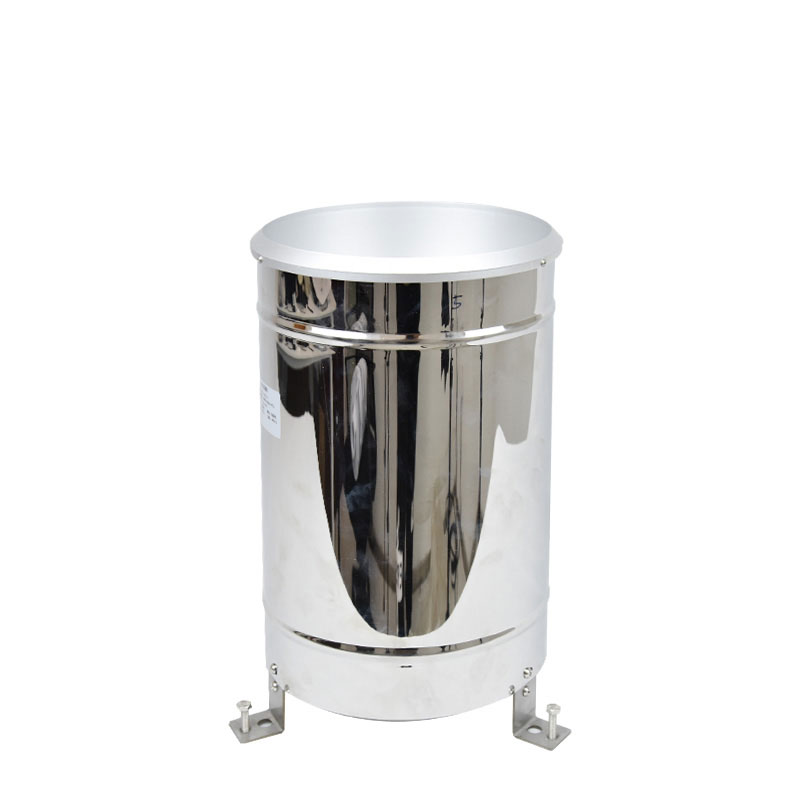
rainfall measuring equipment is a high-precision rainfall observation instrument that measures precipitation using a tipping-bucket mechanism. It features a rain-catching aperture with a diameter of Φ200 mm, a resolution of 0.2 mm, and a measurement error not exceeding ±2%. Capable of digitally outputting real-time rainfall data, it is compatible with RS485 interfaces and is widely utilized in the fields of meteorology, hydrology, and agricultural irrigation.
rainfall measuring equipment serves as a primary instrument for precipitation measurement, enabling real-time rainfall observation and converting rainfall volume into digital information—expressed in the form of switch signals—to meet requirements for data transmission, processing, recording, and display. Structurally, rainfall measuring equipment primarily comprises a rain-catching aperture, a filter screen, a diversion funnel, a tipping bucket, a bucket support, tilt adjustment mechanisms, leveling devices, a permanent magnet, a reed switch, and signal output terminals. Its core component is the tipping bucket. The rain-catching aperture adheres to the international standard diameter of Φ200 mm; falling rainwater flows through the diversion funnel into the tipping bucket. Once the accumulated water volume reaches a preset threshold, the bucket tips over due to a shift in its center of gravity, triggering the reed switch to output a pulse signal. During this measurement process, the instrument automatically performs counting and data storage, thereby delivering multiple advantages: accurate time-stamping, automated data recording, and ease of data compilation.
In terms of technical specifications, rainfall measuring equipment features clearly defined measurement ranges and precision metrics. The standard resolution is 0.2 mm, though a 0.5 mm option is also available for user selection. The rainfall intensity range spans from 0 mm to 4 mm/min, with a maximum allowable throughput intensity reaching 8 mm/min. For extended applications, the intensity range can be expanded to 0–10 mm/min, allowing for a maximum throughput intensity of 15 mm/min. The measurement accuracy is ≤±2%, meeting the requirements for Class I accuracy under national standards. The operating environment temperature range is 0°C to 50°C, with a humidity limit of 95% (non-condensing), enabling the instrument to perform stable operations across a wide variety of outdoor climatic conditions. Utilizing the Modbus RS485 communication protocol for data output, the device enables both wired and wireless data transmission to data acquisition systems, remote telemetry units, or cloud platforms. It simultaneously supports a variety of transmission schemes—including GPRS, universal 4G LTE, BeiDou satellite short-message services, and NB-IoT—facilitating the remote, real-time monitoring of rainfall dynamics.
In terms of application, the rainfall measuring equipment is ideally suited for use by various agencies and sectors, including meteorological observatories (stations), hydrological stations, agriculture and forestry departments, land and geological disaster management bureaus, highways, and railways. It is employed to measure precipitation amounts and intensity, as well as to accurately record the precise onset time of rainfall events. Within the field of urban drainage, the device serves to monitor surface water accumulation on roadways and the inflow intensity within pipe networks, thereby providing real-time data essential for urban flood control. Furthermore, when integrated into hydrological station networks, the rainfall measuring equipment can be paired with wireless automated hydrological reporting systems, serving as the core sensor for remote rainfall telemetry and flood warning at dedicated monitoring stations. The instrument's housing is primarily constructed from 304 stainless steel, offering excellent corrosion resistance. The complete unit meets or exceeds IP65 protection standards and supports both solar power supply and low-power operation modes. This robust design ensures stable, maintenance-free operation in complex environmental conditions—including extreme cold, high temperatures, and dusty or windy terrains—thereby providing reliable data support for precise rainfall forecasting, water resource scheduling, and disaster early warning systems.
In today's fast-paced life, people are paying increasing attention to health. Taking leisure vacations at scenic spots has become the first choice for many to relax their minds and bodies and get close to nature. And negative oxygen ions, an invisible yet significant substance in scenic spots, a...
In the process of coal mine production, wind measurement work is of great importance. The space underground in coal mines is relatively enclosed, and there are flammable and explosive substances such as gas and coal dust. Reasonable ventilation can effectively dilute and discharge gas, reduce the ga...
The four key aspects of agriculture, namely soil moisture condition, crop seedling condition, pest and disease condition, and disaster condition, are crucial elements in the agricultural production process. The soil moisture condition reflects the water status of the soil, and an appropriate soil mo...
I. Product IntroductionOur company is a professional manufacturer of meteorological sensors. We have been focusing on the research and development, as well as the production of various meteorological sensors, and also provide meteorological environment solutions. The company has a complete productio...


 Skype
Skype
 whatsapp
 mail
mail