Tianyi Sensor IOT Technology Co., Ltd
Sales Manager:Ms. Emily Wang
Cel,Whatsapp,Wechat:+86 15898932201
Email:info@fengtutec.com
Add:No. 155 Optoelectronic Industry Accelerator, Gaoxin District, Weifang, Shandong, China


Sales Manager:Ms. Emily Wang
Cel,Whatsapp,Wechat:+86 15898932201
Email:info@fengtutec.com
Add:No. 155 Optoelectronic Industry Accelerator, Gaoxin District, Weifang, Shandong, China
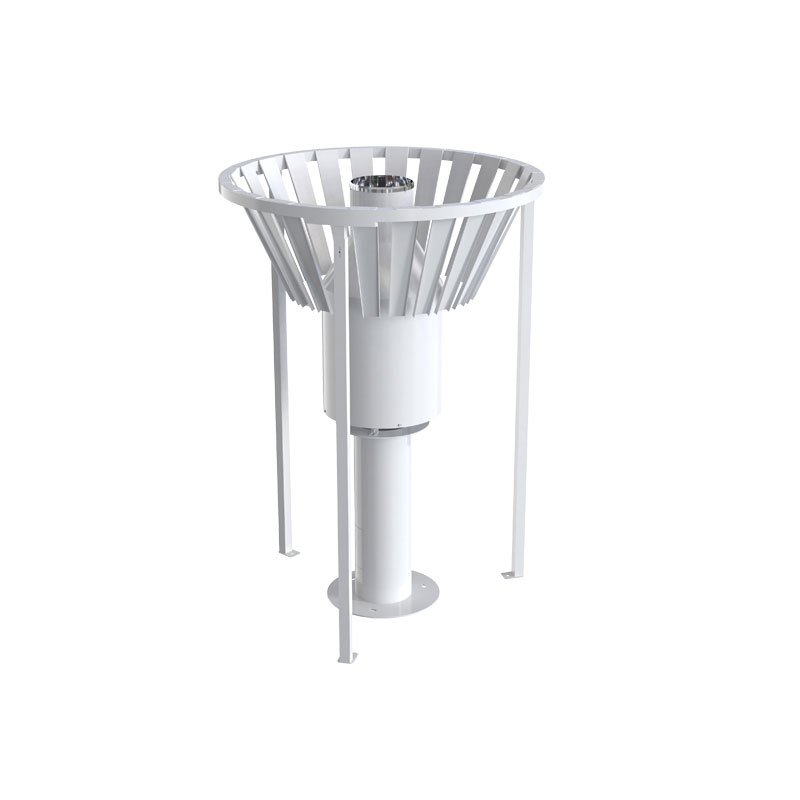
Model:FT-YX1
Brand:tianyi
Weighing Rain Gauge uses weight-based technology to measure rain, snow, sleet and hail and is a tool for accurately measuring precipitation.
Weighing Principle Precipitation Gauge Working Principle: Based on weighing principle technology, Weighing Principle Precipitation Gauge utilizes a high-precision weighing sensor to measure "precipitation increment," enabling monitoring of all types of precipitation, including solid (snowfall), liquid (rainfall), and mixed solid-liquid states (sleet, freezing rain).
Hardware Configuration: Weighing Principle Precipitation Gauge mainly consists of a main control unit, rain inlet, water collector, drainage device, weighing sensor, protective housing, mounting base, and windproof ring.
Complies with national standards:
SL/T 811.4-2021 "Precipitation Observation Instruments" (Water Conservancy Industry Standard for Weighing Rain Gauges) issued by the Ministry of Water Resources of the People's Republic of China.
QX/T 320-2016 "Weighing Precipitation Measuring Instruments" (Meteorological Industry Standard for Weighing Rain Gauges) issued by the China Meteorological Administration.
Power Supply: 10~30V DC
Average Power Consumption:
High-Altitude/Cold-Weather Type: 30W (Equipped with a heating module, DC 12V power supply)
Communication Method:
Pulse Type: The user calculates rainfall over different time periods by acquiring the number of pulse on/off cycles from the rain gauge and based on the gauge's resolution.
RS485 Model: This rain gauge uses the Modbus-RTU protocol and has a built-in clock. It has several pre-defined rainfall programs, including parameters such as "today's rainfall," "minute rainfall," "yesterday's rainfall," "total rainfall," and "rainfall intensity." Users can directly read this rainfall data via RS485.
Resolution: 0.1mm/0.2mm/0.5mm/1mm
Rainfall Intensity Range: 6~1800mm/h
Typical Accuracy:
When rainfall ≤ 10mm, the maximum permissible error is ±0.2mm;
When rainfall > 10mm, the maximum permissible error is ±2%;
Operating Environment: -35℃~+65℃, 0%RH~95%RH (non-condensing)
Weighing Principle Precipitation Gauge Main Control Unit:
Collects real-time data from the weighing sensor.
Converts the acquired weight information into pulse and RS485 output signals.
When the water volume reaches a set threshold, automatically drains the water.
When the ambient temperature is low, controls the heating equipment to prevent icing from rain or snow.
Weighing Principle Precipitation Gauge Rainwater collection opening:
The inner wall depth of the rainwater collection opening is greater than 100mm to ensure that rainwater entering the opening will not splash out.
Inner diameter of the rainwater collection opening: φ200+0.6mm
Acute angle of the cutting edge: 40°~45°
Weighing Principle Precipitation Gauge Rainwater Collector:
Located below the rain inlet, the rainwater collector collects rainwater and is a cylindrical structure made of stainless steel.
The default capacity of the rainwater collector is 28L, and it supports automatic drainage controlled by a main control unit.
Weighing Principle Precipitation Gauge Drainage Device:
When the water level reaches 80% of the collector's capacity, the drainage device activates and automatically drains the water.
The drainage process lasts approximately 1 minute. Rainfall is not measured during drainage. After drainage, approximately 1-2 liters of liquid will remain in the collector.
Because the antifreeze mixes with the rainwater, some antifreeze will be discharged during the process. If drainage occurs in winter, replace the antifreeze.
The evaporation inhibitor oil, due to its low density, floats on the surface of the liquid and will not be automatically discharged with the liquid.
Weighing Principle Precipitation Gauge Weighing Sensor:
The weighing component uses a piezoelectric weighing sensor to sense pressure changes, converting the increase in precipitation into a corresponding precipitation output.
The weighing sensor adopts a closed structure and a load-bearing weighing method.
Weighing Principle Precipitation Gauge Protective Housing:
The protective housing protects the precipitation weighing unit and precipitation data processing unit, among other components.
The housing is made of stainless steel with a white matte anti-salt spray corrosion coating.
The housing's "U"-shaped design serves to protect against wind, reduce evaporation, and increase precipitation capture.
Weighing Principle Precipitation Gauge Mounting Base:
The mounting base facilitates installation and removal and provides a certain degree of protection for the load cell, drainage device, and main control unit.
The mounting base should be sturdy and reliable, and ideally have vibration damping and leveling functions.
It should be made of stainless steel with a white matte anti-salt spray corrosion coating.
Weighing Principle Precipitation Gauge Windproof Ring:
The windproof ring consists of a circular frame, a T-shaped bracket, and a windshield panel. The surface is coated with a white matte, salt spray-resistant coating.
In sites requiring solid precipitation monitoring, it is advisable to install a windproof ring on the weighing rain gauge.
This fully automated online hydrological monitoring device, based on K-band planar radar technology, can simultaneously measure water level, flow velocity, flow rate, and rainfall. Employing a non-contact measurement method, it is unaffected by silt and sewage corrosion. Its built-in intellige...
Water Quality Monitor Equipment consists of an analytical testing unit comprised of sensors for residual chlorine, pH, water temperature, turbidity, and conductivity. It can be widely used for online water quality monitoring in scenarios such as waterworks, water supply networks, secondary water sup...
With the vigorous development of smart agriculture, the four aspects of agricultural condition monitoring have become a key driver in advancing the modernization of agriculture. So, what exactly are these four aspects of agricultural condition monitoring in smart agriculture? In fact, they include s...
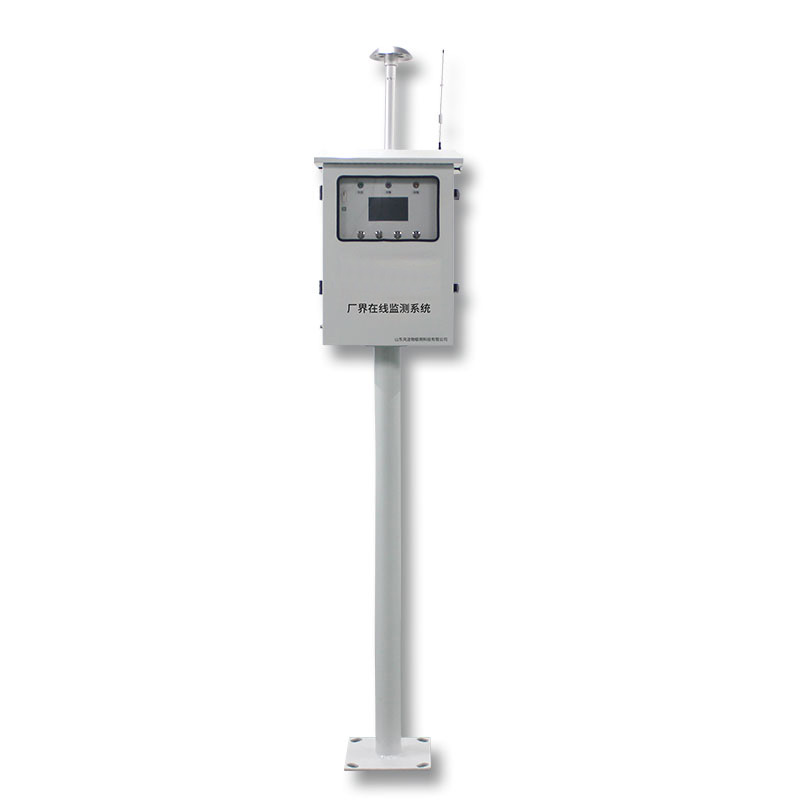
Currently, traditional environmental monitoring methods have some limitations: mainly point-based monitoring with scattered distribution, few online monitoring points, difficulty in accurately tracing pollution sources, and high cost of traditional air automatic monitoring stations. Therefore, the c...


 Get a Free Quote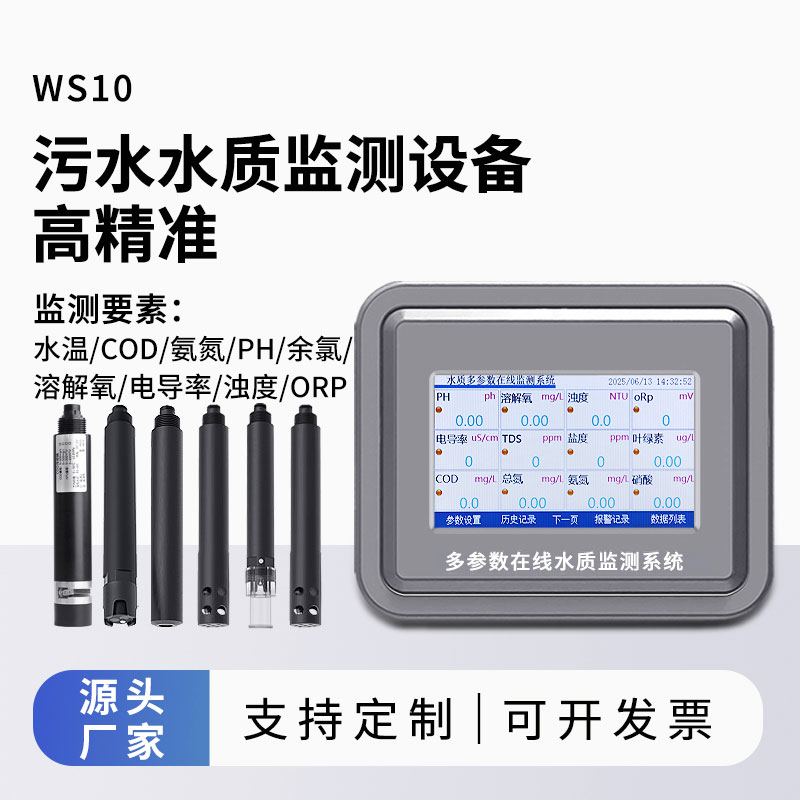
 Skype
Skype
 whatsapp
 mail
mail