Tianyi Sensor IOT Technology Co., Ltd
Sales Manager:Ms. Emily Wang
Cel,Whatsapp,Wechat:+86 15898932201
Email:info@fengtutec.com
Add:No. 155 Optoelectronic Industry Accelerator, Gaoxin District, Weifang, Shandong, China


Sales Manager:Ms. Emily Wang
Cel,Whatsapp,Wechat:+86 15898932201
Email:info@fengtutec.com
Add:No. 155 Optoelectronic Industry Accelerator, Gaoxin District, Weifang, Shandong, China
time:2025-08-04 08:51:03 source:Weather Station viewed:342 time
With the vigorous development of smart agriculture, the four aspects of agricultural condition monitoring have become a key driver in advancing the modernization of agriculture. So, what exactly are these four aspects of agricultural condition monitoring in smart agriculture? In fact, they include soil moisture monitoring, pest monitoring, crop growth monitoring, and disaster monitoring – a comprehensive system that ensures the healthy growth of crops and facilitates efficient agricultural production.
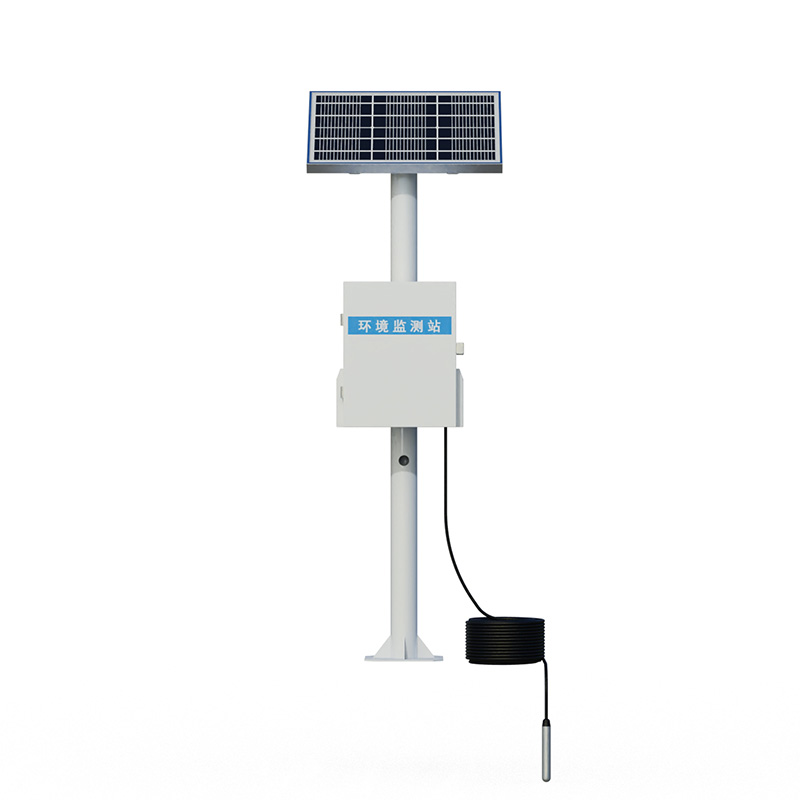
Soil moisture monitoring focuses on soil conditions. Soil moisture is fundamental to crop growth. Specialized equipment enables accurate measurement of soil moisture content at different soil depths. It can also simultaneously monitor other key soil indicators to assess soil fertility and the activity of crop root systems. By integrating soil data with meteorological data, scientific and reasonable irrigation recommendations can be generated for farmers, enabling precise irrigation and effectively avoiding water waste.
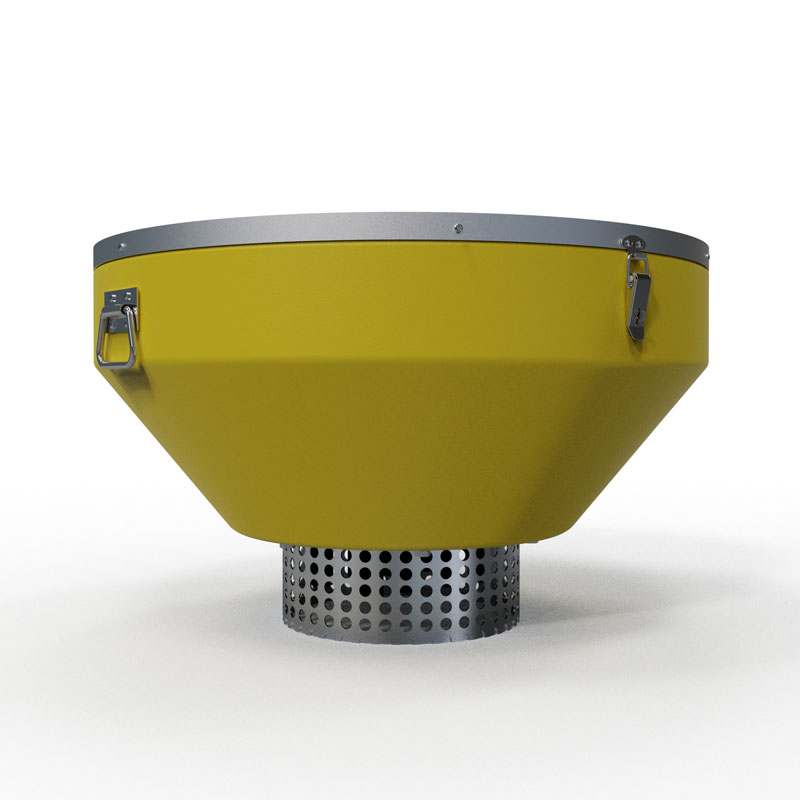
Pest monitoring is crucial for preventing and controlling crop "natural enemies". Specific equipment is used to trap pests, which are then identified and statistically analyzed to accurately determine pest population density and occurrence trends. Detailed pest reports are promptly sent to farmers, allowing them to take timely preventive and control measures. Different types of pest monitoring equipment have their own advantages: for example, intelligent pest forecasting lamps can be remotely controlled, while sex pheromone traps accurately target specific pests.
Crop growth monitoring focuses on the growth status of crops. It accurately assesses crop growth, identifies issues such as excessive growth, nutrient deficiency, or premature senescence, provides a basis for precise fertilization, and can also detect leaf spots on crops. Equipment such as field cameras and drone inspection systems provide comprehensive and timely information on crop growth.
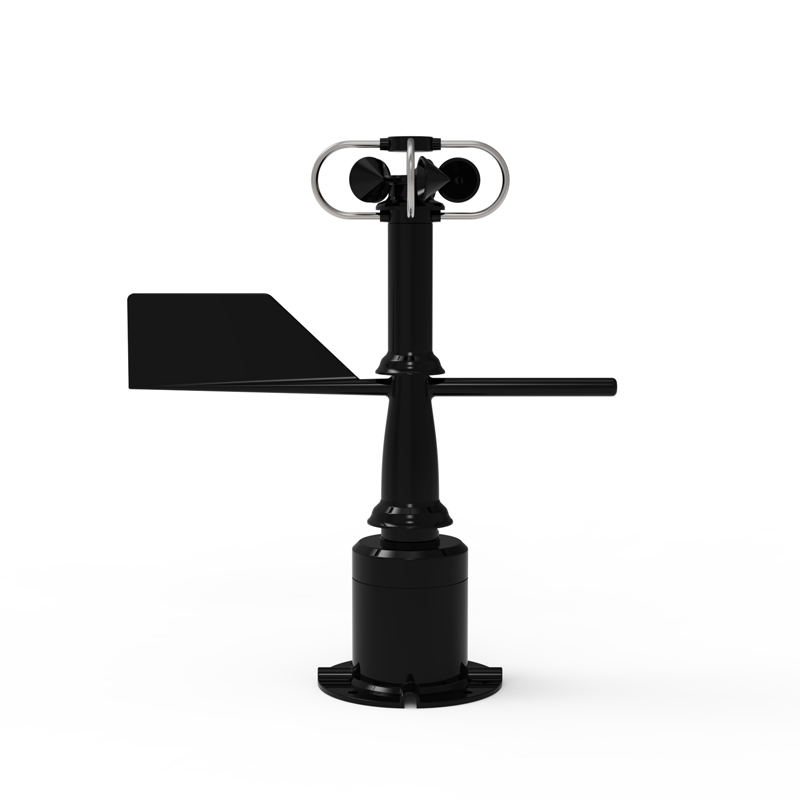
Disaster monitoring primarily targets the risks of natural disasters. By integrating multiple sensors, it can real-time monitor meteorological disasters such as heavy rain, strong winds, and hailstones, and issue early warning information in advance. Specialized instruments can also detect abnormal field conditions such as high-temperature points and frost, buying valuable time for farmers to respond to disasters.
To achieve efficient integration and application of the four aspects of agricultural condition monitoring, Tianyi's Automatic Farmland Weather Station plays an important role. The Fengtu FT-Q3 Smart Agriculture Four-Condition Monitoring Station consists of a tube-type soil moisture monitor, a pest forecasting lamp, a weather station, video surveillance, fencing, a wind-suction insecticidal lamp, a spore trap, and a cloud platform. This system can systematically monitor and manage soil conditions, pest conditions, climate conditions, crop growth, and spore counts in agricultural fields. Data is wirelessly transmitted to a forecasting platform, allowing managers to remotely view real-time environmental parameter data and trends, saving labor costs. Based on data feedback, timely adjustments can be made to ensure crops remain in a favorable growth state, effectively promoting the intelligent and efficient development of agricultural production.
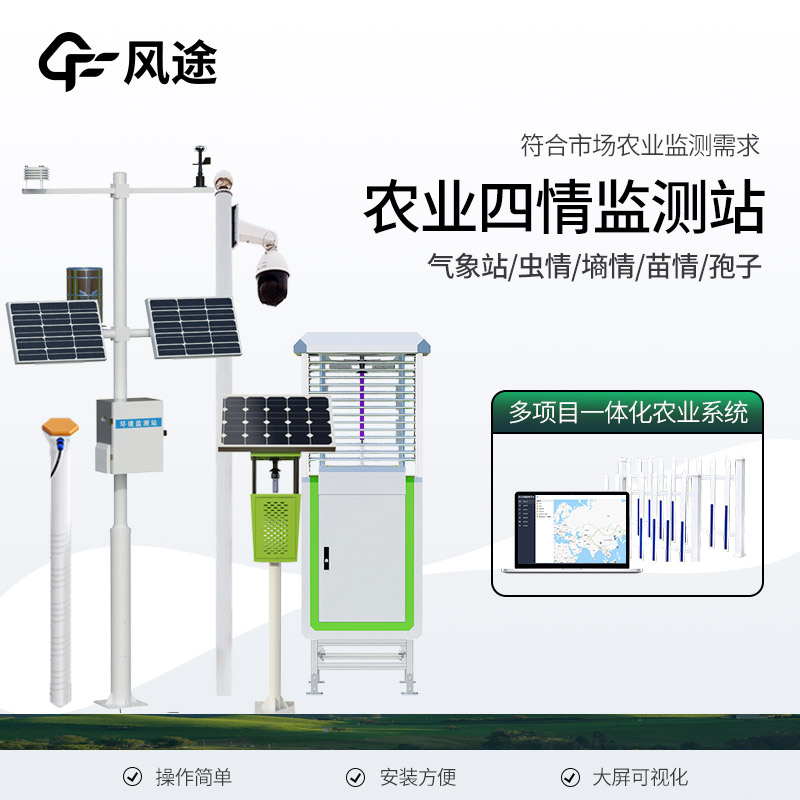
A soil moisture monitoring system is a comprehensive station that conducts real-time monitoring of soil moisture and related environmental parameters. Equipped with high-precision sensors, it adopts technologies such as Frequency Domain Reflectometry (FDR) and Time Domain Reflectometry (TDR) to accu...
instrument used to measure rainfall employs a three-channel narrowband infrared detector and a pure sinusoidal AC signal source, achieving a rainfall resolution of 0.01mm, a rainfall intensity range of 0-4mm/min, and a measurement accuracy of ≤±4%. The device consumes only 0.12W and operates...
The portable visibility monitor uses the forward scattering method to measure the total extinction coefficient of air and calculate visibility. Its integrated, portable design is compact and lightweight, making it widely applicable in emergency response, road traffic, and meteorological scenar...
instrument used to measure rainfall utilizes a three-channel narrowband infrared detector and a pure sine wave AC signal source to measure precipitation based on infrared optical principles. It supports the real-time scanning of raindrop size and count, offering a resolution of 0.01 mm, a rain...


 Skype
Skype
 whatsapp
 mail
mail