Tianyi Sensor IOT Technology Co., Ltd
Sales Manager:Ms. Emily Wang
Cel,Whatsapp,Wechat:+86 15898932201
Email:info@fengtutec.com
Add:No. 155 Optoelectronic Industry Accelerator, Gaoxin District, Weifang, Shandong, China


Sales Manager:Ms. Emily Wang
Cel,Whatsapp,Wechat:+86 15898932201
Email:info@fengtutec.com
Add:No. 155 Optoelectronic Industry Accelerator, Gaoxin District, Weifang, Shandong, China
time:2026-02-03 10:49:29 source:Weather Station viewed:215 time
Meteorological monitoring equipment includes six-parameter automatic weather stations, precipitation sensors, radiation observation stations, and unmanned aerial vehicle (UAV) systems, used to monitor meteorological elements such as temperature, humidity, wind speed and direction, rainfall, atmospheric pressure, and solar irradiance.
Meteorological monitoring equipment is a general term for instruments and systems widely used in modern meteorological observation, environmental monitoring, and related industries. The core function of these devices is to automatically and continuously collect data on various meteorological elements. Based on different measurement parameters, technical principles, and application scenarios, a diverse range of equipment types has been developed. Common equipment includes six-parameter automatic weather stations, precipitation sensors, meteorological radiation observation stations, UAV automatic weather detection systems, regional weather stations, and meteorological cloud big data platforms that integrate data collection and analysis functions.
The six-parameter automatic weather station is the most widely used basic equipment, typically capable of simultaneously monitoring six basic meteorological elements: air temperature, relative humidity, wind speed, wind direction, atmospheric pressure, and rainfall. It consists of corresponding sensors, data collectors, power supply, and communication units, with a compact structure, and can be deployed in various outdoor environments, forming the basic nodes of a meteorological observation network.
The precipitation sensor is a device specifically used to observe precipitation type and intensity. It can not only measure rainfall but also distinguish different types of precipitation such as drizzle, rain, snow, sleet, and hail using laser or microwave technology, and provide information on the spectral distribution of precipitation particles. This is particularly important for refined weather forecasting, aviation safety, and hydrological research.
The meteorological radiation observation station focuses on monitoring solar radiation energy. Its equipped radiation sensors can measure solar irradiance in different wavebands, such as total radiation, direct radiation, scattered radiation, and ultraviolet radiation, while also monitoring the surface temperature of the components. This data is of great value for solar energy resource assessment, climate change research, and agricultural light energy utilization.
The UAV automatic weather detection system provides flexible mobile observation capabilities. It integrates lightweight meteorological sensors onto a UAV platform, allowing for vertical profile detection or horizontal scanning of specific areas to obtain three-dimensional distribution data of temperature, humidity, pressure, and wind field. It is commonly used in atmospheric boundary layer research, emergency monitoring at disaster sites, and environmental surveys. Regional meteorological stations typically refer to monitoring stations with a higher density, deployed in specific areas (such as cities, farmlands, and mountainous regions). Their configuration can be customized according to needs, focusing on capturing small-scale climate characteristics. The meteorological cloud big data platform acts as a data hub, receiving data streams from various front-end devices, performing quality control, storage, analysis, visualization, and product release, providing data services and decision support to users.
The meteorological parameters monitored by these devices include temperature, humidity, wind speed, wind direction, precipitation, atmospheric pressure, solar irradiance, radiation, and component surface temperature. Accurate and timely data is fundamental for weather forecasting and warning, climate analysis, agricultural planning, renewable energy development, transportation, environmental protection, and scientific research. With the development of sensor technology, the Internet of Things, and artificial intelligence, these systems are evolving towards higher precision, lower power consumption, greater intelligence, and broader connectivity.
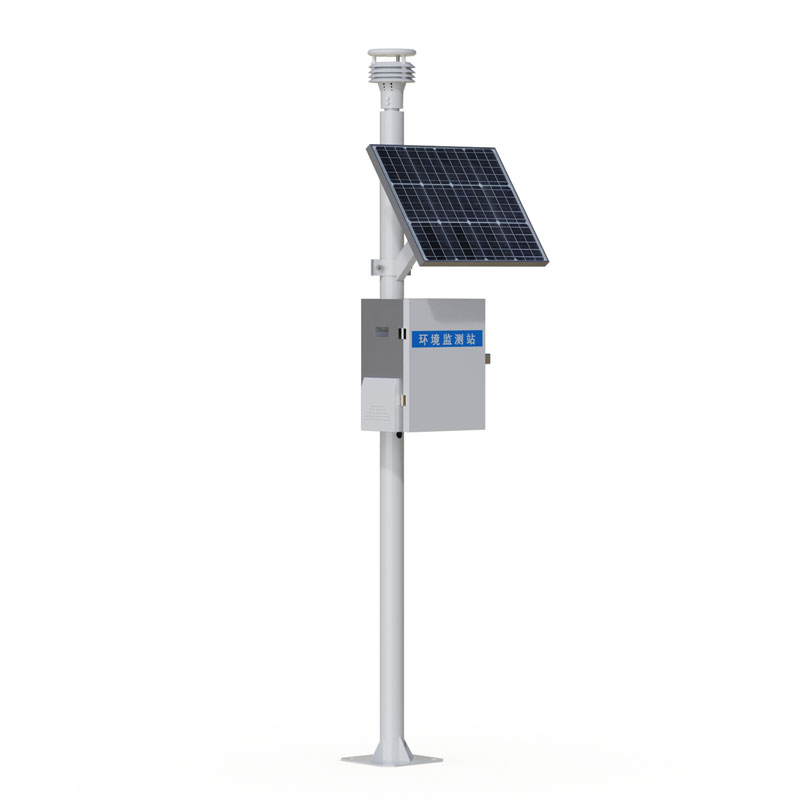
The FT-WQX8B Photovoltaic Weather Station is a professional environmental monitoring device developed and manufactured by Fengtu Technology, a company specializing in the R&D of micro weather stations and meteorological environment solutions. With a complete industrial chain and technical team,...
The wireless transmission technology of Multiparameter Weather Sensors enables remote real-time transmission of meteorological data through communication methods such as LoRa, ZigBee, and GPRS. Traditional wired sensors suffer from cumbersome cabling, which limits installation locations. In contrast...
In the fields of meteorology, environmental monitoring, agriculture, hydrology, transportation, and wind power generation, obtaining high-precision, high-time-resolution meteorological data for small-scale (microscale) areas is crucial. Traditional meteorological observation stations are usually lar...
Against the backdrop of rapid industrialization, industrial parks—core hubs for industrial agglomeration—face prominent pollution discharge issues. These issues are characterized by complex compositions, diverse types, and high emission intensity. Among them, industrial clusters and parks involvin...


 Skype
Skype
 whatsapp
 mail
mail