Tianyi Sensor IOT Technology Co., Ltd
Sales Manager:Ms. Emily Wang
Cel,Whatsapp,Wechat:+86 15898932201
Email:info@fengtutec.com
Add:No. 155 Optoelectronic Industry Accelerator, Gaoxin District, Weifang, Shandong, China


Sales Manager:Ms. Emily Wang
Cel,Whatsapp,Wechat:+86 15898932201
Email:info@fengtutec.com
Add:No. 155 Optoelectronic Industry Accelerator, Gaoxin District, Weifang, Shandong, China
time:2025-07-30 08:55:38 source:Weather Station viewed:334 time
To achieve efficient crop production in greenhouses, it is essential to precisely control key environmental factors:
Temperature: Different crops have specific optimal temperature ranges. Excessively high or low temperatures can hinder their growth.
Air humidity: Too high air humidity easily triggers diseases, while too low humidity leads to imbalanced crop transpiration.
Soil moisture: It determines root development and water supply, with most vegetables thriving in a humidity range of 60%-80%.
Light: As the energy source for photosynthesis, it directly affects crop yield and quality.
Carbon dioxide concentration: It is related to photosynthetic efficiency, and a reasonable concentration can promote crop growth.
Agriculture Sensors are integrated environmental monitoring devices capable of simultaneously monitoring multiple indicators. The air temperature module can real-time track temperature changes in the greenhouse, enabling growers to activate temperature control equipment promptly and keep crops in a suitable temperature environment.
The air humidity module is sensitive to humidity changes. When humidity exceeds the appropriate range, it can link with ventilation or humidification equipment to maintain stable humidity and reduce the occurrence of diseases.
The illuminance module can accurately measure light intensity. For light-loving crops such as roses, it can connect with supplementary lighting or shading equipment to ensure the normal progress of photosynthesis.
The carbon dioxide module monitors the concentration in the greenhouse in real-time. When the concentration is insufficient, it supplements gas fertilizers; when it is too high, it facilitates ventilation, creating a suitable gas environment for crops.
These integrated sensors provide growers with precise environmental data, transforming agricultural production from experience-based management to scientific regulation and contributing to the efficient development of greenhouse agriculture.
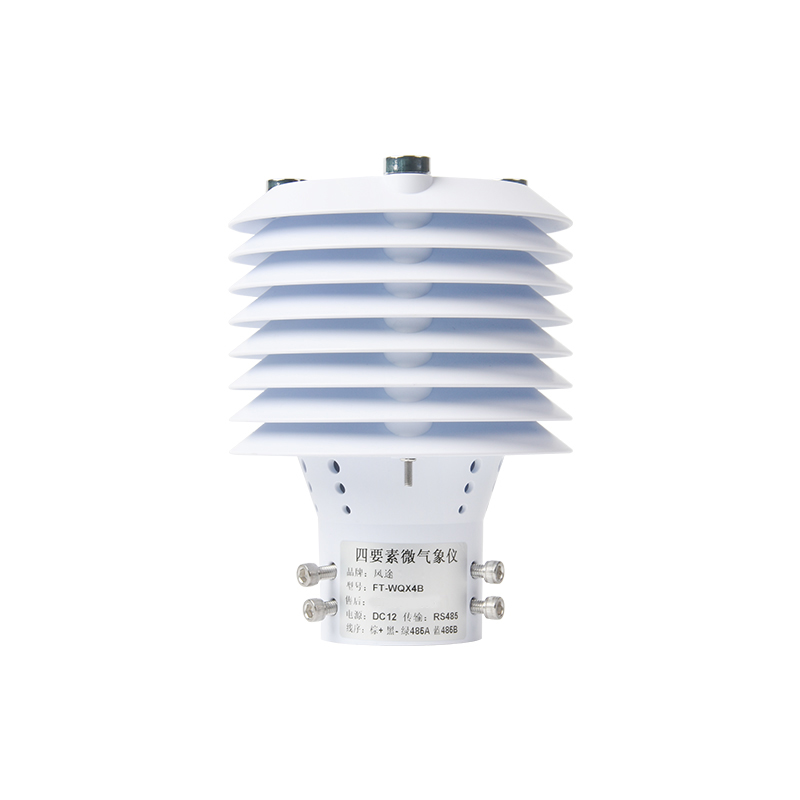
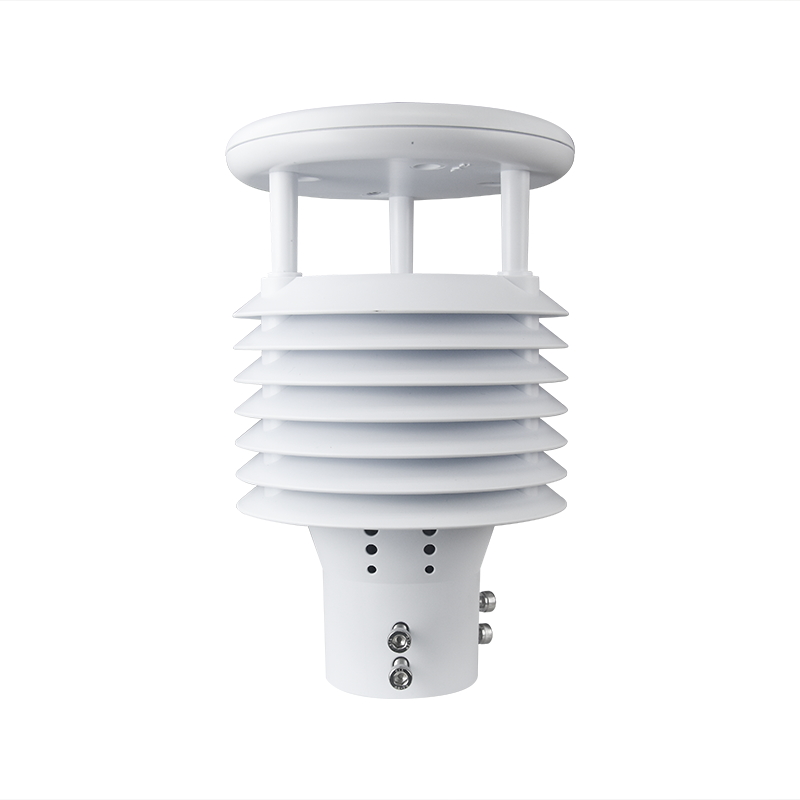
An ultrasonic weather station is a highly integrated meteorological monitoring device that utilizes modern ultrasonic detection technology. It emits ultrasonic waves and measures changes in their propagation speed through the air to accurately calculate wind speed and direction, completely eliminati...
In the process of coal mine production, wind measurement work is of great importance. The space underground in coal mines is relatively enclosed, and there are flammable and explosive substances such as gas and coal dust. Reasonable ventilation can effectively dilute and discharge gas, reduce the ga...
As a real-time online monitoring terminal, the Air Quality Monitoring Station integrates multiple technologies including online monitoring, data collection and wireless transmission. It can accurately conduct monitoring on pollution indicators such as PM2.5, PM10 and the five meteorological paramete...
Shandong Fengtu offers three 3D ultrasonic anemometers: the FT-SWF1 aluminum alloy model (16,000 yuan), the FT-SWF2 stainless steel model (18,000 yuan), and the FT-F1H drone model (8,800 yuan). All models utilize the ultrasonic time-of-flight method, have no mechanical rotating parts, and meas...


 Skype
Skype
 whatsapp
 mail
mail