Tianyi Sensor IOT Technology Co., Ltd
Sales Manager:Ms. Emily Wang
Cel,Whatsapp,Wechat:+86 15898932201
Email:info@fengtutec.com
Add:No. 155 Optoelectronic Industry Accelerator, Gaoxin District, Weifang, Shandong, China


Sales Manager:Ms. Emily Wang
Cel,Whatsapp,Wechat:+86 15898932201
Email:info@fengtutec.com
Add:No. 155 Optoelectronic Industry Accelerator, Gaoxin District, Weifang, Shandong, China
time:2025-07-29 08:55:24 source:Weather Station viewed:348 time
What are the display methods of the Negative Oxygen Ion Monitoring System?
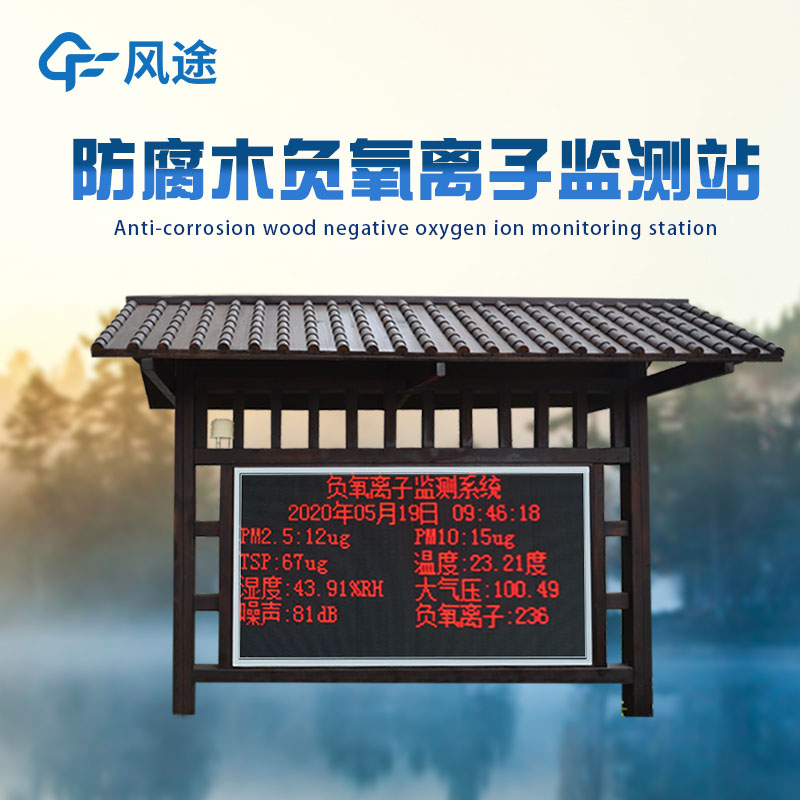
Liquid Crystal Display (LCD) is a relatively common display method. Many negative oxygen ion detection devices are equipped with LCD screens, such as small environmental monitoring stations. It can clearly present the negative oxygen ion concentration value in digital form and can also simultaneously display other environmental parameters such as temperature and humidity. Small monitoring devices at scenic spot entrances often use LCD screens, allowing tourists to intuitively understand the current negative oxygen ion concentration and air quality. LCD displays have the advantages of low power consumption, clear display, and low cost, and are suitable for scenarios with basic requirements for display functions and emphasis on energy consumption and cost control.
Light-Emitting Diode (LED) display is also a commonly used display method, which is divided into monochrome, dual-color, full-color and other types. Large parks and nature reserves mostly use LED displays to show monitoring data. Monochrome LED screens display concentration values and air quality levels such as "excellent", "good", and "poor" in red or green. They have high brightness, are still clearly visible under strong outdoor light, and are suitable for long-distance viewing. Dual-color or full-color LED screens are more powerful. In addition to displaying concentration and related environmental data, they can also show data change trends through colors and charts, and even play promotional content. The full-color LED large screens in the tourist centers of ecological scenic spots often display the concentration in real time and present the change situation with dynamic charts, helping people understand the fluctuations in air quality.
The display method based on computer software interfaces is also important. After connecting the detection system to a computer, special monitoring software can present detailed data on the computer screen. This method can store and analyze a large amount of historical data, and display concentration change trends and time period comparisons in various charts such as line charts and bar charts. Researchers often use this method to in-depth analyze the relationship between negative oxygen ion concentration and other environmental factors. With the help of network technology, data can also be viewed remotely, making it convenient to grasp the situation of monitoring points at any time.
With the development of the mobile Internet, display through mobile phone applications (APP) has become a convenient way. After users install the corresponding APP and access the server, they can check the detection data at any time.
The above are several mainstream display methods of the Negative Oxygen Ion Monitoring System. Users can choose the most suitable method according to their actual needs during the procurement stage to better obtain and utilize monitoring data.
Water quality monitoring equipment, centered around sensors for water temperature, pH, dissolved oxygen, and turbidity, can collect and analyze water data in real time. This equipment is widely used in various water environment monitoring applications, including aquaculture, wastewater treatment, reservoirs, rivers, and drinking water sources....
Road Weather Sensors employs the forward-scattering method to measure the air extinction coefficient and calculate visibility. It is capable of identifying five distinct phenomena—fog, rain, snow, mixed precipitation, and clear conditions—with an identification accuracy rate of ≥95%. With a...
Meteorological equipment includes surface-based meteorological observation instruments and upper-air meteorological sounding instruments, used for weather forecasting, climate research, and environmental management. Highly integrated small-scale automatic meteorological observation equipment e...
Underwater search and rescue robot is an observation-class underwater remotely operated vehicle (ROV) that transmits real-time video or still images of the underwater environment back to the surface via a high-definition camera and multi-beam sonar. Its multi-beam imaging sonar enables it to p...


 Skype
Skype
 whatsapp
 mail
mail