Tianyi Sensor IOT Technology Co., Ltd
Sales Manager:Ms. Emily Wang
Cel,Whatsapp,Wechat:+86 15898932201
Email:info@fengtutec.com
Add:No. 155 Optoelectronic Industry Accelerator, Gaoxin District, Weifang, Shandong, China


Sales Manager:Ms. Emily Wang
Cel,Whatsapp,Wechat:+86 15898932201
Email:info@fengtutec.com
Add:No. 155 Optoelectronic Industry Accelerator, Gaoxin District, Weifang, Shandong, China
time:2025-10-28 08:53:52 source:Weather Station viewed:375 time
In the field of wind power generation, accurate measurement of wind speed and direction is essential for wind farm site selection, wind turbine power characteristic research, and generator set power control.
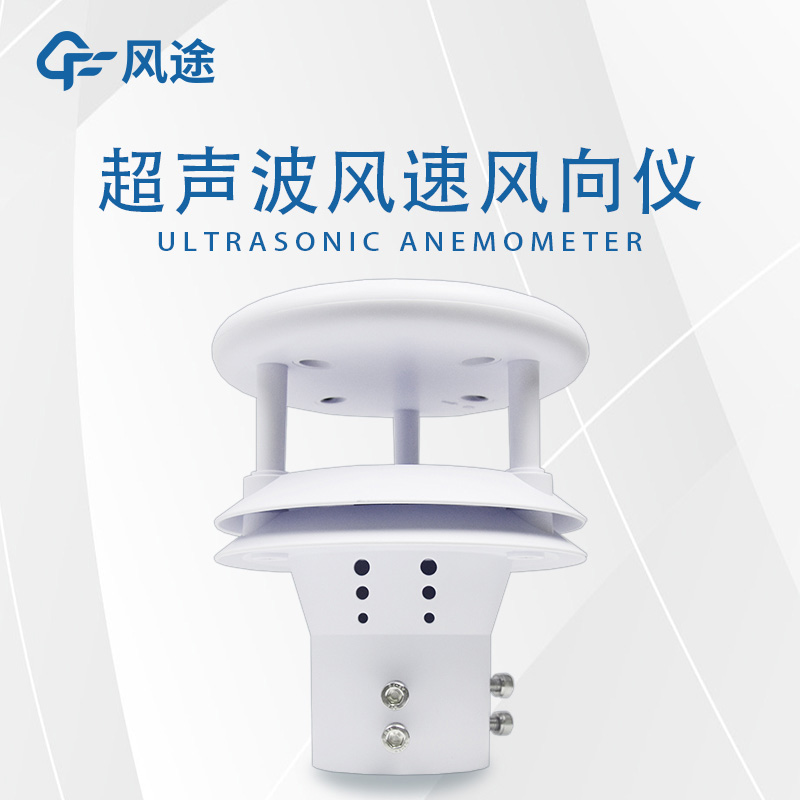
Traditional mechanical anemometers suffer from issues such as wear and aging of moving parts, while ultrasonic measurement technology provides a more advanced solution. FengTu is committed to the research and development of miniature weather instruments. The developed FT-WQX2 Ultrasonic Wind Speed Direction Sensor adopts continuous frequency-modulated ultrasonic signals and calculates wind speed and direction by measuring relative phase differences. The key advantage of this technology is that it overcomes reliance on high-precision timers and effectively avoids measurement errors caused by sensor startup delay, demodulation circuit delay, and temperature changes.
Compared with traditional mechanical anemometers, it offers multiple advantages:
No moving parts design: Fundamentally solves mechanical wear and aging problems, resulting in longer service life.
High response speed and zero starting wind speed: Capable of capturing instantaneous wind condition changes with strong measurement real-time performance.
Strong environmental adaptability: The probe adopts a concealed top cover design that effectively prevents measurement interference caused by snow accumulation and natural wind obstruction. The sensor housing uses ASA engineering plastic, which is corrosion-resistant and UV-protective, ensuring long-term stable operation without discoloration in harsh outdoor environments.
High integration and maintenance-free: Wind speed and direction measurement are achieved through a highly integrated structure, requiring basically no on-site maintenance and calibration.
Main application areas:
Wind power generation: Provides key data for wind farm assessment and wind turbine control.
Urban environmental monitoring: Used in urban weather stations to monitor urban wind environments.
Transportation and building safety: Applied in bridge tunnels, marine vessels, aviation airports and other scenarios to monitor wind impact on transportation and building structure safety.
Meteorological monitoring: Serves as the wind measurement component of professional weather stations.
Meteorological and Environmental Monitoring Equipment is a highly integrated, low-power automated weather observation system capable of real-time monitoring of wind speed and direction, temperature and humidity, atmospheric pressure, optical rainfall, PM2.5, PM10, and various gaseous pollutant...
In the agricultural field, the traditional extensive irrigation method relying on experience is likely to cause either water resource waste or insufficient irrigation. With the rise of precision agriculture, different crops have varying requirements for soil temperature and humidity at different gro...
Total Nitrogen Analyzer utilizes the resorcinol method and photoelectric quantitative technology. Its integrated design allows for rapid sampling and testing, boasts strong anti-interference capabilities, and enables real-time monitoring of total nitrogen content in water. It is widely used in...
Visibility and Present Weather Sensor employs the forward scattering method to measure the total extinction coefficient of the air, enabling real-time monitoring of road visibility and the identification of weather phenomena such as fog, rain, and snow. This provides high-precision measurement...


 Skype
Skype
 whatsapp
 mail
mail