Tianyi Sensor IOT Technology Co., Ltd
Sales Manager:Ms. Emily Wang
Cel,Whatsapp,Wechat:+86 15898932201
Email:info@fengtutec.com
Add:No. 155 Optoelectronic Industry Accelerator, Gaoxin District, Weifang, Shandong, China


Sales Manager:Ms. Emily Wang
Cel,Whatsapp,Wechat:+86 15898932201
Email:info@fengtutec.com
Add:No. 155 Optoelectronic Industry Accelerator, Gaoxin District, Weifang, Shandong, China
time:2026-04-17 13:22:10 source:Weather Station viewed:147 time
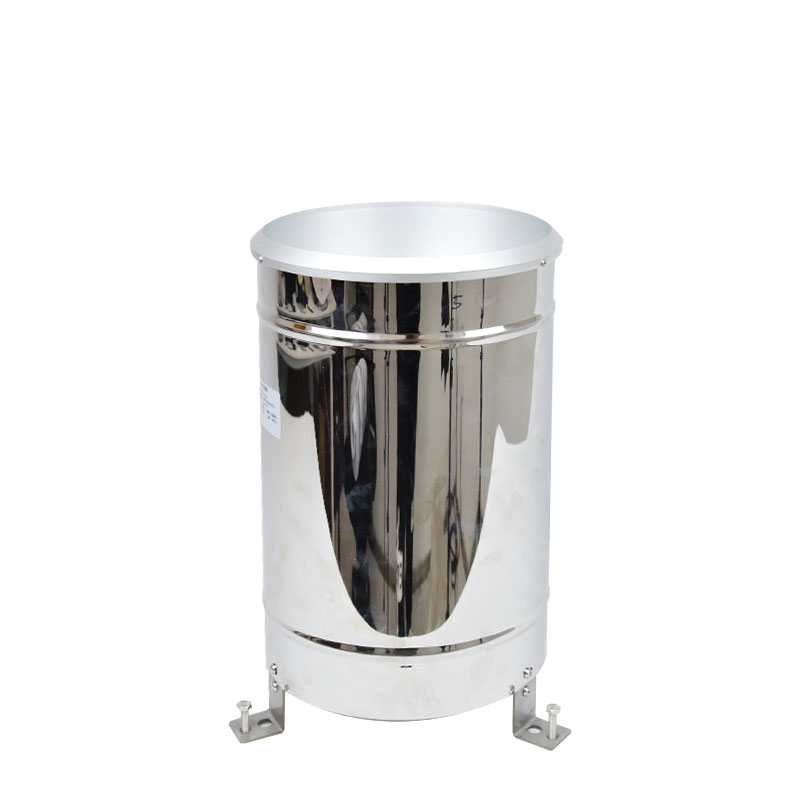
Stainless Steel Tipping Bucket Rain Gauge is a hydrometeorological instrument designed to measure natural rainfall. It features an error margin of ≤±2%, a resolution of 0.2 mm, and a rainfall intensity range of 0 to 4 mm/min. Supporting Modbus 485 output, the device converts rainfall measurements into digital switch signals, enabling real-time precipitation monitoring in applications such as meteorological stations and hydrological observatories.
Stainless Steel Tipping Bucket Rain Gauge serves as a critical instrument for the real-time, digitized observation of rainfall data. Its primary function is to measure natural precipitation while simultaneously converting these measurements into digital information—expressed in the form of switch signals—to meet requirements for data transmission, processing, recording, and display. The instrument is suitable for use by meteorological bureaus, hydrological stations, agricultural and forestry agencies, and defense departments for the remote telemetry of liquid precipitation amounts, rainfall intensity, and the start and end times of precipitation events. It is also applicable in automated hydrological reporting systems utilized for flood control, water supply dispatch, and water level management in power plant reservoirs.
Stainless Steel Tipping Bucket Rain Gauge consists of a rain-receiving assembly and a metering mechanism. The rain-receiving aperture features an international standard diameter of Φ200 mm. Its operating principle is as follows: rainwater enters the collector through the top-mounted aperture, flows into a receiving funnel, and subsequently drains through the funnel's spout into a tipping bucket. When the accumulated water reaches a specific volume, the tipping bucket becomes unbalanced and tips over; each tip of the bucket closes an electrical switch, thereby transmitting a pulse signal to a recording device. The tipping bucket's support system is precision-engineered to minimize frictional torque and ensure highly sensitive tipping action, guaranteeing an accurate response to every collected precipitation event.
In terms of technical specifications, the instrument maintains an error margin of ≤±2% and a resolution of 0.2 mm. It covers a standard rainfall intensity range of 0 to 4 mm/min, with a maximum allowable throughput of 8 mm/min; an extended range of 0 to 10 mm/min is also available, allowing for a maximum throughput of 15 mm/min. The device utilizes Modbus 485 for data output, operates on a DC 12V power supply, draws a working current of 2 mA, consumes a mere 0.02 W of power, and functions within an operating temperature range of 0°C to 50°C. Certain models feature a resolution of up to 0.1 mm, are suitable for rainfall intensities of ≤4 mm/min, and meet Class I standards for measurement accuracy.
Stainless Steel Tipping Bucket Rain Gauge is widely utilized by meteorological stations, hydrological stations, and agencies in the agricultural and forestry sectors to measure liquid precipitation, precipitation intensity, and precipitation duration. In the field of hydrology and water conservancy, it facilitates long-term rainfall monitoring at hydrological stations, thereby supporting flood control, drought relief operations, and water resource management. In the meteorological domain, it serves as a core instrument for weather stations to collect data on rainfall volume, intensity, and start/end times, providing precise data for weather forecasting and climate analysis. Furthermore, this instrument boasts a robust anti-interference capability, high measurement precision, large data storage capacity, ease of integration into networks, and fully automated, unattended operation.
Agricultural monitoring system provides precise guidance for agricultural production through comprehensive monitoring of soil moisture, crop growth, pest and disease infestations, and disasters.Soil Moisture Monitoring focuses on soil water status. Imbalances in soil moisture directly affect crop gr...
Negative oxygen ion monitoring stations function to real-time capture and transmit negative oxygen ion data in the air. Through "on-site display + remote viewing," they convert the originally invisible and intangible negative oxygen ion concentration into intuitive data, allowing managers...
The FT-SQ6 electronic weather station is a professional meteorological measurement tool that integrates portability, accuracy, and durability, and it is also a reliable piece of equipment in the field of special firefighting. Its compact design and lightweight body make portability its main advantag...
Here's a little bit of knowledge: Bridges actually freeze more easily than road surfaces.Why is that?From the perspective of heat dissipation, the temperature difference between a bridge deck and an ordinary road surface is quite understandable. The road surface is directly built on the ground,...


 Skype
Skype
 whatsapp
 mail
mail