Tianyi Sensor IOT Technology Co., Ltd
Sales Manager:Ms. Emily Wang
Cel,Whatsapp,Wechat:+86 15898932201
Email:info@fengtutec.com
Add:No. 155 Optoelectronic Industry Accelerator, Gaoxin District, Weifang, Shandong, China


Sales Manager:Ms. Emily Wang
Cel,Whatsapp,Wechat:+86 15898932201
Email:info@fengtutec.com
Add:No. 155 Optoelectronic Industry Accelerator, Gaoxin District, Weifang, Shandong, China
time:2025-11-19 11:23:45 source:Weather Station viewed:383 time
Meteorological monitoring system is a high-precision automatic meteorological observation device integrating temperature, humidity, wind speed, wind direction, and atmospheric pressure sensors. This device combines ultrasonic detection technology to achieve accurate all-weather monitoring of meteorological elements.
Meteorological monitoring system employs an integrated sensor design, capable of simultaneously measuring five key meteorological parameters: temperature, relative humidity, wind speed, wind direction, and atmospheric pressure. This integrated design combines multiple sensors into a compact unit, significantly reducing equipment size and installation complexity.
Based on the principle of ultrasonic wind measurement, the device calculates wind speed and direction by the difference in the speed of sound propagation in the air. This measurement method eliminates the need for mechanical rotating parts, effectively avoiding measurement errors caused by bearing wear in traditional cup-type sensors, thus improving data accuracy and extending equipment lifespan.
For temperature measurement, the device uses a high-precision temperature sensor to accurately capture changes in ambient temperature. The humidity sensor uses a capacitive measurement principle to monitor relative humidity in real time. The atmospheric pressure sensor detects changes in atmospheric pressure through a pressure-sensitive element, providing fundamental data for weather trend analysis.
Meteorological monitoring system is capable of all-weather operation and can run continuously under various environmental conditions. Its sensor protection level meets outdoor use standards, resisting the effects of rain, dust, and extreme temperatures, ensuring data continuity and reliability.
The meteorological data collected by the device is transmitted to the data center via wired or wireless means. Users can access the data platform via computer or mobile device to view real-time trends in various meteorological parameters. The system also supports data storage and export functions for easy subsequent analysis and application.
In agriculture, this device provides data support for farmland microclimate monitoring, helping farmers scientifically plan irrigation, fertilization, and pest and disease control. In environmental monitoring, it provides meteorological background data for air quality assessment and pollution diffusion research. In urban management, meteorological data assists in urban heat island effect analysis and ventilation corridor planning. In scientific research, it provides field observation data for climate research and weather forecast model validation.
The installation location of Meteorological monitoring system must comply with meteorological observation specifications, avoiding obstructions such as buildings and trees, ensuring the sensor is fully exposed to the natural environment. Installation height and surrounding environment can affect the representativeness of measurement results; therefore, site selection requires careful evaluation.
With the development of IoT and AI technologies, modern Meteorological monitoring system is evolving towards intelligence. The new generation of equipment incorporates data quality control and anomaly diagnosis functions, enabling it to automatically identify sensor malfunctions and data anomalies, thus improving the reliability of observational data.
This integrated, high-precision meteorological observation equipment has become an important component of the modern meteorological monitoring system. The continuous and accurate meteorological data it provides offers crucial technical support for scientific decision-making and practical applications across various industries.
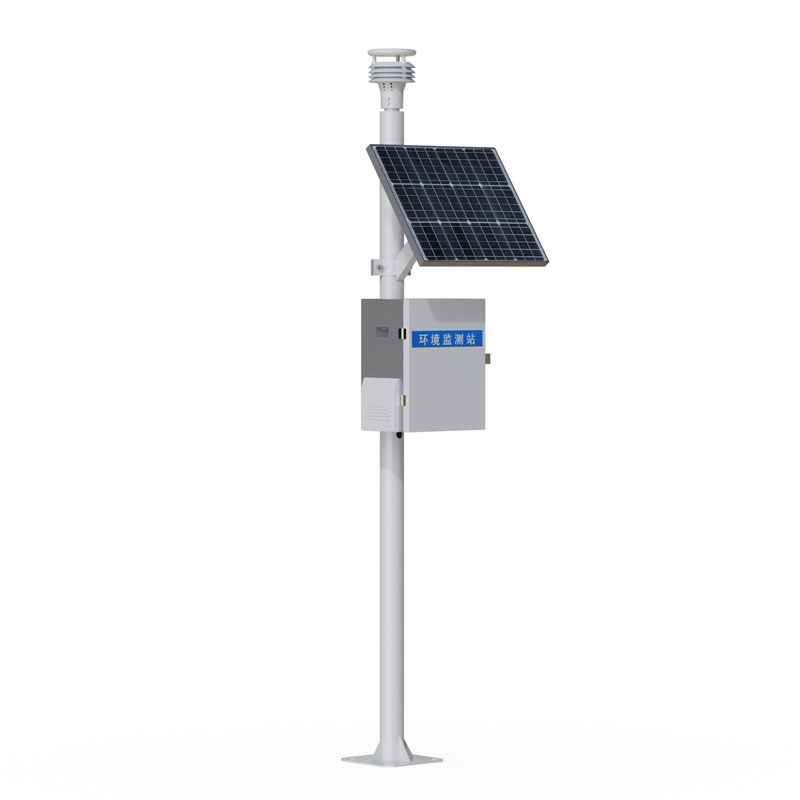
PV Weather Station monitors elements such as solar radiation and temperature and humidity, providing data support for the operation of photovoltaic power plants....
The Air Quality Monitoring Station is a miniaturized product dedicated to real - time online monitoring of the atmospheric environment. It has the capability of simultaneous multi - parameter monitoring, which can accurately measure the concentrations of various pollutants in the atmosphere, such as...
Radar rain detector is a precipitation measurement instrument that uses 24GHz Doppler radar technology. It identifies rain, snow, and hail types and measures rainfall intensity by analyzing the falling velocity and particle size of precipitation particles. Unaffected by foliage cover, it offers sensitive and rapid detection and is widely used in meteorology, hydrology, environmental protection, and flood control....
Recommend Several Excellent Water Quality MonitorsI. Portable Multi-parameter Detector (FT-SS07)It covers all parameters and supports the detection of 12 parameters such as water temperature, conductivity, pH, ammonia nitrogen, dissolved oxygen, COD, turbidity, etc. It adopts all-digital elect...


 Skype
Skype
 whatsapp
 mail
mail