Tianyi Sensor IOT Technology Co., Ltd
Sales Manager:Ms. Emily Wang
Cel,Whatsapp,Wechat:+86 15898932201
Email:info@fengtutec.com
Add:No. 155 Optoelectronic Industry Accelerator, Gaoxin District, Weifang, Shandong, China


Sales Manager:Ms. Emily Wang
Cel,Whatsapp,Wechat:+86 15898932201
Email:info@fengtutec.com
Add:No. 155 Optoelectronic Industry Accelerator, Gaoxin District, Weifang, Shandong, China
time:2025-11-21 10:49:47 source:Weather Station viewed:405 time
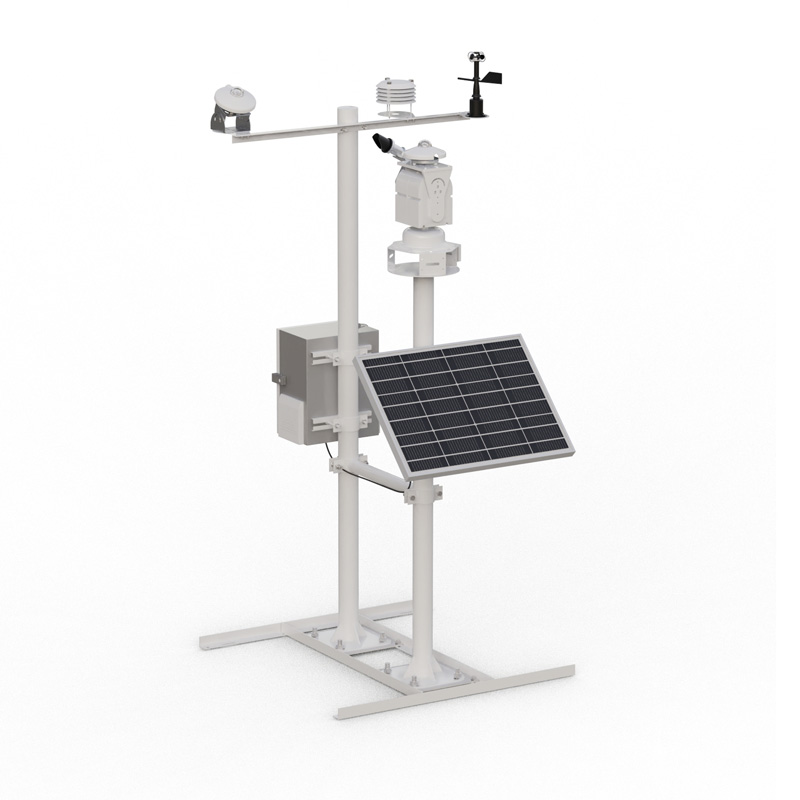
PV Weather Station monitors elements such as solar radiation and temperature and humidity, providing data support for the operation of photovoltaic power plants.
PV Weather Station is a monitoring device specifically designed for photovoltaic power generation systems. By real-time monitoring of key meteorological elements such as total solar radiation, wind speed, wind direction, air temperature, relative humidity, and atmospheric pressure, it provides a data foundation for performance analysis and operation and maintenance management of photovoltaic power plants. This device typically adopts an integrated design, supports 4G wireless transmission, and can upload data to a cloud platform in real time. Users can remotely access monitoring information through a computer or mobile terminal.
In terms of technical composition, the core of this weather station is various high-precision sensors. The total solar radiation sensor uses a thermopile or photoelectric principle, with a spectral range typically covering 300 to 3000 nanometers and an accuracy within ±2%. The wind speed and direction sensor mostly uses the ultrasonic principle to avoid mechanical wear, with a wind speed measurement range of 0 to 60 meters/second and a wind direction measurement accuracy of ±3°. The temperature and humidity sensor uses a capacitive polymer thin-film element, with a temperature measurement range of -40 to 60℃ and a humidity measurement range of 0 to 100%RH. The atmospheric pressure sensor is based on MEMS technology, with a measurement range of 500 to 1100 hPa. All sensor data is integrated and processed by an industrial-grade data collector, and the sampling interval can be set to 1 to 10 minutes.
The communication system of this weather station supports 4G network transmission and is compatible with communication protocols such as TCP/IP and MQTT, ensuring stable data upload. The cloud platform provides data visualization, historical data querying, and abnormal alarm functions. When the monitored parameters exceed the set threshold, the system can send alarm messages via SMS or APP push notifications. The power supply system usually uses a 12V or 24V DC power supply, and some models support auxiliary power supply from solar panels, ensuring continuous operation even in the event of a power grid failure.
In the application of photovoltaic power plants, meteorological data has multiple values. Solar radiation data is a key parameter for evaluating the power generation efficiency of the power plant. By comparing the actual power generation with the theoretical power generation, problems such as component pollution, degradation, or failure can be detected in a timely manner. Wind speed data is used to assess the safety risks of the support structure due to strong winds, triggering a warning when the wind speed exceeds a set threshold. Temperature data helps analyze the impact of component operating temperature on power generation efficiency; studies have shown that for every 1℃ increase in photovoltaic component temperature, the output power decreases by approximately 0.4%. The long-term accumulation of this data can also be used for power plant output prediction, equipment selection optimization, and operation and maintenance strategy development.
When selecting the PV Weather Station, monitoring requirements and installation conditions should be considered. The basic model primarily monitors solar radiation, wind speed, temperature, and humidity, suitable for small distributed power plants; the high-end model adds monitoring functions such as sunshine hours, rainfall, and module backsheet temperature, suitable for large ground-mounted power plants. The installation location should avoid shading, ensuring that the solar radiation sensor faces due south and the tilt angle is consistent with the photovoltaic modules. Regular maintenance includes cleaning the sensor surface, checking connection lines, and calibrating measurement accuracy. It is recommended to clean and maintain the solar radiation sensor monthly.
The PV Weather Station, by providing accurate and continuous meteorological data, has become an important component of intelligent management for photovoltaic power plants. This equipment not only provides environmental parameter support for the real-time operation of the power plant but also provides a scientific basis for power plant efficiency evaluation and fault diagnosis. As the photovoltaic industry's requirements for refined operation and maintenance increase, the monitoring accuracy and functional integration of dedicated weather stations will continue to improve.
As a key device in modern meteorological monitoring, one of the primary advantages of the wireless Small Automatic Weather Station is its adoption of wireless data transmission technology.1. Freedom from Wired Infrastructure LimitationsTraditional wired weather stations are constrained by cabling, b...
What kinds of Wind Speed Sensors are there on the market and how should consumers choose?There are a wide variety of Wind Speed Sensors available in the market. However, according to the detection principles, they can be classified into mechanical sensors, ultrasonic sensors, thermal sensors, Pitot...
As a real-time online monitoring terminal, the Air Quality Monitoring Station integrates multiple technologies including online monitoring, data collection and wireless transmission. It can accurately conduct monitoring on pollution indicators such as PM2.5, PM10 and the five meteorological paramete...
Water quality monitoring equipment, centered around sensors for water temperature, pH, dissolved oxygen, and turbidity, can collect and analyze water data in real time. This equipment is widely used in various water environment monitoring applications, including aquaculture, wastewater treatment, reservoirs, rivers, and drinking water sources....


 Skype
Skype
 whatsapp
 mail
mail