Tianyi Sensor IOT Technology Co., Ltd
Sales Manager:Ms. Emily Wang
Cel,Whatsapp,Wechat:+86 15898932201
Email:info@fengtutec.com
Add:No. 155 Optoelectronic Industry Accelerator, Gaoxin District, Weifang, Shandong, China


Sales Manager:Ms. Emily Wang
Cel,Whatsapp,Wechat:+86 15898932201
Email:info@fengtutec.com
Add:No. 155 Optoelectronic Industry Accelerator, Gaoxin District, Weifang, Shandong, China
time:2026-04-23 11:27:12 source:Weather Station viewed:3 time
instrument used to measure rainfall utilizes a three-channel narrowband infrared detector and a pure sine wave AC signal source to measure precipitation based on infrared optical principles. It supports the real-time scanning of raindrop size and count, offering a resolution of 0.01 mm, a rainfall intensity range of 0–4 mm/min, and a measurement accuracy of ≤±4%. This device is widely applied across various sectors, including meteorology, agriculture, municipal services, and transportation.
instrument used to measure rainfall is a high-precision, non-contact device designed to measure precipitation based on infrared optical principles. At its core, it employs a three-channel narrowband infrared detector and a pure sine wave AC signal source, performing precipitation monitoring through the interaction between infrared beams and raindrops. The sensor is equipped with an internal infrared emitter and receiver; the emitter continuously emits infrared light at a specific wavelength to establish a detection optical path. When raindrops enter the measurement zone, they scatter, refract, and absorb the infrared light, resulting in a reduction in the light intensity received by the receiver. By measuring these variations in light intensity—and utilizing built-in algorithms—the sensor calculates the size, count, and falling velocity of the raindrops, thereby deriving the total precipitation and rainfall intensity. This non-contact measurement method completely eliminates issues associated with mechanical wear and jamming, ensuring maintenance-free operation.
In terms of technical specifications, instrument used to measure rainfall operates on a supply voltage of DC 12V, with a power consumption of just 0.12W and an operating current of 10mA, making it ideally suited for unattended field observation stations. It features a rainfall resolution of 0.01 mm, a rainfall intensity measurement range of 0 to 4 mm/min, and a measurement accuracy of ≤±4%. The device operates within an ambient temperature range of -40°C to 85°C and a humidity range of 0% to 100% RH. The rain-sensing surface covers an area of 78 cm²; by utilizing a pure sine wave infrared light source and built-in narrowband filters, the sensor remains unaffected by external light sources—such as high-intensity sunlight—enabling stable operation even in complex lighting environments. The high-transmittance rain-sensing cover allows for the unimpeded passage of direct sunlight while remaining compatible with the integration of other internal optical sensors, such as those for illuminance, total radiation, and ultraviolet light. instrument used to measure rainfall offers numerous core advantages in practical applications. Compared to traditional tipping-bucket rain gauges, its sensitivity is approximately 100 times higher, enabling it to count individual raindrops and transmit corresponding pulse signals. The device contains no internal moving mechanical parts and is completely sealed; consequently, it is free from issues related to mechanical wear and clogging. Furthermore, it requires no specific leveling during installation and can even measure rainfall while in motion without compromising accuracy. Certain models also feature a built-in function capable of identifying four distinct rainfall types—scouring, dense, discrete, and adhering—and processing each category separately. Additionally, the device includes capabilities for measuring condensation and storing data, automatically recording the total accumulated rainfall. The sensor supports pulse signal output via optocoupler isolation, as well as RS232 or RS485 interfaces; notably, it is compatible with the output formats of traditional tipping-bucket rain gauges, thereby facilitating seamless integration into information systems. This device is widely utilized in fields such as meteorological observation, agricultural irrigation, municipal flood control, traffic warning systems, geological hazard monitoring, maritime navigation, and smart irrigation systems.
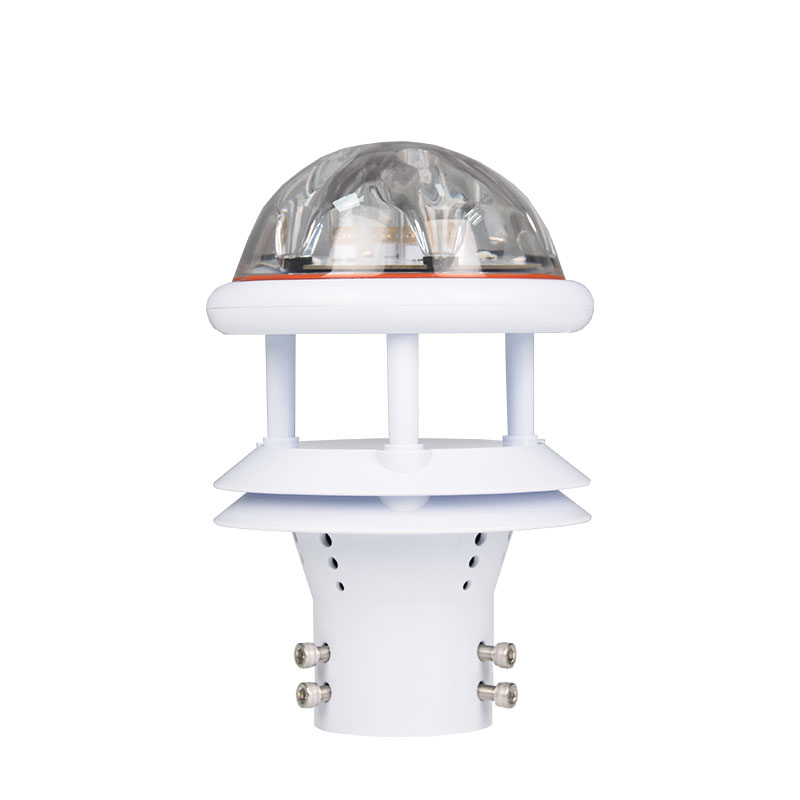
A Portable Weather Station is a highly integrated automatic field meteorological data collection and transmission device. Essentially, it is a fully functional mobile observation platform capable of rapidly establishing temporary meteorological observation points in areas not covered by conventional...
The operation of air quality monitoring stations relies on a comprehensive grid-based environmental supervision system. This system takes towns, communities (and villages) in cities as basic units, and divides them into air pollution prevention and control management grids according to different lev...
In today's intertwined context of agricultural modernization and ecological conservation needs, dynamic changes in soil moisture directly impact crop growth, water resource utilization, and ecosystem stability. Automatic Soil Monitoring Systems are becoming the link connecting farmland managemen...
Meteorological monitoring equipment includes six-parameter automatic weather stations, precipitation sensors, radiation observation stations, and unmanned aerial vehicle (UAV) systems, used to monitor meteorological elements such as temperature, humidity, wind speed and direction, rainfall, at...


 Skype
Skype
 whatsapp
 mail
mail