Tianyi Sensor IOT Technology Co., Ltd
Sales Manager:Ms. Emily Wang
Cel,Whatsapp,Wechat:+86 15898932201
Email:info@fengtutec.com
Add:No. 155 Optoelectronic Industry Accelerator, Gaoxin District, Weifang, Shandong, China


Sales Manager:Ms. Emily Wang
Cel,Whatsapp,Wechat:+86 15898932201
Email:info@fengtutec.com
Add:No. 155 Optoelectronic Industry Accelerator, Gaoxin District, Weifang, Shandong, China
time:2026-04-22 11:42:06 source:Weather Station viewed:141 time
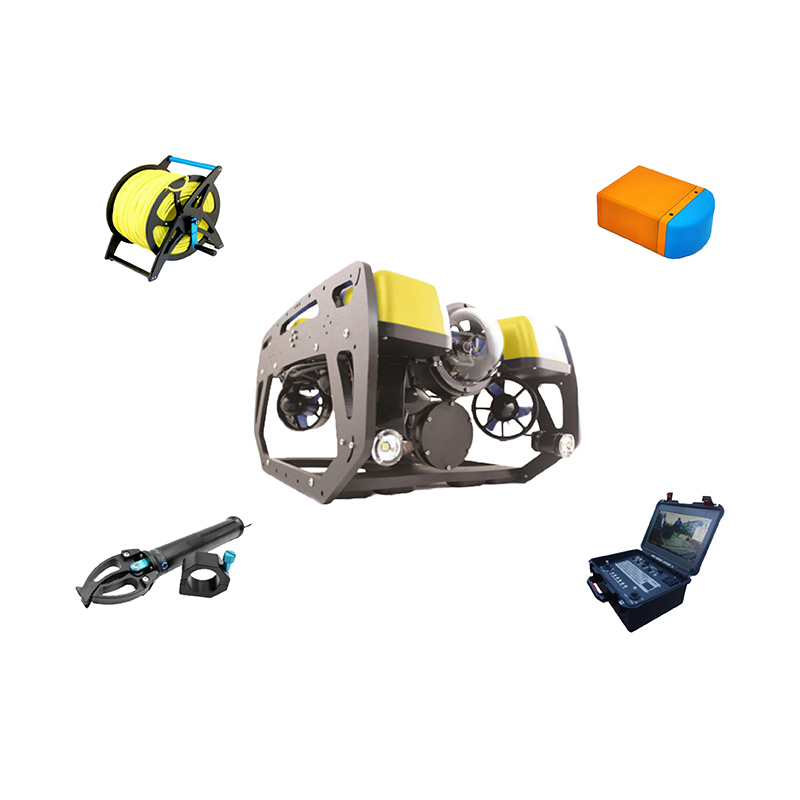
Underwater search and rescue robot is an observation-class underwater remotely operated vehicle (ROV) that transmits real-time video or still images of the underwater environment back to the surface via a high-definition camera and multi-beam sonar. Its multi-beam imaging sonar enables it to pinpoint targets in low-visibility, turbid waters, which are then visually verified using the high-definition camera. This makes it ideally suited for search, rescue, and salvage operations in various bodies of water, including oceans, reservoirs, rivers, and lakes.
Underwater search and rescue robot is an observation-class underwater ROV with primary functions that include underwater search, observation, positioning, and sonar scanning/imaging. The device utilizes a high-definition camera and multi-beam sonar to transmit real-time video and photographic data of the underwater environment back to the surface, enabling search and rescue personnel to conduct analysis and assessment. This effectively reduces search times and significantly improves the success rate of rescue operations. Underwater search and rescue robot is suitable for use in a wide range of aquatic environments—including oceans, reservoirs, rivers, and lakes—and is capable of navigating complex underwater conditions such as strong currents, low temperatures, and poor visibility. In practical search and salvage operations, rescue teams typically begin by using boat-mounted side-scan sonar to rapidly survey large areas, generating acoustic terrain maps and identifying specific "highlight" zones containing potential targets. Subsequently, the underwater robot is deployed to the suspected target area, where it employs its onboard forward-looking multi-beam sonar to conduct real-time scans of the immediate surroundings. In turbid waters—where visibility is low or even zero—the sonar system takes the lead in scanning and pinpointing the target's location. Once a potential target is identified via the sonar imagery, rescue personnel maneuver the robot closer; as the target enters the camera's field of view, its identity is conclusively verified through high-definition video footage. Upon target confirmation, the robot utilizes an Ultra-Short Baseline (USBL) underwater positioning system to calculate the target's precise GPS coordinates, thereby facilitating subsequent salvage operations. If the target is relatively small in size, it can be directly retrieved using the robot's robotic arm. Certain models are also equipped with specialized gripper arms featuring force-limiting protection, designed to prevent secondary injuries to victims during rescue operations.
The technical specifications for Underwater search and rescue robot vary depending on the specific model. The maximum operational depth of mainstream products ranges from 100 to 350 meters, with some models capable of reaching depths exceeding 350 meters. Certain models feature a multi-thruster, full-vector configuration that enables 360-degree omnidirectional movement. Equipped with multi-beam imaging sonar, these devices offer a maximum detection range of 40 meters, while their underwater cameras provide a clear visual range of approximately 2 meters; the combination of these two systems allows for long-range preliminary targeting and close-range precise identification. High-power LED lighting units mounted at the front ensure that cameras can function effectively even in unilluminated underwater environments, with camera resolutions typically reaching the 4K/12-megapixel standard. Regarding power supply, most models support a hybrid power system utilizing both AC mains electricity and batteries, thereby enabling continuous, uninterrupted operation. Furthermore, select advanced models integrate AI recognition technology, boosting the efficiency of analyzing sonar imagery by approximately 45% compared to manual visual inspection. The applications of the Underwater search and rescue robot system extend beyond water-based rescue operations and shipwreck salvage to encompass scenarios such as safety inspections of dams and bridge piers, underwater pipeline surveys, underwater archaeology, and marine ecological observation.
PV Weather Station monitors elements such as solar radiation and temperature and humidity, providing data support for the operation of photovoltaic power plants....
Online Turbidity Analyzer mainly consists of water temperature and turbidity sensors, enabling real-time online monitoring of water turbidity and temperature. It is widely used in municipal water supply, drinking water treatment, sewage treatment, industrial production, and livestock farming,...
Shandong Fengtu offers three 3D ultrasonic anemometers: the FT-SWF1 aluminum alloy model (16,000 yuan), the FT-SWF2 stainless steel model (18,000 yuan), and the FT-F1H drone model (8,800 yuan). All models utilize the ultrasonic time-of-flight method, have no mechanical rotating parts, and meas...
The earthquake rescue safety monitoring instrument consists of a control terminal, an aftershock monitor, and an audible and visual alarm. It uses a triaxial tilt sensor to monitor real-time angular changes in walls, beams, and other structural elements with an accuracy of 0.1°. When a thresh...


 Skype
Skype
 whatsapp
 mail
mail