Tianyi Sensor IOT Technology Co., Ltd
Sales Manager:Ms. Emily Wang
Cel,Whatsapp,Wechat:+86 15898932201
Email:info@fengtutec.com
Add:No. 155 Optoelectronic Industry Accelerator, Gaoxin District, Weifang, Shandong, China


Sales Manager:Ms. Emily Wang
Cel,Whatsapp,Wechat:+86 15898932201
Email:info@fengtutec.com
Add:No. 155 Optoelectronic Industry Accelerator, Gaoxin District, Weifang, Shandong, China
time:2026-05-21 13:12:38 source:Weather Station viewed:5 time
Piezoelectric rain gauges use a PVDF piezoelectric film as the rain-sensing device and an embedded AI neural network to distinguish raindrop signals, avoiding false triggering caused by interference from sand, dust, vibration, etc. The device features a fully solid-state integrated design with no exposed parts. It has a measurement range of 0-4 mm/min, an accuracy of ≤±4%, a resolution of 0.01 mm, and a sampling frequency of less than 1 second. It is widely used in meteorology, hydrology, agriculture, and geological disaster monitoring.
A piezoelectric rain gauge is an instrument used to measure rainfall amount and intensity. Its core rain-sensing element is a PVDF piezoelectric film. When a raindrop impacts the film surface, the mechanical impact force is converted into an electrical signal, and the signal strength is proportional to the raindrop's momentum. Because raindrops are affected by gravity and air resistance during their descent, their velocity is constant upon reaching the ground. According to the momentum theorem P=mv, the sensor can calculate the weight of a single raindrop by measuring the impact force, and thus accumulate the total rainfall.
In terms of signal processing, the piezoelectric rain gauge incorporates an embedded AI neural network algorithm, enabling it to distinguish the effective waveform formed by raindrop impacts from the electrical signal output by the sensor. Simultaneously, it filters out debris such as sand, dust, leaves, and insects, as well as environmental interference from wind and mechanical vibrations, effectively preventing false triggering. All electronic components and rain-sensing parts are integrated into a fully enclosed housing, with no exposed parts, physically eliminating the possibility of debris entering the device and completely solving the measurement inaccuracy problem caused by debris blockage or insects entering traditional tipping bucket rain gauges.
Regarding technical parameters, mainstream piezoelectric rain gauges have a measurement range of 0 to 4 mm/min, a measurement accuracy of less than or equal to ±4%, a resolution of 0.01 mm, and a sampling frequency of less than 1 second, enabling second-level monitoring of rainfall duration. Some models can extend the maximum measurement range to 8 mm/min, approximately twice the range of traditional tipping bucket rain gauges. The device is powered by a DC 12V power supply, with a power consumption as low as 0.12W. It can operate normally within a wide temperature range of -40°C to 85°C and is compatible with ambient humidity from 0 to 100%RH, making it suitable for various harsh outdoor environments.
The piezoelectric rain gauge adopts a fully solid-state integrated design with no moving mechanical parts. Compared to the mechanical flipping structure of tipping bucket rain gauges, it eliminates rotational wear or jamming issues, resulting in a longer service life and eliminating the need for on-site calibration and routine maintenance. In complex scenarios such as field geological disaster monitoring, the measurement error of the piezoelectric rain gauge can be stably controlled within 4%. It offers advantages over tipping bucket rain gauges in terms of range, accuracy, installation method, and post-maintenance. The device must be installed horizontally on a bracket at least 0.5 meters above the ground, with unobstructed surroundings and away from vibration sources such as construction machinery and air conditioner units to ensure the accuracy of the measurement data.
Piezoelectric rain gauges are widely used in meteorological and environmental monitoring, hydrological and water conservancy comprehensive monitoring stations, traffic and road monitoring, agricultural irrigation, wind power generation, geological disaster monitoring, and smart city flood control and drought relief, among other fields. In meteorological stations, it is used for real-time observation of rainfall processes, supporting weather forecasting and climate research; in agriculture, it is used for rainfall monitoring in farmland and orchards, assisting in the formulation of irrigation plans and water-saving management; in water conservancy and geological disaster monitoring, it is used for rainfall monitoring in rivers, reservoirs, and landslide areas, providing key data support for flood control scheduling and disaster early warning. The equipment is equipped with an RS485 communication interface, follows the standard MODBUS protocol, and can be easily connected to various data acquisition terminals and remote monitoring platforms to achieve automatic collection, reporting, and storage of rainfall data, supporting edge computing of parameters such as periodic rainfall intensity and daily cumulative rainfall.
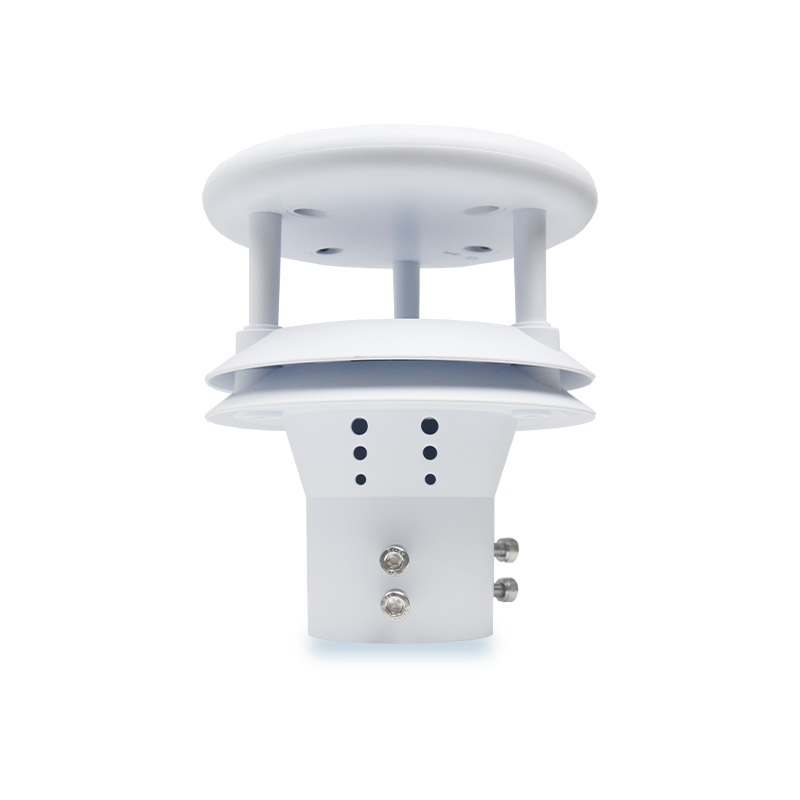
The core advantage of the Wireless Weather Station lies in its integrated composite meteorological sensor. This key component can accurately measure various meteorological parameters, effectively meeting application needs in different scenarios and providing reliable support for obtaining meteorolog...
PV Weather Station monitors elements such as solar radiation and temperature and humidity, providing data support for the operation of photovoltaic power plants....
The problem of water pollution is serious. Governments, environmental protection agencies, and scientific research institutions need to promptly and accurately grasp the water quality status to formulate effective water resource protection and pollution control policies. However, the detection scope...
The Farmland Weather Station is a product of the integration of information technology and agricultural meteorological monitoring. By integrating multiple technical means, it achieves real-time and efficient processing of agricultural meteorological data, addressing the issues of delayed data collec...


 Skype
Skype
 whatsapp
 mail
mail