Tianyi Sensor IOT Technology Co., Ltd
Sales Manager:Ms. Emily Wang
Cel,Whatsapp,Wechat:+86 15898932201
Email:info@fengtutec.com
Add:No. 155 Optoelectronic Industry Accelerator, Gaoxin District, Weifang, Shandong, China


Sales Manager:Ms. Emily Wang
Cel,Whatsapp,Wechat:+86 15898932201
Email:info@fengtutec.com
Add:No. 155 Optoelectronic Industry Accelerator, Gaoxin District, Weifang, Shandong, China
time:2026-02-27 11:18:29 source:Weather Station viewed:214 time
Atmospheric Visibility Sensor is a meteorological monitoring device that calculates meteorological optical range (MOR) by measuring the intensity of light scattering from atmospheric particles. This article introduces a device that uses the forward scattering method, with a range of 2km and a resolution of 1m. It can accurately identify various weather phenomena such as fog, rain, snow, mixed precipitation, and clear skies, providing data support for meteorological monitoring and traffic safety.
Atmospheric Visibility Sensor is a specialized device for measuring atmospheric visibility. Its core working principle is based on the precise measurement of light particle scattering intensity. This device emits near-infrared light pulses at a specific angle and receives the scattering signals of light from aerosol particles in the atmosphere (such as fog, rain, snow, and dust), thereby calculating the meteorological optical range (MOR). Currently, most Atmospheric Visibility Sensor devices use the forward scattering method. This measurement principle has been widely accepted by the World Meteorological Organization and the International Civil Aviation Organization and is applied in fields such as runway visibility assessment and road traffic monitoring.
The Atmospheric Visibility Sensor, employing forward scattering technology, calculates current visibility by measuring the total extinction coefficient of air. Its technological advantages lie in its compact structure and ease of installation and maintenance. Compared to traditional transmission-type visibility meters, forward scattering sensors have lower purchase costs and a smaller footprint, while their measurement accuracy has been proven to be comparable to that of transmission meters.
Regarding technical parameters, the Atmospheric Visibility Sensor, suitable for traffic meteorology and regional meteorological monitoring, typically has a measurement range of 2 kilometers, meeting the needs of low visibility monitoring in scenarios such as highways, airport runways, and port waterways. The device has a resolution of 1 meter, accurately capturing subtle changes in visibility. In terms of measurement accuracy, within a 2-kilometer range, the error of the forward scattering Atmospheric Visibility Sensor can be controlled within ±2%. Furthermore, the device's built-in weather phenomenon recognition function can accurately distinguish between weather types such as fog, rain, snow, mixed precipitation, and clear skies, with a recognition rate exceeding 95%.
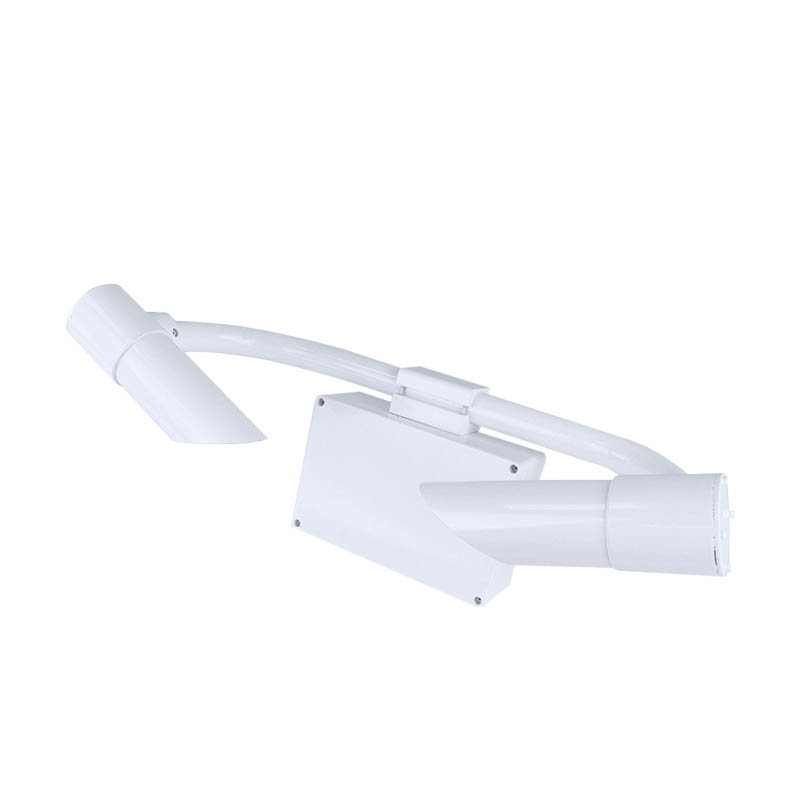
The Atmospheric Visibility Sensor is designed and manufactured with long-term operational needs in harsh outdoor environments fully considered. The equipment casing is typically made of high-quality aluminum alloy, anodized and powder-coated, and has an IP66 protection rating, effectively preventing dust, water, and corrosion. The transmitting and receiving lenses feature a downward tilt design to minimize interference from stray light such as sunlight. Built-in heating prevents condensation or icing on the lenses, ensuring stable operation within a temperature range of -40℃ to +60℃ and relative humidity of 0% to 100%. Both the power and communication interfaces are equipped with surge protection circuits to effectively reduce damage from lightning strikes and static electricity.
When installing Atmospheric Visibility Sensor in the field, choose an open, flat, and unobstructed location. The recommended installation height is between 1.5 meters and 3 meters. The receiver should be installed facing away from a strong light source (such as the sun), and the transmitter and receiver should be oriented north-south to avoid optical interference. Regular maintenance includes lens cleaning and calibration checks; it is generally recommended to clean the lens every 3 months and perform a calibration check every 6 months.
Cultural relics carry the memories of human civilization and are precious non-renewable resources. Meteorology, as an important part of the natural environment, has an intricate connection with the protection of cultural relics.Meteorological conditions are directly related to the preservation...
Tianyi specializes in the research, development and production of meteorological monitoring equipment, with profound technical strength and rich experience in the field of Automatic Farmland Weather Station. The weather stations produced by the company feature high-precision sensors and are made of...
Water quality monitor system for drink water is a water quality analysis device that integrates multidisciplinary technologies such as sensor technology, automatic control, and data communication. Its core monitoring parameters include residual chlorine, pH, water temperature, turbidity, and conductivity. This device is widely used for online continuous monitoring of water quality in various scenarios, including urban and rural water treatment plants, water distribution networks, secondary water supply systems, end-user points, indoor swimming pools, large-scale water purification equipment, and direct drinking water projects....
In the solar energy industry, the quality of photovoltaic (PV) modules affects their power generation efficiency, and the EL detector is an important tool for inspecting the quality of PV modules.The EL detector works based on the principle of electroluminescence. When a forward voltage is applied t...


 Skype
Skype
 whatsapp
 mail
mail