Tianyi Sensor IOT Technology Co., Ltd
Sales Manager:Ms. Emily Wang
Cel,Whatsapp,Wechat:+86 15898932201
Email:info@fengtutec.com
Add:No. 155 Optoelectronic Industry Accelerator, Gaoxin District, Weifang, Shandong, China


Sales Manager:Ms. Emily Wang
Cel,Whatsapp,Wechat:+86 15898932201
Email:info@fengtutec.com
Add:No. 155 Optoelectronic Industry Accelerator, Gaoxin District, Weifang, Shandong, China
time:2025-07-18 08:48:58 source:Weather Station viewed:367 time
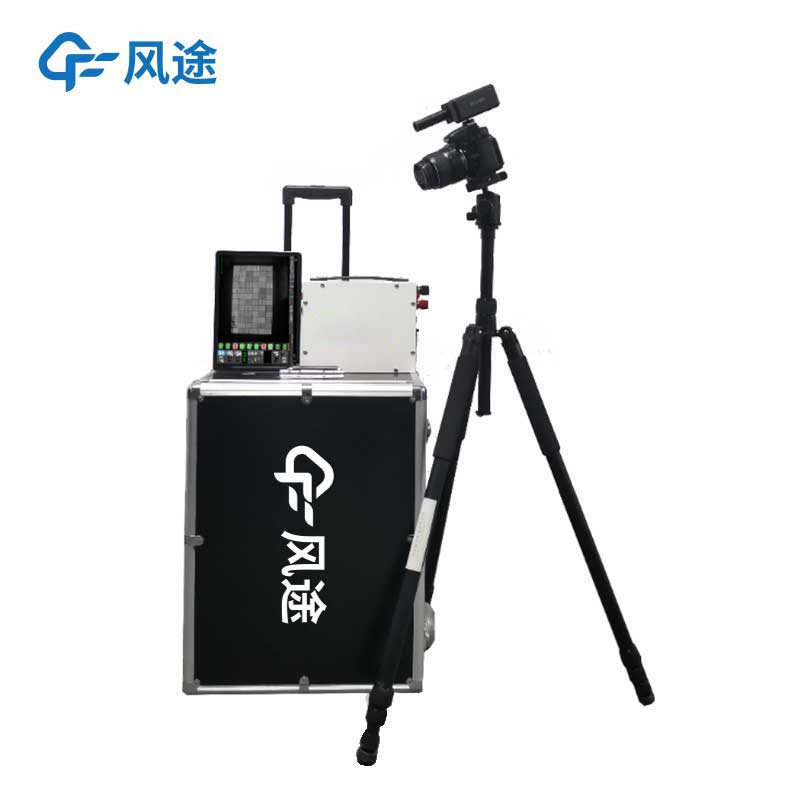
In the solar energy industry, the quality of photovoltaic (PV) modules affects their power generation efficiency, and the EL detector is an important tool for inspecting the quality of PV modules.
The EL detector works based on the principle of electroluminescence. When a forward voltage is applied to a PV module, electrons and holes in the semiconductor materials inside the module recombine and release photons, producing a luminescent phenomenon. A flawless PV module emits light uniformly and stably, while defects such as hidden cracks, broken grids, and black spots will cause abnormal light emission in the corresponding areas, which are clearly visible in the imaging.
How to test with a module EL tester? Make corresponding preparations before the test. The tester needs to be preheated for 15 to 30 minutes, and parameters such as focal length, optical performance, and linearity are calibrated using standard samples. The surface of the PV module to be inspected should be cleaned with a soft cloth to remove dust, stains, etc., and then stably fixed on the test bench, positioned in the center of the camera's field of view with the module surface perpendicular to the lens.
In the testing process, the forward voltage should be set according to the specifications of the PV module, generally ranging from several volts to dozens of volts. A high-sensitivity CCD camera is used to capture photons and convert them into images. Parameters such as exposure time and gain can be adjusted to optimize the imaging effect. The test must be carried out in a dark environment to avoid interference from external light; during the day, the inspection needs to be conducted in a darkroom.
Next is result analysis. Different defect problems have different imaging patterns. For example, hidden cracks appear as black lines or differential lines with indefinite directions in the image; broken grids are manifested as breaks or discontinuities in the metal grid lines, with extremely weak light emission at the broken points; black spots are local blackened areas. After discovering defects, slight hidden cracks can be repaired by filling with glue, a small number of edge broken grids can be repaired by welding, while PV modules with severe defects such as large-area hidden cracks, multiple key broken grids, and large black spots need to be scrapped.
Repeatability tests can be performed on PV modules of the same batch to verify the consistency of the results. If there is a large difference, it is necessary to check for equipment failures or process issues.
Ultrasonic Portable Mini Wind Meter is a meteorological instrument used to measure air flow speed and direction. It consists of two parts: a wind speed and direction sensor and a data display unit....
The 3D ultrasonic anemometer utilizes ultrasonic measurement technology and features an all-metal construction devoid of any moving parts; it is capable of simultaneously measuring wind direction in both horizontal and vertical planes while outputting wind speed components along the X, Y, and...
Hydrological flow monitoring equipment plays a crucial role in water conservancy work, helping us grasp the dynamics of water resources and facilitating flood control, water dispatch, and other tasks. Below is a detailed introduction to common equipment.Water Level Monitoring StationThe battery-powe...
Infrared Thermal Imaging Camera features both infrared and visible light imaging modes, supporting various operating modes including incandescent, black-and-white, firefighting, fire, search and rescue, picture-in-picture, and fusion display, suitable for different on-site environment needs. T...


 Skype
Skype
 whatsapp
 mail
mail