Tianyi Sensor IOT Technology Co., Ltd
Sales Manager:Ms. Emily Wang
Cel,Whatsapp,Wechat:+86 15898932201
Email:info@fengtutec.com
Add:No. 155 Optoelectronic Industry Accelerator, Gaoxin District, Weifang, Shandong, China


Sales Manager:Ms. Emily Wang
Cel,Whatsapp,Wechat:+86 15898932201
Email:info@fengtutec.com
Add:No. 155 Optoelectronic Industry Accelerator, Gaoxin District, Weifang, Shandong, China
time:2025-08-07 08:51:51 source:Weather Station viewed:330 time
Nowadays, with the rapid development of industry, the pollution problem in industrial parks has attracted much attention. Traditional environmental monitoring methods can no longer meet the needs of refined supervision of pollution in industrial parks. However, the emergence of Air quality monitoring stations has brought new opportunities for pollution prevention and control in industrial parks, enabling pre-warning and in-process tracking.
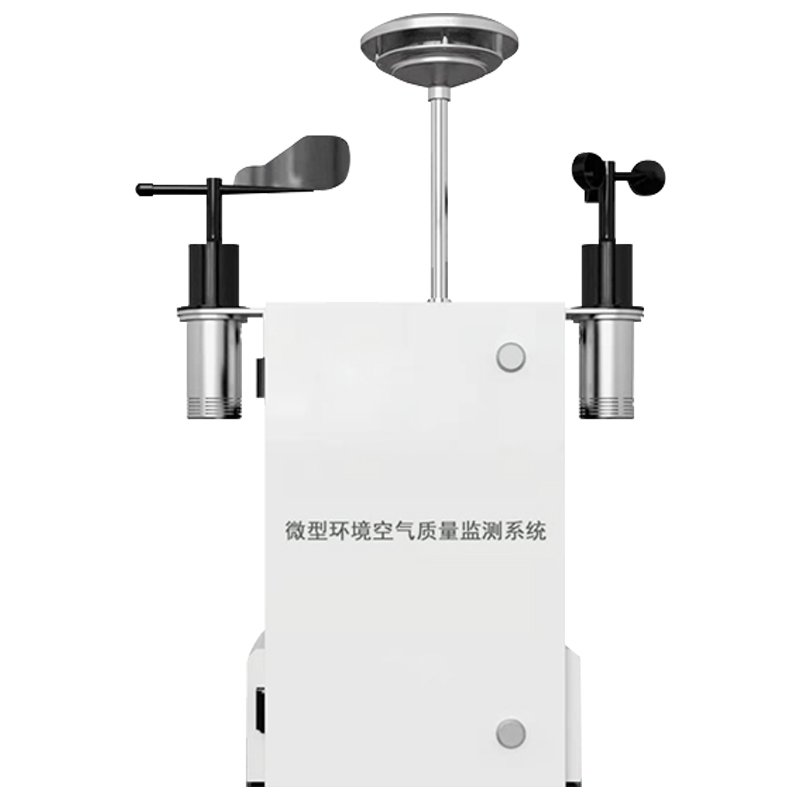
An Air quality monitoring station is a highly integrated environmental monitoring device that can accurately monitor the concentrations of air pollutants such as sulfur dioxide, nitrogen dioxide, ozone, carbon monoxide, PM2.5, and PM10. It can also be equipped with meteorological parameter sensors to collect meteorological data such as temperature, humidity, wind speed, and wind direction.
In industrial parks, Air quality monitoring stations are scientifically deployed based on the "grid" concept. According to factors such as the functional zoning of the park, enterprise distribution, and pollution emission characteristics, the entire park is divided into multiple fine monitoring units, and micro-stations are reasonably set up in each unit. In this way, each micro-station forms an all-round, dead-angle-free data monitoring network, which fully covers every corner of the park. Whether it is near the production workshop, around the warehouse, or beside the park road, it can be effectively monitored.
In terms of pre-warning, the built-in data acquisition and processing unit of the micro-station will upload the monitoring data to the cloud platform in real-time. The platform uses professional data analysis models to conduct in-depth mining and analysis of these data. Once it is found that the pollutant concentration approaches or exceeds the preset threshold, the system will immediately automatically trigger the early warning mechanism. The early warning information will be quickly transmitted to the park's environmental protection managers, relevant enterprise leaders, and environmental protection supervision departments through various forms such as text messages, APP pushes, and sound and light alarms. For example, when a micro-station in a certain area detects that the PM2.5 concentration rises rapidly in a short time and is close to the early warning threshold, the early warning system will start immediately, reminding relevant personnel to conduct timely inspections. It may be that there is a problem in the production process of nearby enterprises, or there is a construction site carrying out large-scale earthwork operations, so that measures can be taken in advance to prevent further deterioration of pollution.
In the in-process tracking stage, after a pollution incident occurs, due to the formation of a dense monitoring network, it can monitor the dynamic changes of pollutant concentrations in real-time and continuously. Combined with the data from each micro-station and meteorological parameters, the diffusion path and impact range of pollutants can be accurately calculated through specific algorithm models. At the same time, the source of pollution can be quickly identified based on the differences in monitoring data from different micro-stations. After receiving the warning, environmental law enforcement personnel and enterprise staff can rush to the scene according to this information to carry out targeted inspections and treatments. During the treatment process, the micro-station continuously tracks the changes in pollutant concentrations, feeds back the treatment effect in real-time, and provides strong support for subsequent decision-making adjustments. If an enterprise reduces pollutant emissions by stopping part of the production lines, the monitoring data of the micro-station will show that the pollutant concentration in the area is gradually decreasing, indicating that the treatment measures are effective.
Remote Controlled Lifebuoy is a U-shaped remotely controlled water rescue wing with a control range of up to 1500 meters. It features dual-sided travel, one-button return, automatic righting, and precise positioning, enabling rapid arrival at the location of a person in the water. It is suitable for rescues in complex waters....
Atmospheric Visibility Sensor is a meteorological monitoring device that calculates meteorological optical range (MOR) by measuring the intensity of light scattering from atmospheric particles. This article introduces a device that uses the forward scattering method, with a range of 2km and a...
Anemometer can measure wind speed, wind direction, temperature, humidity, atmospheric pressure, light intensity, radiation, and runway temperature in real time. It is equipped with SOS distress signals, an electronic compass, weather forecasting, and GNSS positioning. It supports wireless tran...
In the cold winter, transmission lines often face severe challenges of icing. When conditions such as low temperature, high humidity, and specific wind speed occur simultaneously, the phenomenon of icing on transmission lines is likely to form. Line icing not only increases the mechanical load on co...


 Skype
Skype
 whatsapp
 mail
mail