Tianyi Sensor IOT Technology Co., Ltd
Sales Manager:Ms. Emily Wang
Cel,Whatsapp,Wechat:+86 15898932201
Email:info@fengtutec.com
Add:No. 155 Optoelectronic Industry Accelerator, Gaoxin District, Weifang, Shandong, China


Sales Manager:Ms. Emily Wang
Cel,Whatsapp,Wechat:+86 15898932201
Email:info@fengtutec.com
Add:No. 155 Optoelectronic Industry Accelerator, Gaoxin District, Weifang, Shandong, China
time:2026-04-02 10:45:03 source:Weather Station viewed:156 time
Anemometer sensors are categorized into two main types based on their operating principles: mechanical and ultrasonic. Mechanical sensors feature structures such as wind cups or propellers, while ultrasonic sensors rely on the time-of-flight method for measurement. Different models are suited for various applications, including meteorological monitoring, drone operations, tunnel ventilation, and handheld field inspections.
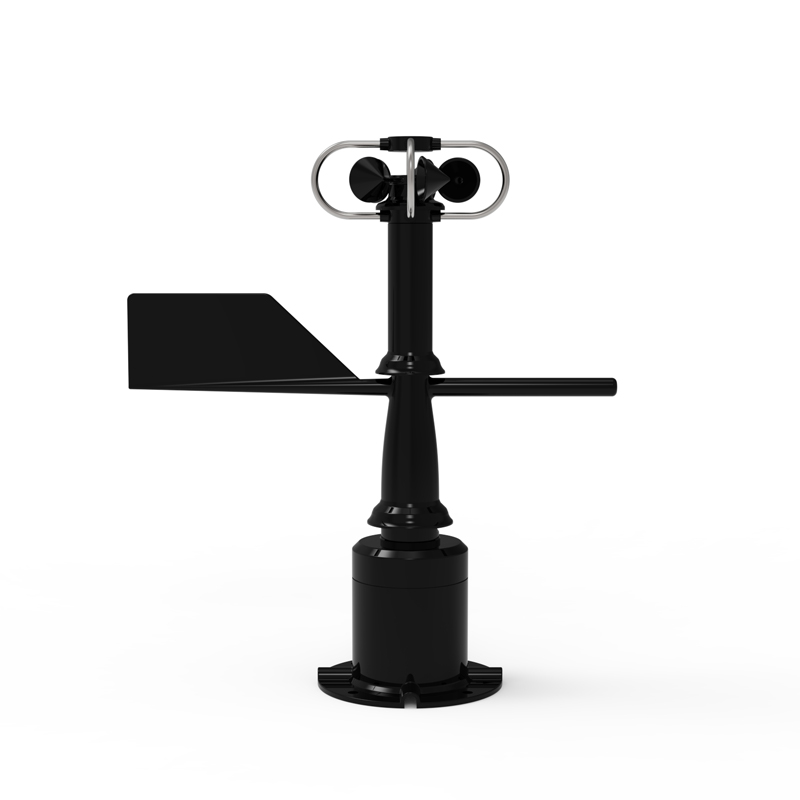
Based on their operating principles, anemometer sensors can be broadly classified into two major categories: mechanical wind sensors and ultrasonic wind sensors. Mechanical wind sensors primarily consist of two structural types: wind-cup and propeller-based designs. Their operating principle involves the force of airflow driving the sensor to rotate; a central shaft then actuates internal sensing components to generate pulse signals. Within the sensor's specified measurement range, a distinct linear relationship exists between the wind speed and the frequency of these pulses. The advantages of mechanical wind sensors include simple construction, lower cost, and mature technology. However, due to the presence of mechanical rotating parts, they are susceptible to bearing wear issues after prolonged use and are subject to a specific "startup wind speed" threshold. Taking the FS485 model as an example: this sensor features a housing made of high-performance engineering polymer plastics; it offers a wind speed measurement range of 0–60 m/s with a resolution of 0.01 m/s, and a wind direction measurement range of 0–360 degrees with a resolution of 0.1 degrees. It has a startup wind speed of 0.5 m/s and outputs data via an RS485 interface.
Ultrasonic wind sensors perform measurements based on either the ultrasonic time-of-flight method or the Doppler effect principle. They calculate wind speed and direction by determining the time difference required for ultrasonic waves to travel between two specific points; this method effectively mitigates the influence of temperature fluctuations on the speed of sound. The key advantages of ultrasonic sensors include the absence of mechanical rotating parts—meaning no wear and tear, and thus maintenance-free operation—as well as the lack of a startup wind speed threshold. They are capable of detecting even subtle changes in airflow and provide comprehensive, 360-degree coverage for wind direction measurement. Regarding specific product models, the FT-SWF1 3D Ultrasonic Anemometer is capable of simultaneously measuring wind speeds across three dimensions. It features a hard-anodized aluminum alloy housing, offers a wind speed measurement range of 0–50 m/s with an accuracy of ±0.2 m/s, and is ideally suited for applications such as wind power generation and meteorological monitoring for roads and bridges. The FT-SQX1 Tunnel Wind Speed and Direction Detector is specifically designed for tunnel environments; featuring an IP68 protection rating and a Mean Time Between Failures (MTBF) exceeding 50,000 hours, it provides data essential for the design of tunnel ventilation systems.
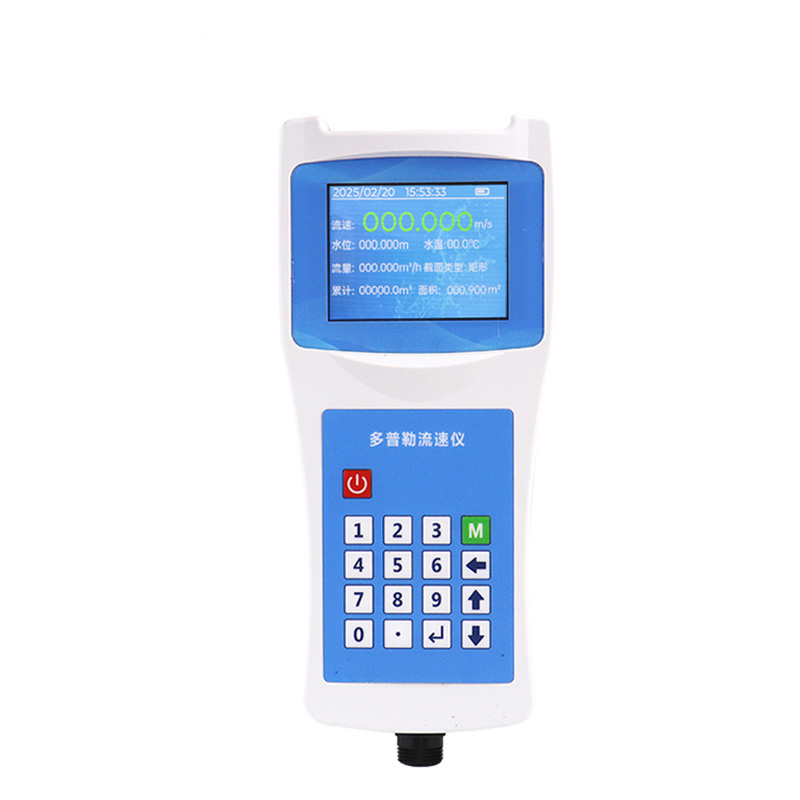
To address the specific application requirements of drone platforms, specialized airborne anemometers have also been developed for the market. The FT-F1S Airborne Weather Station for drones can be mounted on drone platforms to enable real-time observation of wind speed and direction in complex terrain and hard-to-reach areas. The FT-F1H 3D Drone Wind Speed and Direction Sensor, utilizing the ultrasonic time-of-flight principle, features a compact structure with a measurement path of just 35 mm and weighs only 114 grams, making it particularly well-suited for integration into drone systems. Furthermore, handheld anemometers—such as the FT-SQ3 Three-Parameter Handheld Weather Station—integrate measurements of instantaneous wind speed, wind direction, and average wind speed into a single device. Equipped with a built-in electronic compass for 360-degree wind direction monitoring and a 3800mAh lithium battery capable of providing 18 hours of continuous operation, this device is widely utilized across fields such as meteorology, environmental protection, agriculture and forestry, and military operations.
River Level Monitoring Station is one of the tools in the modern flood control and disaster reduction system. It realizes real-time control of watershed hydrological information through multi-dimensional data collection and intelligent analysis. The system is composed of four major modules: water le...
What are the negative oxygen ion monitors? One is a detector suitable for scenic spots, and the other is a handheld negative ion detector.For the negative ion detector in scenic spots, the FT-FZ1 Scenic Air Negative Oxygen Ion Monitor can be selected. This monitor can monitor the concentration of ne...
In terms of application value, the popularization of integrated dust monitoring sensors like the FT-WQX8 is transforming traditional environmental monitoring models. In the past, single-parameter monitoring devices required separate deployment and maintenance. Not only did this result in high initia...
Water quality monitoring equipment for water treatment plants is an integrated system for online monitoring of key parameters such as residual chlorine, pH, water temperature, turbidity, and conductivity. It provides a basis for multi-dimensional testing of source water, treated water, and network water, and is widely used in full-process water quality safety management from water plants to end-users....


 Skype
Skype
 whatsapp
 mail
mail