Tianyi Sensor IOT Technology Co., Ltd
Sales Manager:Ms. Emily Wang
Cel,Whatsapp,Wechat:+86 15898932201
Email:info@fengtutec.com
Add:No. 155 Optoelectronic Industry Accelerator, Gaoxin District, Weifang, Shandong, China


Sales Manager:Ms. Emily Wang
Cel,Whatsapp,Wechat:+86 15898932201
Email:info@fengtutec.com
Add:No. 155 Optoelectronic Industry Accelerator, Gaoxin District, Weifang, Shandong, China
time:2025-05-19 09:16:52 source:Weather Station viewed:388 time
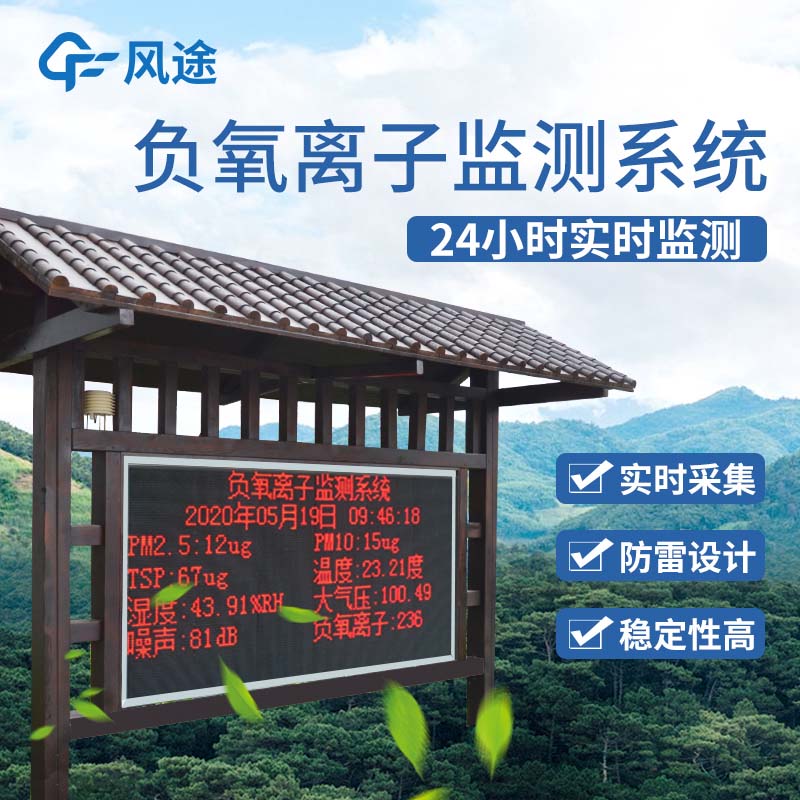
Negative oxygen ion monitoring stations collect real - time data on negative oxygen ion concentrations in the environment through sensors, and transmit the data to the background for processing and display via communication technologies. The core of this system lies in its precise perception of the number of negative oxygen ions in the air, providing a quantitative basis for environmental quality assessment.
Parks are common locations for negative oxygen ion monitoring stations, primarily due to their rich vegetation. Processes such as photosynthesis in plants and tip discharge of leaves generate negative oxygen ions. Especially in areas with dense trees, flowers, and grass, the concentration of negative oxygen ions is usually high. The monitoring system can visually present the changes in negative oxygen ion concentrations in the park, helping managers understand the effect of vegetation on air quality improvement and evaluate the ecological environment quality of the park.
From the perspective of public demand, negative oxygen ions are called "air vitamins", which have the functions of purifying the air, promoting human metabolism, and enhancing immunity. When citizens go to the park for leisure and exercise, they are concerned about the environmental health. The real - time data on negative oxygen ion concentrations displayed by the monitoring system can enable people to intuitively understand the air quality in the park and provide a reference for choosing the time and place for exercise.
As the ecological window of the city, relevant departments can analyze the evolution trend of the urban ecological environment by collecting long - term data through negative oxygen ion monitoring stations in parks, providing a scientific basis for urban greening planning and the formulation of ecological protection policies. The public disclosure of monitoring data also helps to raise public awareness of the ecological environment and enhance environmental protection awareness.
The widespread application of negative oxygen ion monitoring stations in parks not only meets the needs of environmental monitoring and management but also coincides with the public's pursuit of a healthy living environment, making it a common facility in parks.
Cultural relics carry the memories of human civilization and are precious non-renewable resources. Meteorology, as an important part of the natural environment, has an intricate connection with the protection of cultural relics.Meteorological conditions are directly related to the preservation...
With the rapid advancement of urbanization, construction sites, road works, and material storage yards are scattered across various corners of cities. During construction and operation, these sites inevitably generate environmental pollutants: dust and noise.A dust detector is an intelligent d...
Please note that this is a basic meteorological instrument capable of monitoring only wind speed, wind direction, air temperature and humidity, and air pressure.When equipped with sensors for dust concentration, harmful gases (such as sulfur dioxide, nitrogen oxides), PM2.5, PM10, etc., it becomes a...
The standout advantage of the Portable Weather Station is its "portability," a feature directly reflected in its name. Compared with traditional fixed meteorological monitoring equipment, it has a significantly smaller size and lighter weight, with its overall design fully considering the...


 Skype
Skype
 whatsapp
 mail
mail